White Gold Wedding Bands: Stamps, Rhodium and Yellowing
Identify Your Jewelry Piece Instantly
Unsure about a hallmark, gemstone cut, or metal stamp? Take a photo and get an instant AI analysis and appraisal.

💡 Key Takeaways (Quick Reference)
- Read the inside of the band. A white gold band is stamped with its gold content: 14K or 585, 18K or 750, 10K or 417. There is no separate mark for “white”.
- White gold is not naturally white. It is gold alloyed with whitening metals, usually nickel or palladium, and most of it is plated with rhodium to look brighter than the alloy underneath.
- Yellowing is the plating wearing through, not fake gold. It shows first on the palm side of the band.
- Weight separates the white metals. Platinum is far heavier than white gold, titanium far lighter, and tungsten carbide close enough to fool the hand.
A white gold wedding band is one of the hardest rings to read by eye. It looks the same as platinum, palladium, silver, titanium and tungsten carbide, and the white surface you see is usually a plating, not the metal it covers. This guide covers the stamps inside the band, what the white surface is made of, why it turns yellow, and how to tell white gold from the other white metals sold as wedding bands. For the platinum question in detail, see our platinum vs. white gold guide.
Step 1: Read the Stamps Inside the Band
Hold the band under a 10x loupe and turn it against a light. Quality marks are struck on the inner surface of the shank, usually at the back, opposite the top of the ring.
| Stamp inside the band | What it means | Gold content |
|---|---|---|
| 18K / 18KT / 750 | 18 karat | 75.0% |
| 14K / 14KT / 585 | 14 karat | 58.5% |
| 10K / 417 | 10 karat | 41.7% |
| 9K / 375 | 9 carat (UK and Commonwealth) | 37.5% |
| PLAT / Pt950 / 950 PLAT | Platinum, not gold | 95% platinum |
| Pd950 / 950 Pd | Palladium, not gold | 95% palladium |
| 925 / STERLING | Sterling silver, not gold | 92.5% silver |
Three things to know about these marks:
- The stamp gives the gold, never the colour. 14K white gold and 14K yellow gold carry the same 14K or 585. What changes is the other 41.5% of the alloy. Our gold purity stamps guide covers the karat numbers and their millesimal equivalents in full.
- A US karat stamp should have a trademark beside it. Under the National Gold and Silver Stamping Act, a quality mark on gold must be accompanied by the name or registered trademark of the company that guarantees it, struck close to the quality mark. A band stamped 14K with nothing beside it deserves a second look.
- The law allows only a small shortfall. Since 1981, US gold jewelry may fall short of its stamped karat by no more than 3 parts per thousand, or 7 parts per thousand where solder is counted.

Step 2: Know What the White Surface Is
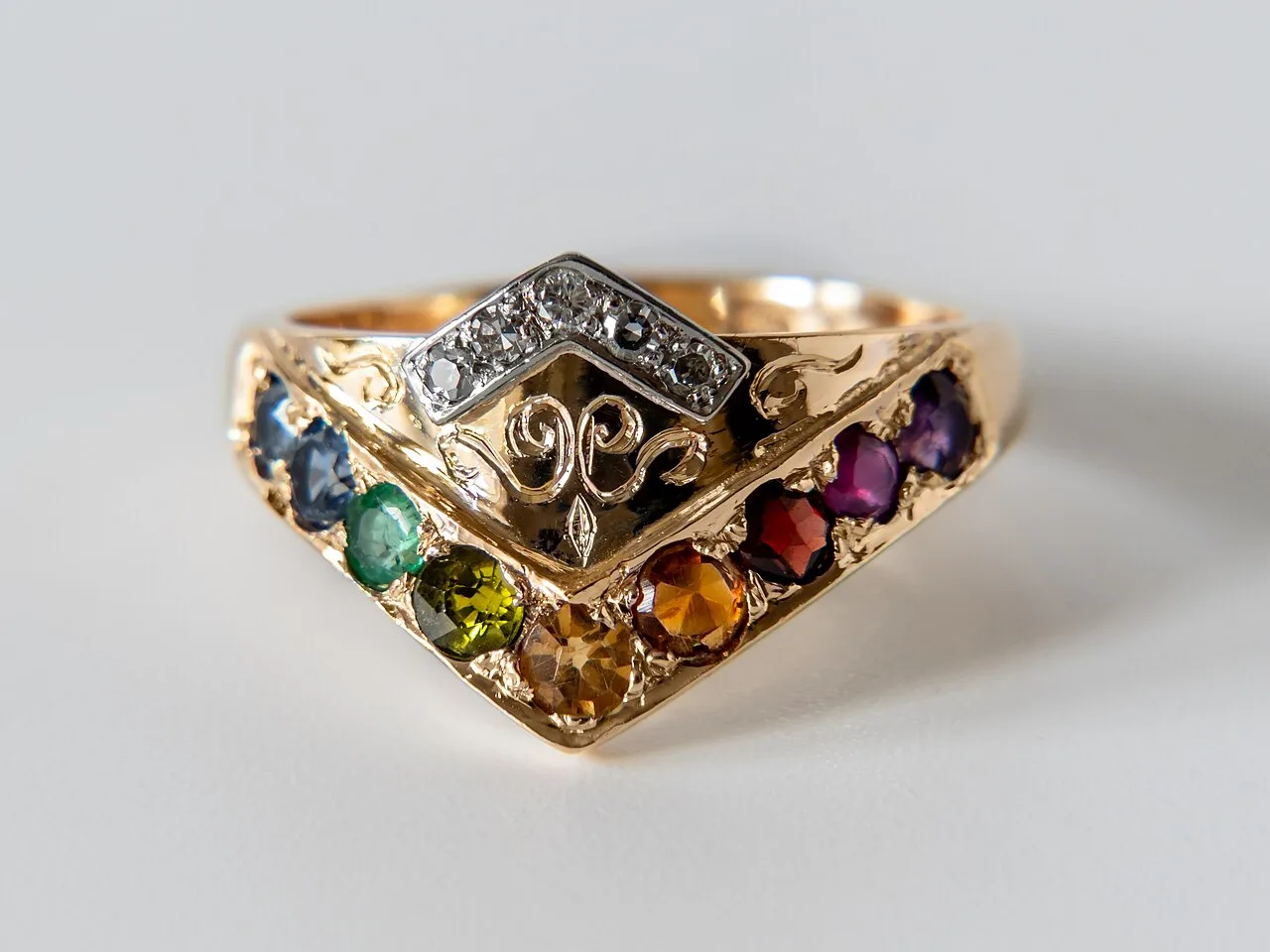
Gold is yellow at any karat. White gold is gold alloyed with metals that bleach that colour, and two families dominate:
- Nickel white gold. Nickel is the cheapest whitener and, according to the trade’s White Gold Task Force, the most common one in American white gold. It makes a hard alloy, and nickel is also the most common metal allergy.
- Palladium white gold. Palladium, a platinum-group metal, whitens without the allergy risk, but it costs more, so palladium alloys are typically found in more expensive bands.
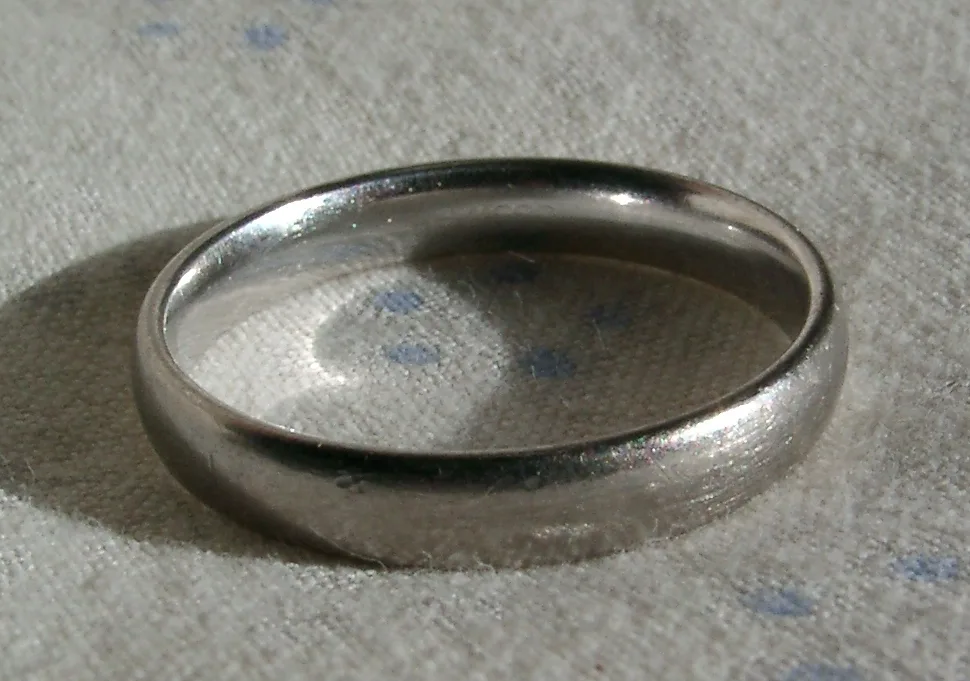
Neither alloy reaches the brilliant white of a new ring on its own. Most white gold is electroplated with rhodium, another platinum-group metal, and that thin coat is what you are looking at on a new band.

The trade grades how white the bare alloy is. The White Gold Task Force, set up by the Manufacturing Jewelers & Suppliers of America (MJSA) and the World Gold Council, measures yellowness on the ASTM D1925 Yellowness Index:
| Grade | Yellowness Index | Rhodium plating |
|---|---|---|
| Grade 1 (“premium white”) | below 19 | not needed |
| Grade 2 (“standard white”) | 19 to about 24.5 | optional |
| Grade 3 (“off-white”) | about 24.5 to 32 | required |
| Not white gold | 32 and above | — |
The published accounts disagree by a tenth of a point at the boundaries (18.9 or 19; 24.4 or 24.5), which is why the table rounds them.
Step 3: Read the Yellowing
A white gold band that has turned faintly yellow or grey is almost always one whose rhodium has worn through. It is not a sign of fake gold, and it is not the gold changing colour: it is the colour of the alloy underneath, showing.
- The plating is thin. Jewelers’ figures for plating on rings run from under a micron to about 2.5 microns, and a quick “flash” plating is thinner still. Sources disagree on how long it lasts, from months for a flash coat to a few years on a properly plated ring, because wear depends on the thickness and on how the ring is worn.
- Wear shows on the palm side first. The underside of the band rubs against everything the hand holds, and a wedding band also rubs against the engagement ring beside it. Yellowing that starts there and spreads outward is plating wear.
- It can be renewed. A jeweler can strip, polish and re-plate a white gold band. A grade 1 alloy can also be left unplated and stays close to white.
If a “white gold” ring turns green or black on the skin instead, or shows red-brown metal through the wear, the base under the plating is not gold. That is the sign of a plated base-metal ring, and it is covered in our guide to identifying gold without a stamp.
Step 4: Weigh It Against the Other White Metals
Wedding bands in a white colour come in six common materials, and their densities are far enough apart that weight is a useful clue. A jeweler with a scale can settle it by specific gravity; in the hand, compare the band with one of known metal and similar size.
| Metal | Typical stamp | Density (g/cm³) | In the hand |
|---|---|---|---|
| Platinum 950 | PLAT, Pt950 | about 20.0–20.6 | very heavy |
| 18K white gold | 18K, 750 | about 14.8–16.1 | heavy |
| Tungsten carbide | no fineness mark | about 15.6 | heavy, close to 18K |
| 14K white gold | 14K, 585 | about 12.6–14.8 | medium |
| Palladium 950 | Pd950 | about 12.0 | medium, close to 14K |
| Sterling silver | 925, STERLING | about 10.4 | lighter |
| Titanium | no fineness mark | about 4.5 | very light |
Density figures are theoretical values for the alloy; finished rings tend to read slightly lower. The 14K white gold range is wide because sources disagree: the lower figures are for nickel-whitened alloys, and one density table gives 14.82 for a 14K white gold, which is consistent with a palladium-rich alloy. Read the range as “somewhere between sterling and 18K”, not as a single number.


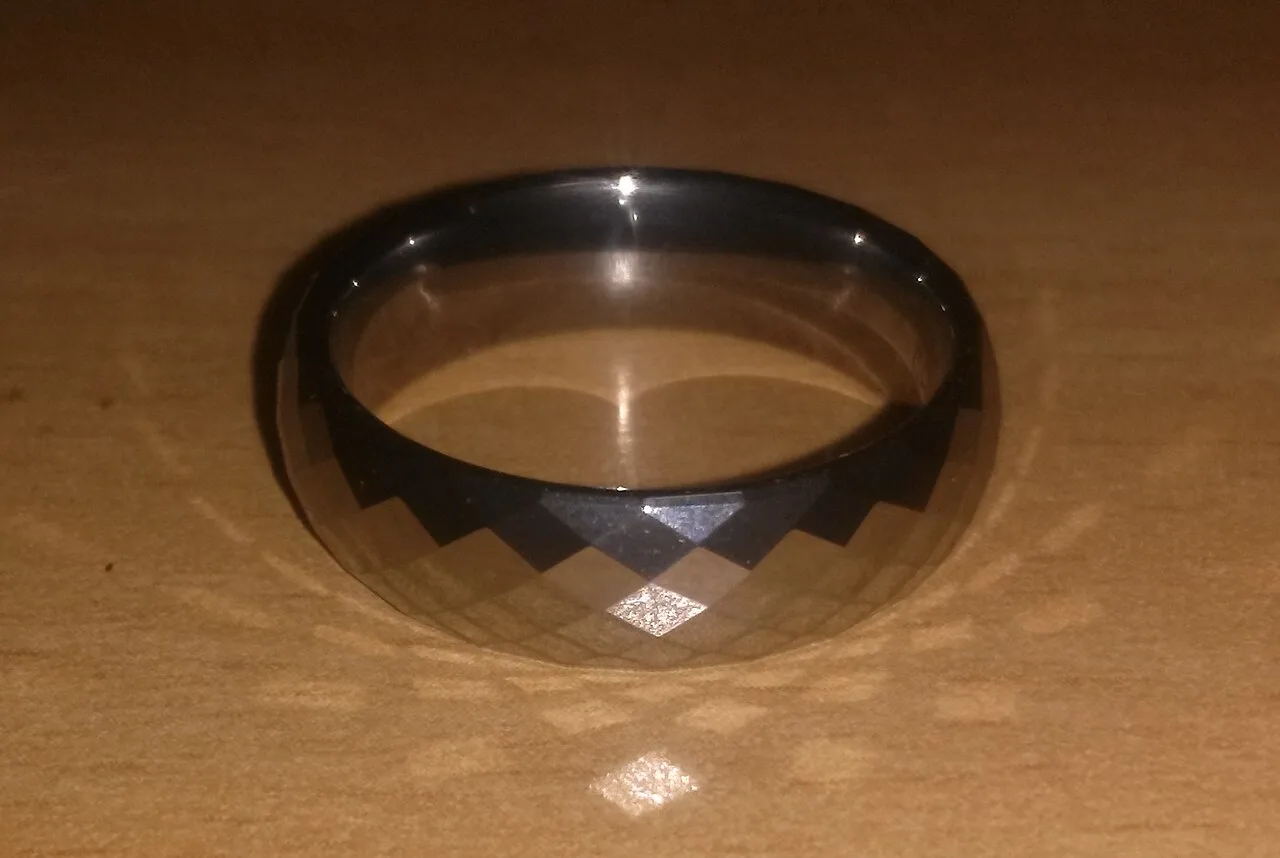
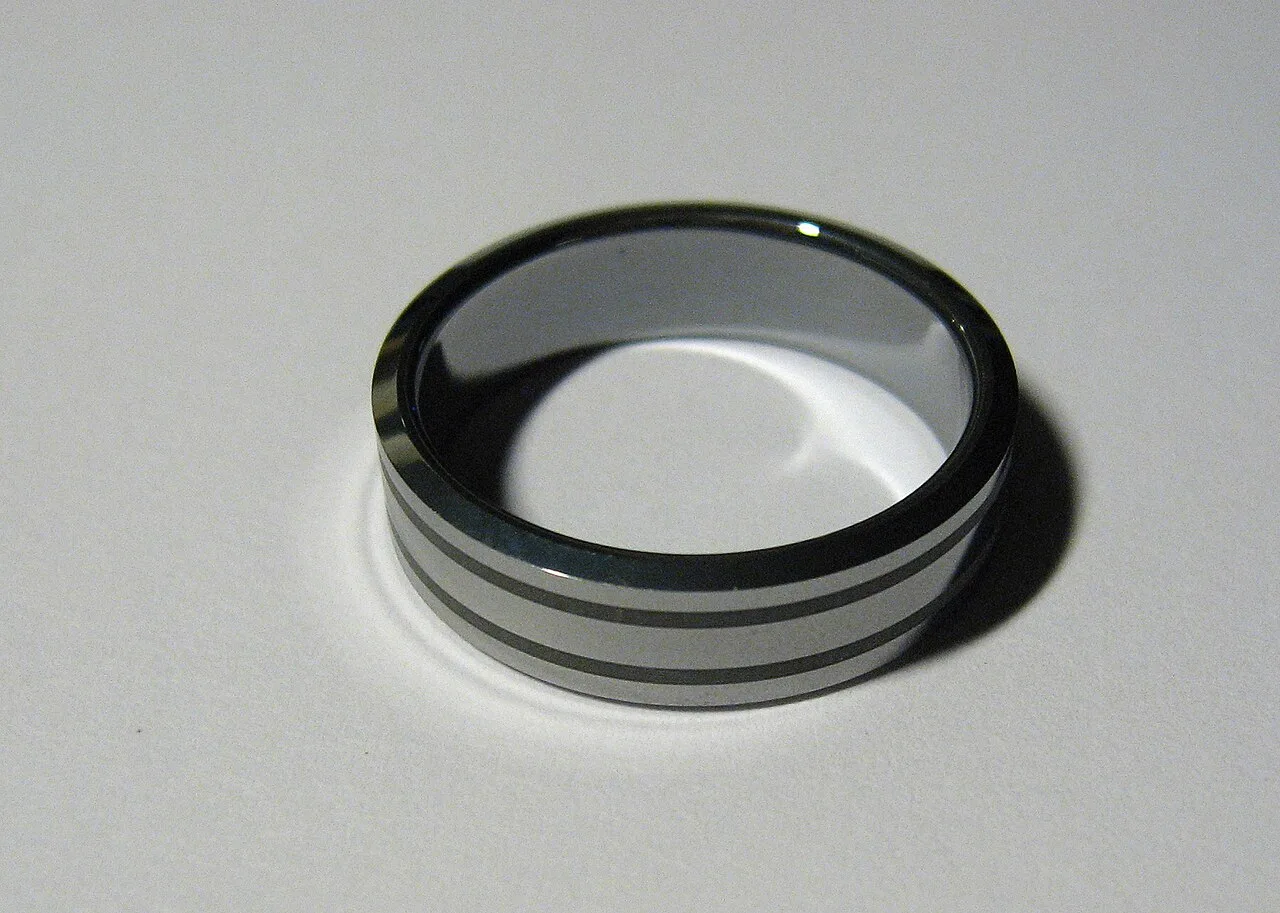
Two pairs are easy to confuse. Tungsten carbide weighs about as much as 18K white gold, but it contains no gold, so it carries no karat stamp, and jewelers say it cannot be resized. Palladium weighs about as much as 14K white gold, but it is naturally white and needs no rhodium, so a worn palladium band never turns yellow.


Step 5: The Nickel Question
If the band causes an itchy rash where it sits, nickel is the usual suspect. In the European Union, nickel release from finger rings and other jewelry in prolonged skin contact has been limited since the Nickel Directive (94/27/EC) to 0.5 µg/cm² per week. Since 2009 that limit has sat in the REACH regulation, Annex XVII entry 27. A coating counts only if it keeps the release under the limit for at least two years of normal use, which is why rhodium on a nickel alloy is not treated as a permanent fix.
The stamp does not tell you which whitener was used: 14K covers nickel and palladium alloys alike, and in the United States most white gold is still nickel white gold. If you have a nickel allergy, ask for palladium white gold or platinum, and expect a nickel white gold band to bother you most once its rhodium has worn through.
Frequently Asked Questions
Why is my white gold wedding band turning yellow?
Because the rhodium plating is wearing through. Most white gold is plated with rhodium, a platinum-group metal, to look whiter than the alloy underneath. When the plating wears, usually on the palm side of the band first, the warmer colour of the gold alloy shows. It is not a sign of fake gold, and a jeweler can re-plate it.
Is white gold stamped differently from yellow gold?
No. The stamp gives the gold content, not the colour: 14K white gold and 14K yellow gold both carry 14K or 585, and 18K of either colour carries 18K or 750. What differs is the rest of the alloy, which in white gold is usually nickel or palladium.
How can I tell a white gold band from tungsten carbide?
Weight will not do it, because tungsten carbide weighs about as much as 18K white gold. Look for a karat stamp such as 14K, 585, 18K or 750: tungsten carbide contains no gold, so it carries none. It is also darker and greyer than rhodium-plated white gold, and it cannot be resized.
Identify Your Jewelry Piece Instantly
Unsure about a hallmark, gemstone cut, or metal stamp? Take a photo and get an instant AI analysis and appraisal.