How to Identify the Carat of Gold: Stamps, Acid and Density
Identify Your Jewelry Piece Instantly
Unsure about a hallmark, gemstone cut, or metal stamp? Take a photo and get an instant AI analysis and appraisal.
💡 Key Takeaways (Quick Reference)
- Karat and carat are the same thing for gold: parts of pure gold in 24. 18 karat is 18/24, or 75% gold.
- Read the stamp first. A fineness mark (750, 585, 18K, 22 with a crown) answers the question if it is genuine. A maker’s mark on its own does not.
- Unmarked gold has three tests: touchstone and acid, specific gravity, and XRF. Each one has a blind spot, and plating fools two of them.
- A magnet only rules metal out. It can never tell you a karat.
Gold purity is counted in 24ths. Pure gold is 24 karat, 18 karat is 18 parts gold in 24 (75%), and 14 karat is 14 in 24 (58.5%). In American English the purity is spelled karat, and carat is kept for gemstone weight, 200 milligrams to the carat. British, South Asian and South African writing uses carat for both, so a “9 carat gold” ring and a “9 karat gold” ring are the same alloy.
Identifying the karat of a piece comes down to two questions: is there a mark you can trust, and if there is not, which test can settle it?
Step 1: Read the Stamp First
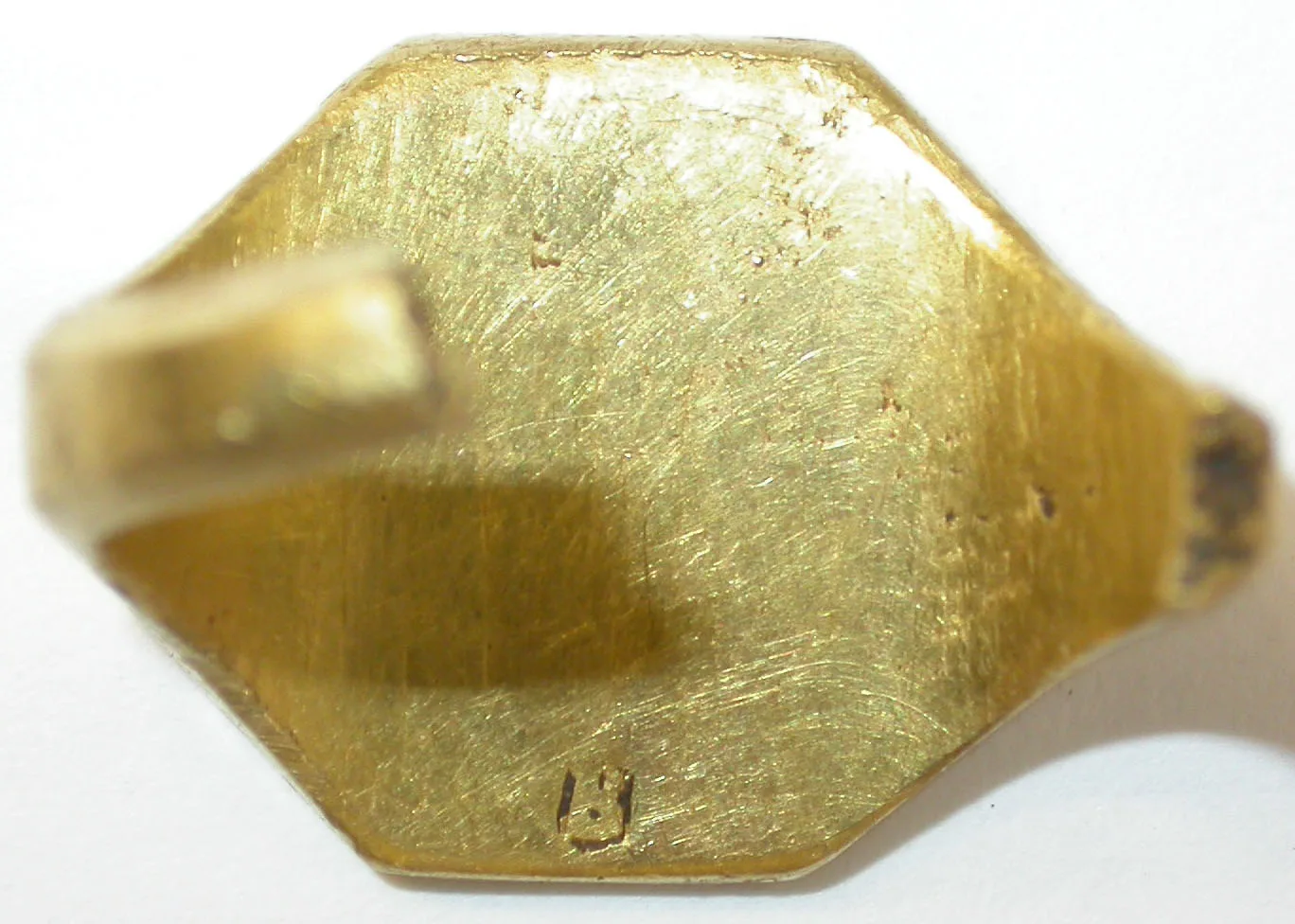
Look inside ring shanks, on clasps and end tabs, and on the back of brooches and pendants. A purity mark is either a karat number (10K, 14K, 18K) or a millesimal number in parts per thousand (417, 585, 750). Our gold purity stamps guide has the full conversion table and the plating marks (GF, GP, HGE) that look like karat stamps but are not.
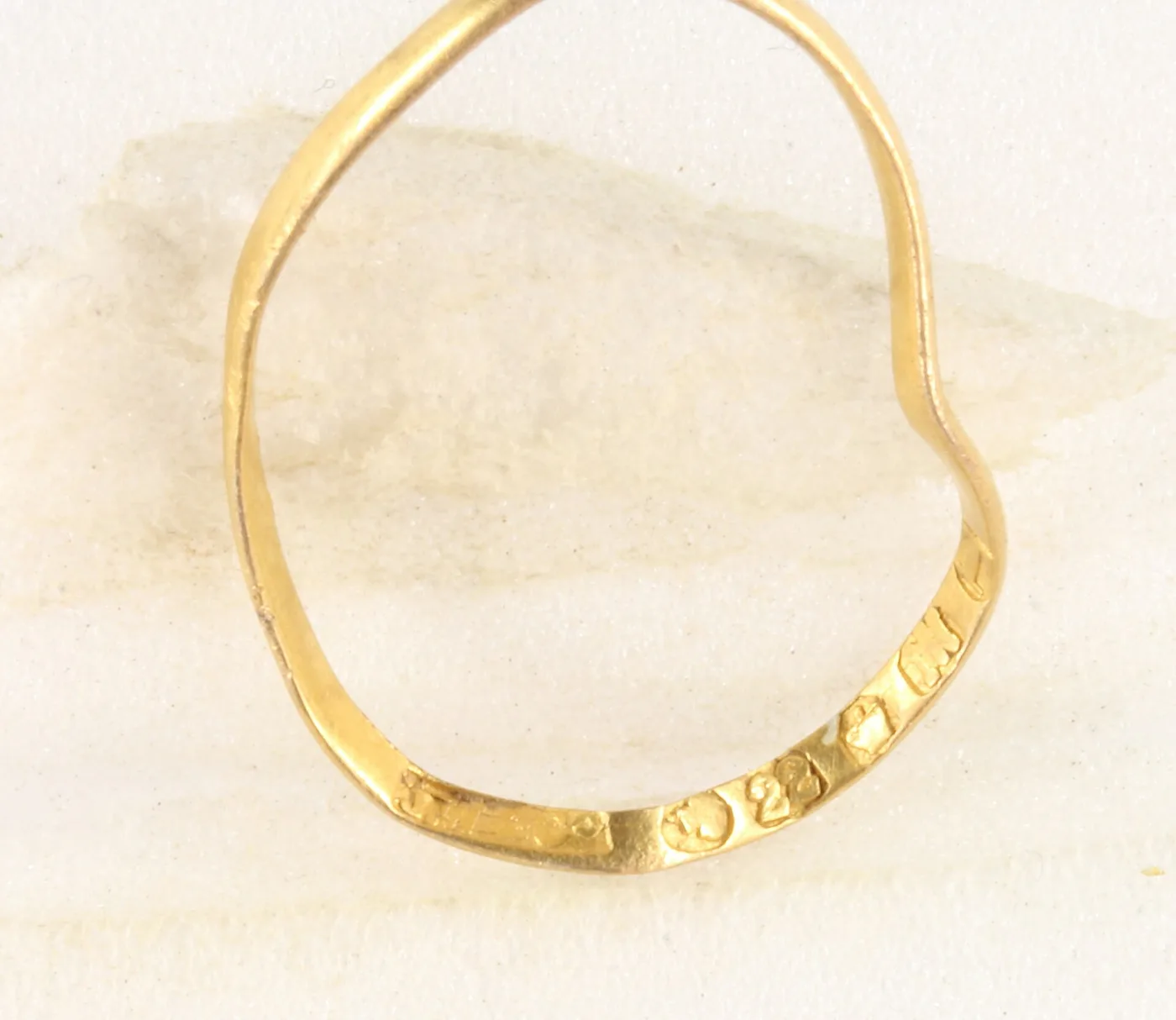

A stamp is a claim, not a proof: a karat number can be struck on plated base metal as easily as on solid gold. If the piece will be sold or insured on its karat, test it even when it is marked.
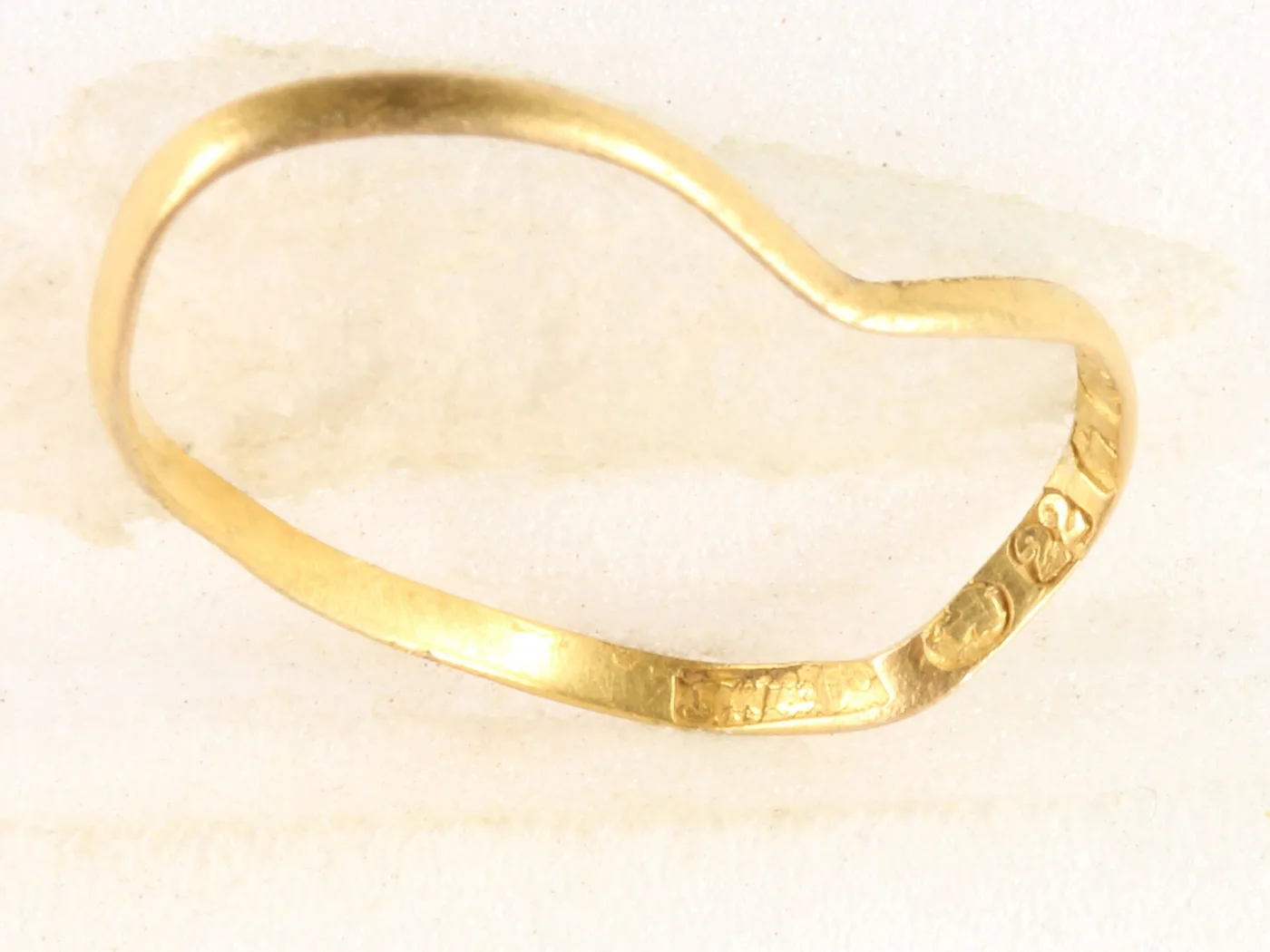

A letter or initials alone is usually a maker’s mark, which names the workshop and says nothing about purity.

Step 2: The Magnet Rules Metal Out, Never In
Gold is not magnetic. If a piece pulls hard toward a strong magnet, there is iron or steel in it. The reverse does not hold: copper, brass and aluminium do not respond to a magnet either, so a piece that ignores the magnet can still be gold-coloured base metal. The magnet is a quick first filter and nothing more. It can never give you a karat.
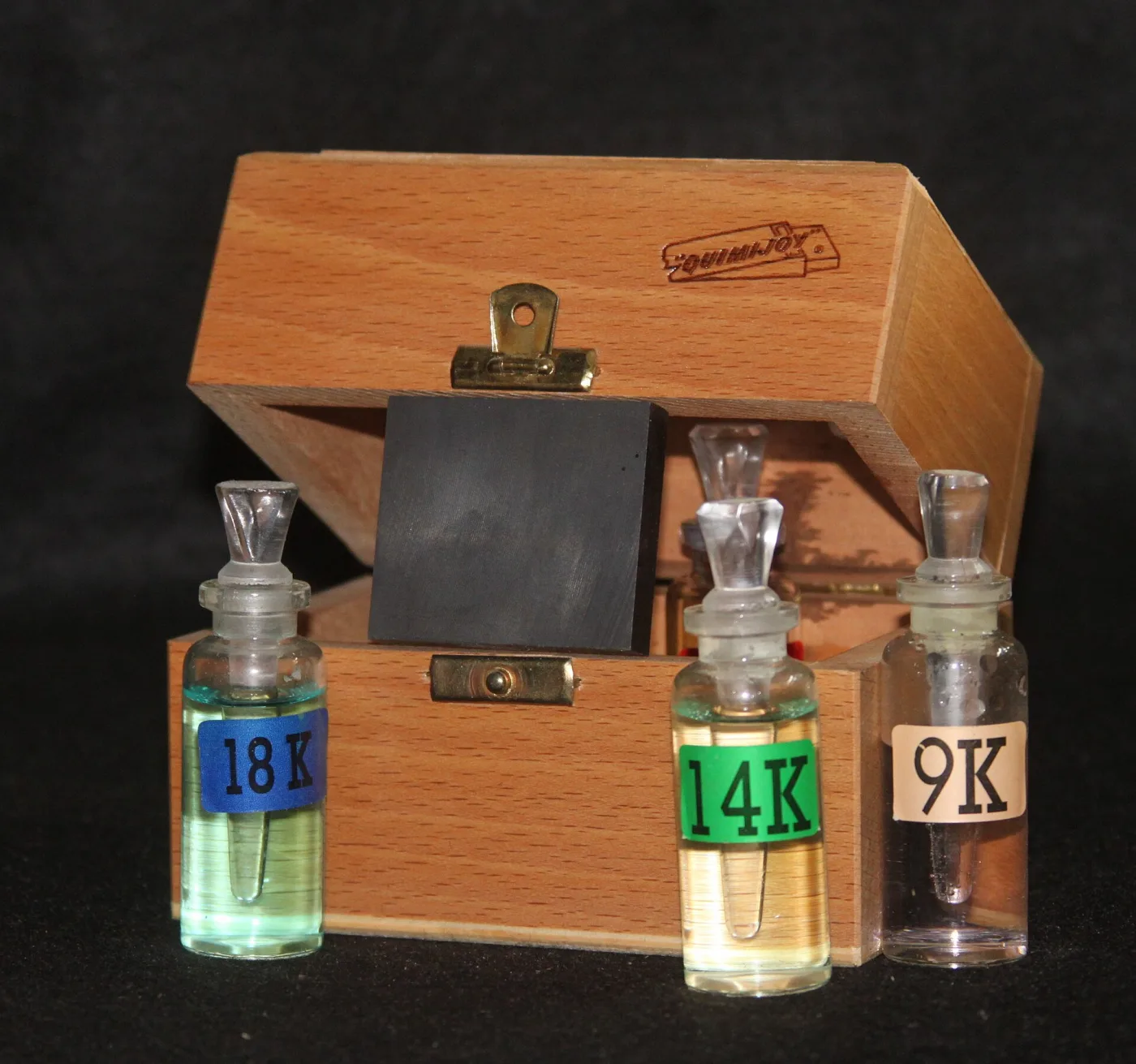
Step 3: Touchstone and Acid
This is the oldest test and still the standard one at the jeweller’s bench. It works because gold resists acid, and the purer the gold, the stronger the acid needed to dissolve it.
- Get beneath the surface. Make a small notch in a hidden spot, away from solder joints, so you test the metal rather than a plating or a solder seam.
- Streak it. Rub the piece on a smooth, fine-grained black touchstone to leave a thin line of metal.
- Add reference streaks. Beside it, rub testing needles of known karat. Each needle is tipped with gold of the karat stamped on its side.
- Apply acid. Measured strengths of nitric acid test 14 karat and below. Higher karats are separated with aqua regia, one part nitric acid to three parts hydrochloric.
- Compare. Watch which reference streaks dissolve alongside yours. In GIA’s worked example, 14K acid dissolved the 10K and 14K needle streaks while the unknown streak held, which puts the piece at 14 karat or slightly higher. Base metal reacts at once, foaming green under 18K acid.
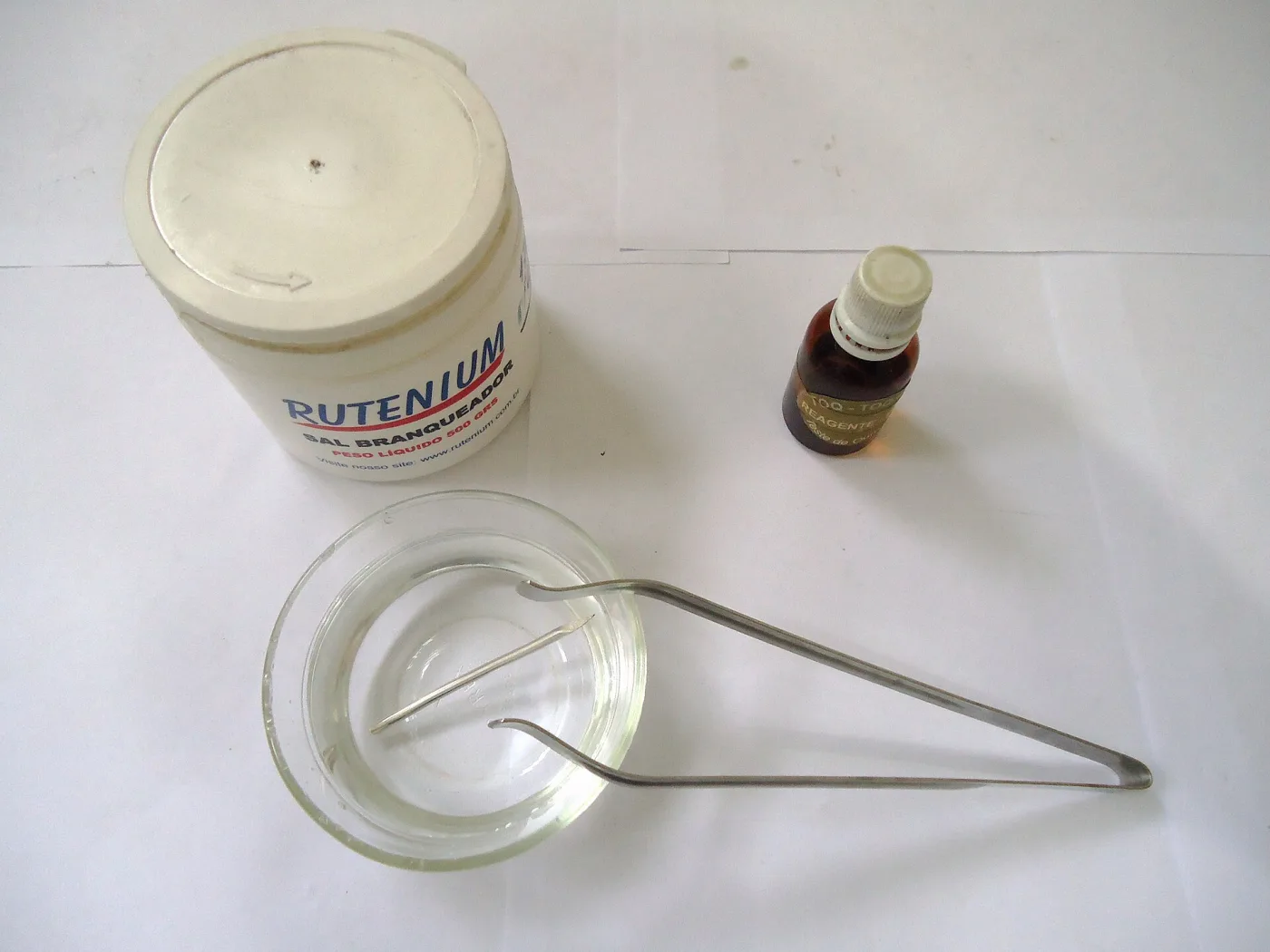

The acids are corrosive and the notch leaves a mark, so on a valuable antique this is a job for a jeweller, not a kitchen table.
Step 4: Specific Gravity
Gold is very dense, and every alloying metal lowers the density, so a piece’s specific gravity (SG) points to its karat without any acid. Weigh it in air, then suspended in water:
SG = weight in air ÷ (weight in air − weight in water)
| Alloy | Specific gravity |
|---|---|
| 24K | 19.36 |
| 22K | about 17.7–17.8 |
| 18K yellow | 15.58 (other alloys about 15.5) |
| 18K white | 14.64 |
| 14K yellow | 13.07 (published range 13.0–13.8) |
| 14K white | 12.61 |
| 10K yellow | 11.57 |
| 10K white | 11.07 |
| Sterling silver | 10.40 |
The published figures do not agree, and they cannot: 14K yellow appears as 13.07 in one supplier’s table and 13.8 in another’s, because each alloy recipe mixes silver, copper and zinc in different proportions. Read SG as a range. It separates 10K from 18K easily, but a 14K green gold (14.20) sits close to an 18K white (14.64).
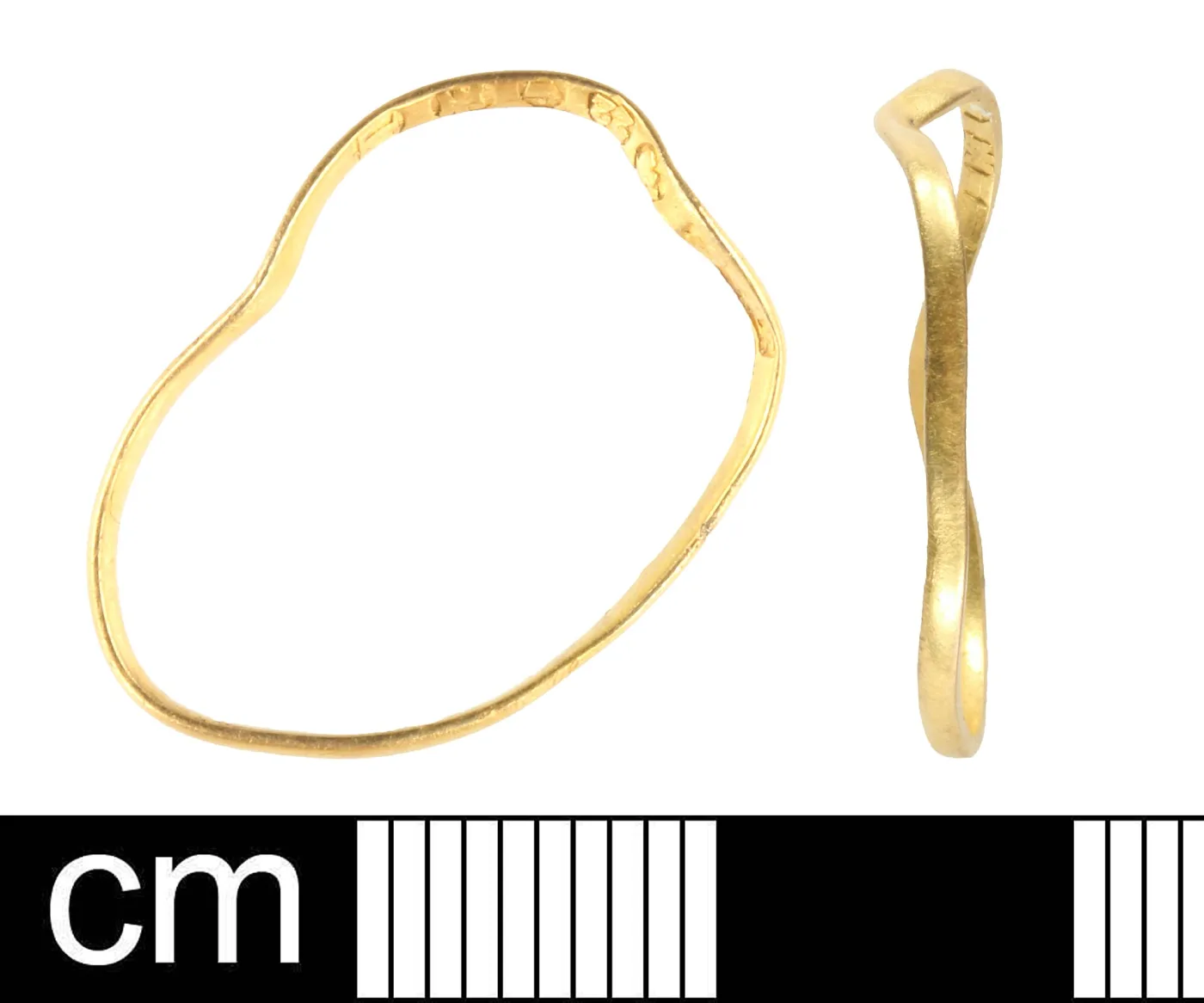

Gemstones, hollow construction, enamel and steel springs all change the result, so the method suits solid, unset pieces with some weight to them. It is the same check our 24k gold bar guide uses for bullion and our Platinum 950 vs. White Gold guide uses to separate white metals.
Step 5: XRF Analysis
An X-ray fluorescence analyzer reads the elements in the metal and reports a gold percentage in seconds without marking the piece. Many jewellers and buyers now use it in place of acid. Its limit is depth: a portable analyzer reads only about the top 10–15 microns. A thick gold plating over base metal can therefore read as solid gold. Higher-end instruments have a plating-detection mode, and the other answer is to file a fresh spot first, which gives up XRF’s main advantage.
Which Test Answers What
| Method | Tells you | Misses | Marks the piece? |
|---|---|---|---|
| Stamp | The claimed karat | Fakes, plating, replaced shanks | No |
| Magnet | Iron or steel is present | Everything non-magnetic | No |
| Touchstone and acid | Karat, to the nearest standard | Plating unless notched; solder | A small notch |
| Specific gravity | A karat range | Stones, hollow parts, light pieces | No |
| XRF | Gold % at the surface | Thick plating | No, unless filed |
Two tests that agree are worth far more than one. Once you know the karat, our guide to what 14K gold is worth shows how to turn it into a melt value.
Frequently Asked Questions
How can I tell what carat my gold is without a stamp?
Use a touchstone and acid test. A streak of the piece is rubbed on a black stone next to streaks from needles of known karat, and acid is applied to all of them. Whichever needles dissolve the same way as your streak tell you the karat. Specific gravity and XRF are the other two methods, and each has blind spots.
Is carat the same as karat for gold?
For gold purity, yes. Both mean parts of pure gold in 24, so 18 carat and 18 karat are the same alloy. Karat is the American spelling; British usage writes carat for gold too. The gemstone carat is a different unit, a weight of 200 milligrams.
Does a magnet test show what karat gold is?
No. Gold is not magnetic, so a strong pull tells you there is iron or steel in the piece, but no pull proves nothing: copper, brass and aluminium do not respond to a magnet either. A magnet can rule metal out; it can never give you a karat.
Identify Your Jewelry Piece Instantly
Unsure about a hallmark, gemstone cut, or metal stamp? Take a photo and get an instant AI analysis and appraisal.