Sterling Silver Ring Identification: Stamps, Marks & Tests
Identify Your Jewelry Piece Instantly
Unsure about a hallmark, gemstone cut, or metal stamp? Take a photo and get an instant AI analysis and appraisal.

💡 Key Takeaways (Quick Reference)
- Read the inside of the band first. On a ring, the marks sit on the inner surface of the shank, where they also wear fastest.
- 925, STERLING and STER all mean 92.5% silver. British rings may carry a lion passant and an assay office mark instead of, or beside, the number.
- Marks can lie. A plated base-metal ring can carry stamps that imitate a hallmark. Green corrosion is the giveaway.
- No mark does not mean no silver. Light rings can be legally exempt from hallmarking, and old marks wear away.
A ring is harder to read than a spoon or a teapot. Its marks are small, they are struck on the curved inside of the band, and every day of wear rubs at them. This guide covers what those marks mean, how fakes imitate them, and what to do when there is nothing to read. For the wider British system of town marks and date letters, see our British sterling silver hallmarks guide.
Step 1: Read the Inside of the Band
Hold the ring under a 10x loupe and tilt it against a light, so a shallow mark throws a shadow. Turn it slowly: marks are usually struck in a row on the inner surface, often near the back of the band.
| Mark inside the band | What it means | Silver content |
|---|---|---|
| 925 / STERLING / STER | Sterling standard | 92.5% |
| Lion passant (England), thistle or lion rampant (Scotland) | British sterling standard mark | 92.5% |
| 925 in a shaped surround | UK millesimal fineness mark, compulsory since 1999 | 92.5% |
| 900 / COIN | Coin silver | 90% |
| 800 / 835 | Continental European silver standards | 80% / 83.5% |
| Eagle with a number (Mexico) | Mexican silver, about 1948 to 1979–80 | read the fineness number beside it |
| EP / EPNS / NICKEL SILVER / GERMAN SILVER / ALPACA | Plate or base metal | none, or a surface only |
What the main marks tell you:
- 925 is sterling. Sterling silver is 92.5% silver, with the other 7.5% usually copper. In the US, a ring stamped sterling or sterling silver must meet that 925 standard by law, and coin silver must meet 900. The FTC Jewelry Guides add that an unqualified silver is misleading unless a fineness number such as 925 comes right before it.
- A US quality mark should have a maker’s mark beside it. US law requires a stamped fineness to be accompanied by the maker’s registered trademark or name. A modern American ring stamped 925 with no maker’s mark next to it deserves a second look.
- British marks follow a set pattern. Today’s UK hallmark has three compulsory parts: the sponsor’s (maker’s) mark, the fineness mark (925 for sterling) and the assay office mark, such as Birmingham’s anchor. The lion passant, the English sterling mark since 1544, and the date letter became optional in 1999. Before that, the date letter was compulsory. Scotland used its own standard marks: a thistle at Edinburgh and a lion rampant at Glasgow.
- Mexican marks changed around 1980. From 1948 to about 1979–80, Mexican silver carried an eagle with a number. The number identified a workshop or a city, not always one silversmith. After that came letter-and-number codes, where the first letter is the town: in TS-24, T stands for Taxco.
The rest of the table, the 800 and 835 continental standards and the plate marks, gets its own section below.

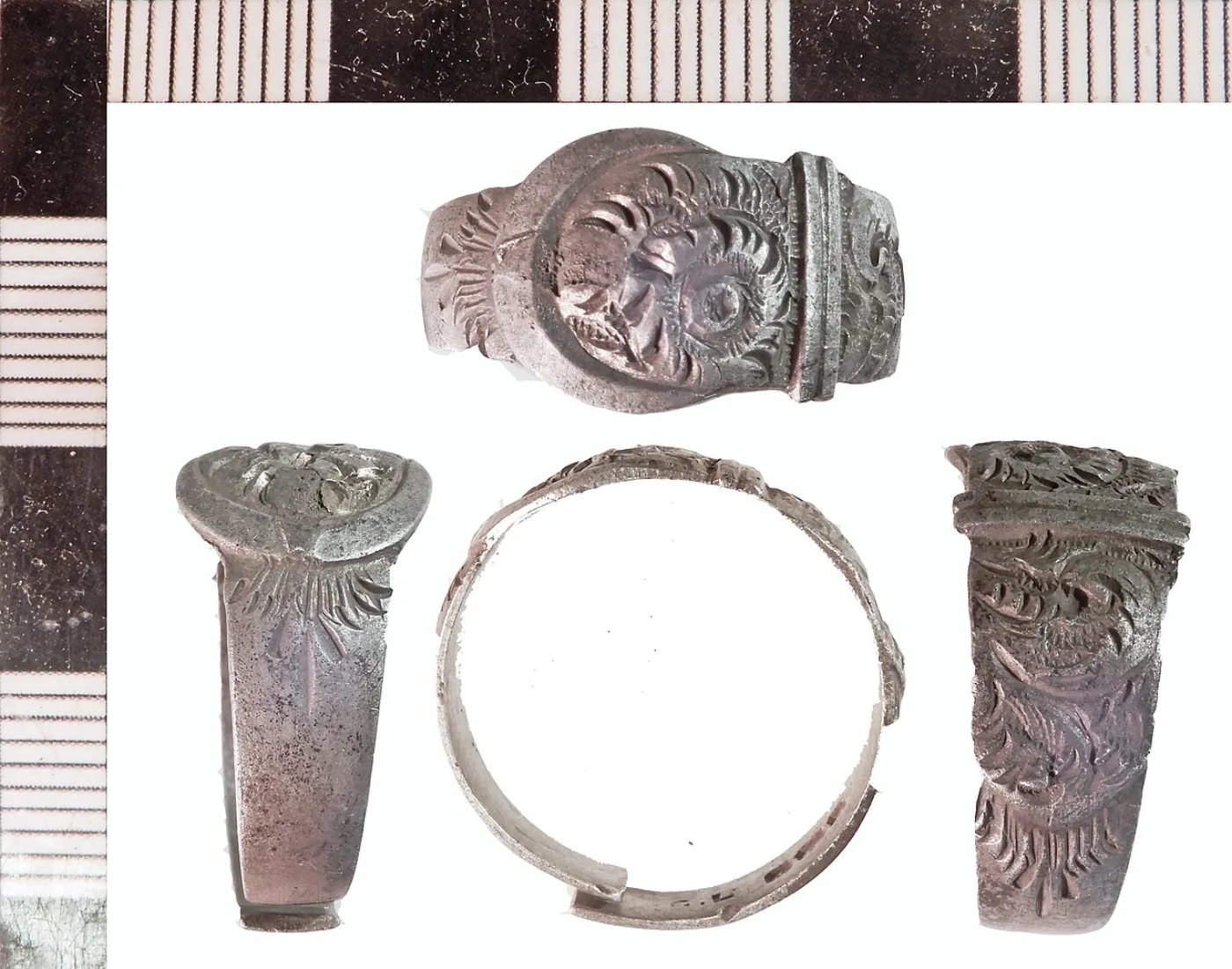
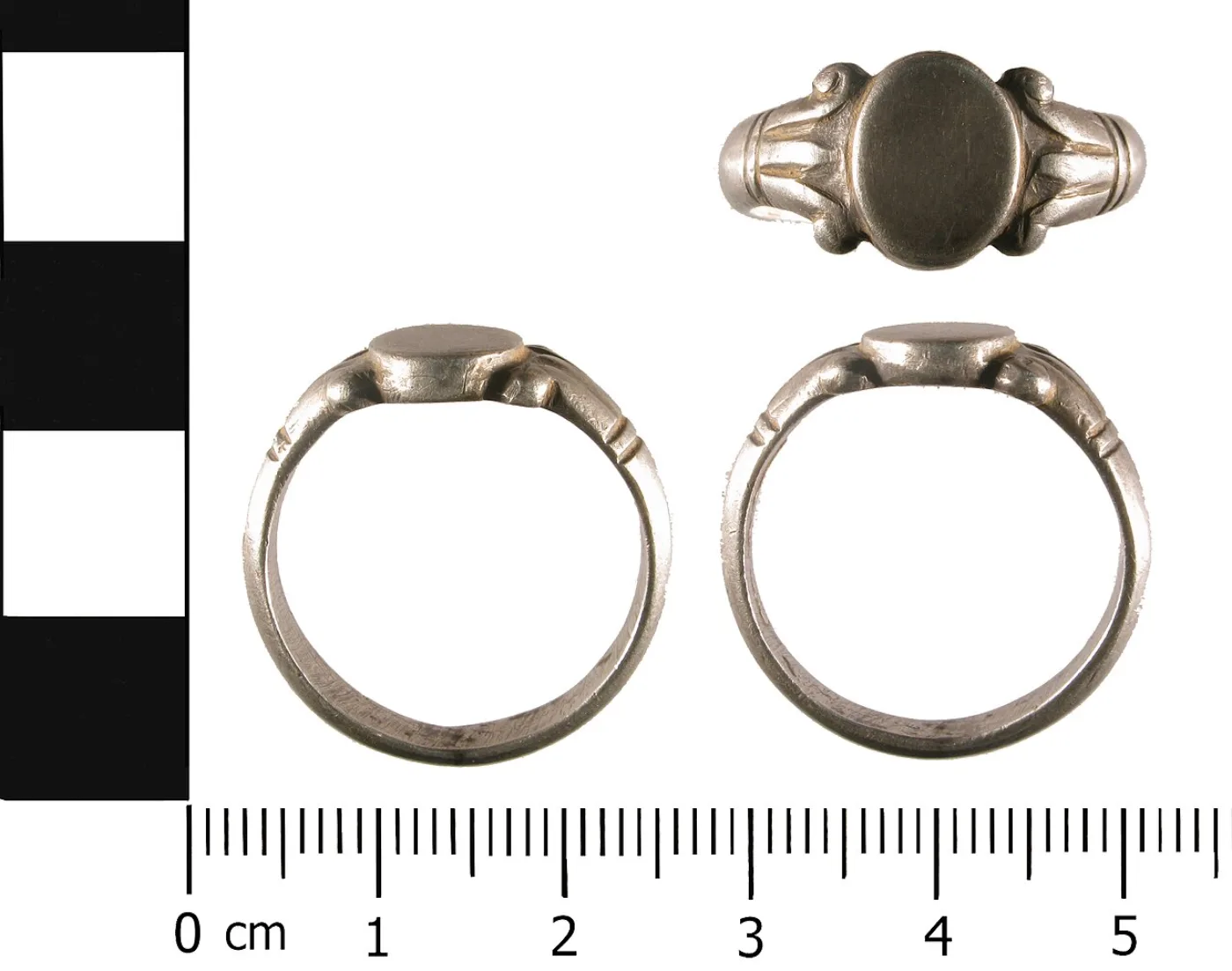
The hero ring at the top of this page shows what a legible British set looks like. The Portable Antiquities Scheme records the maker’s initials G L and three marks in rectangular panels: Birmingham’s anchor, a lion walking left (the lion passant), and the date letter g, which the record dates to 1906. That is the order to read: who made it, what standard it is, where it was tested, and when.
Step 2: Check That the Marks Mean Something
A row of small stamps is not proof of silver. Some makers of plated jewellery struck marks that look like a hallmark at a glance.
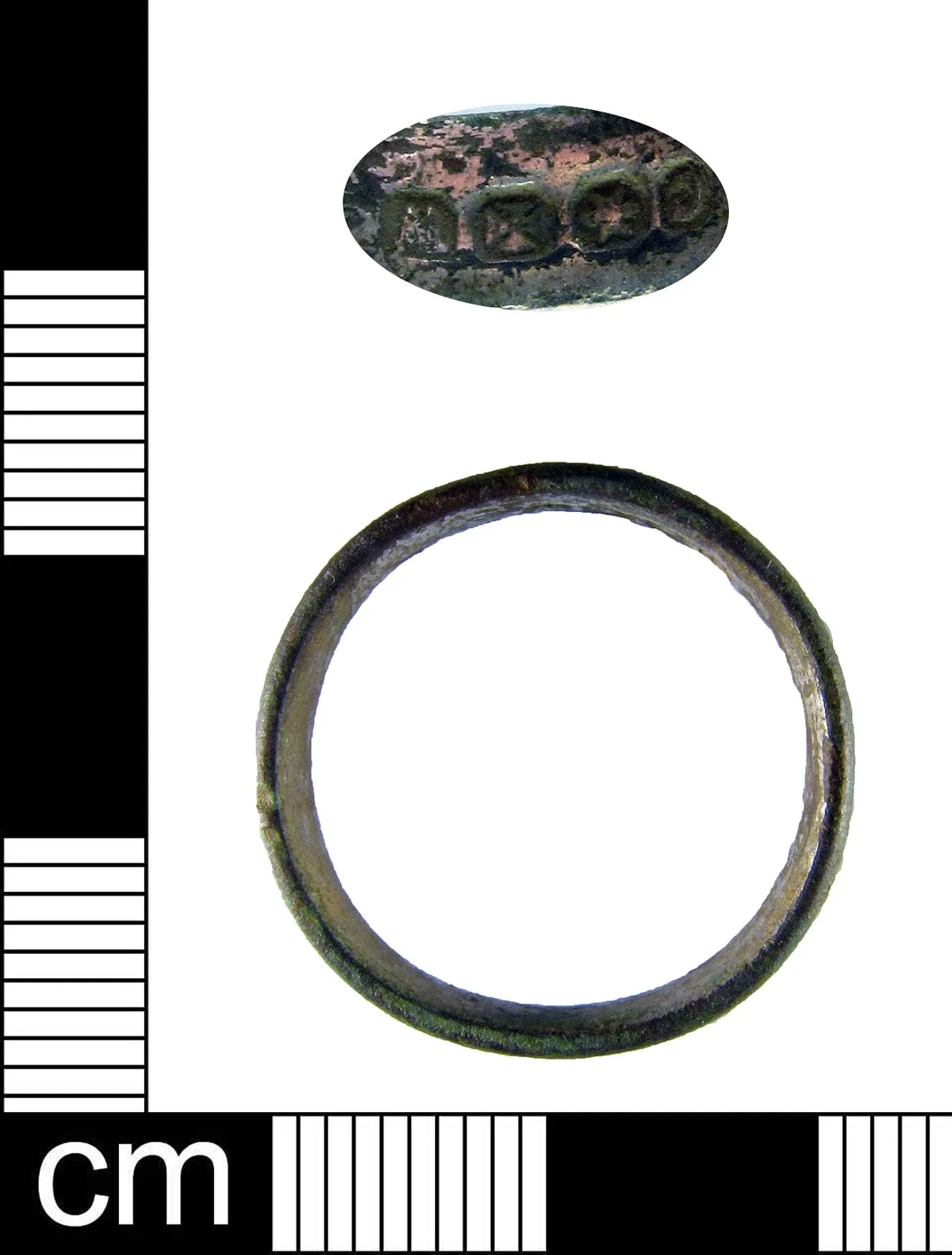

Two checks catch most fakes:
- Does each mark belong to a real system? A British ring should show a recognisable assay office mark and a standard mark. Random letters, stars and crosses mean nothing.
- What colour is the corrosion? Silver tarnishes to a grey-black silver sulfide; on sterling the tarnish also contains copper sulfide, which is dark too. Bright green crusts are copper corrosion. Green on a “silver” ring usually means base metal showing through worn plating.
Watch for the words too. Nickel silver, sold as German silver or alpaca, contains no silver at all: it is a copper, nickel and zinc alloy. EPNS, electroplated nickel silver, is that alloy with a thin skin of real silver on top.
Step 3: Read Wear, Not Just Marks
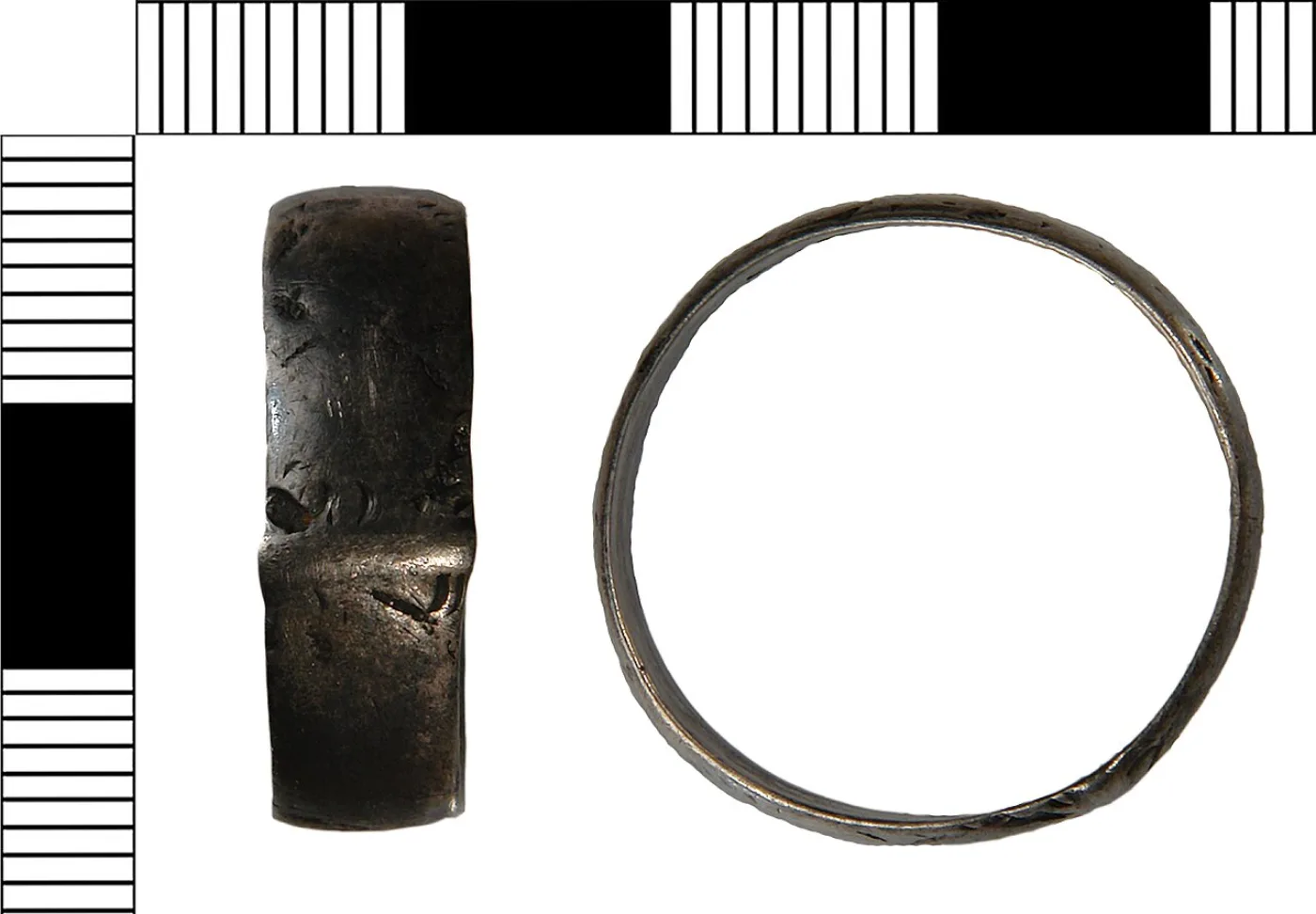
Marks on a ring wear faster than marks anywhere else, because the inside of the band rubs against skin all day.
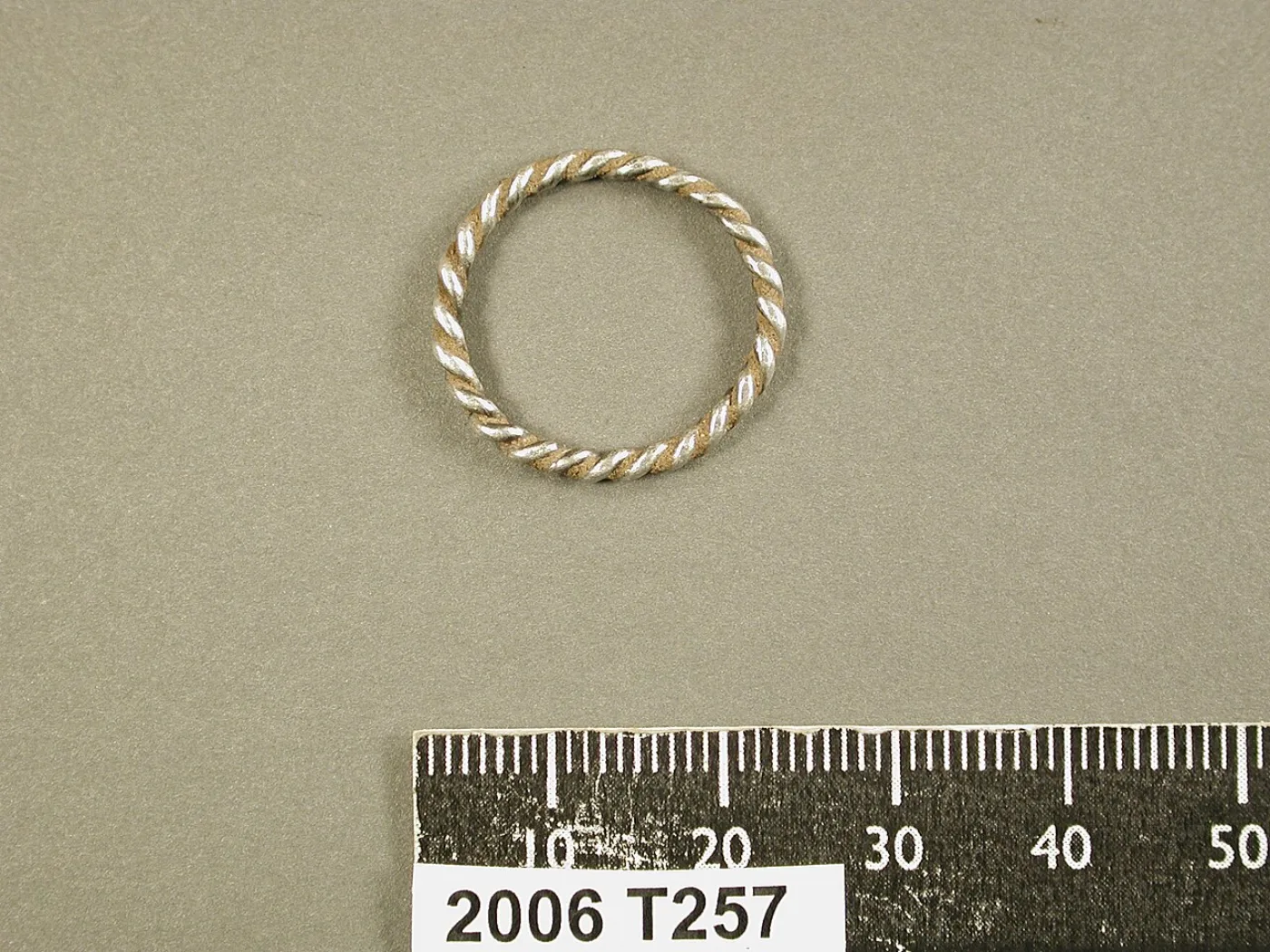

Surface wear tells you something too. On solid silver, wear polishes the high points bright while the recesses stay dark with tarnish. On a plated ring, wear exposes a different metal underneath.

Step 4: When There Is No Mark
An unmarked ring is common, and it is not proof of base metal.
- Light rings can be exempt. Under the UK Hallmarking Act, a silver article whose total metal weight is under 7.78 grams, base metals included, does not have to be hallmarked. The silver must still be of at least the minimum fineness, and the exemption does not apply if the piece also contains gold, platinum or palladium.
- Marks wear away. As Step 3 shows, daily wear inside a band can leave a mark too faint to read.

Without a mark, test the metal:
- Magnet. Silver is not magnetic. A ring that is pulled firmly to a strong magnet has iron or steel in it. No pull proves nothing, because copper and brass are not magnetic either.
- Colour of the tarnish. As in Step 2: grey-black points to silver, green to copper.
- A professional test. An acid test on a hidden spot, or a jeweller’s XRF reading, settles the fineness.
Once the ring is confirmed as sterling, our guide to what sterling silver is worth turns its weight into a melt value. If the ring is gold-toned instead, the marks inside the band read differently: see our gold cameo ring guide for gold-filled and plated marks.
Frequently Asked Questions
Does every sterling silver ring have a 925 stamp?
No. In the UK, a silver article whose total metal weight is under 7.78 grams is exempt from compulsory hallmarking, and many rings weigh less than that. Wear also erases marks: a mark inside a ring band rubs against the finger every day. An unmarked ring needs a test, not a verdict.
What does 925 mean on a ring?
925 means 925 parts per thousand of silver, or 92.5%, which is the sterling standard. The other 7.5% is usually copper. In the US, a ring stamped sterling must meet the same 925 standard.
Is German silver or EPNS real silver?
No. Nickel silver, also sold as German silver or alpaca, is an alloy of copper, nickel and zinc with no silver in it. EPNS means electroplated nickel silver: a thin silver plating over that alloy.
Identify Your Jewelry Piece Instantly
Unsure about a hallmark, gemstone cut, or metal stamp? Take a photo and get an instant AI analysis and appraisal.