Gold Cameo Ring Identification: Gold, Shell or Stone?
Identify Your Jewelry Piece Instantly
Unsure about a hallmark, gemstone cut, or metal stamp? Take a photo and get an instant AI analysis and appraisal.

💡 Key Takeaways (Quick Reference)
- Two questions, two answers: a gold-toned cameo ring can be solid gold, gold filled, rolled gold or plated, and the cameo can be shell, stone, glass or resin. Settle the metal first.
- The fraction is the tell:
14Kalone is solid gold;1/20 12K GFis about 2.5% gold by weight;HGEis a plated surface.- A US quality mark needs a trademark stamped next to it.
- Then the cameo: a curved back and warm translucency point to shell; a flat, polished back points to hardstone; seam lines and bubbles point to resin.
A cameo ring raises the same question as a cameo brooch, what the carving is made of, plus one the brooch rarely does: whether the gold-coloured band is gold at all. Gold filled, rolled gold and electroplated bands all look like gold from across a room. Read the metal first, because it is usually marked, then the cameo, which is not.
Step 1: Read the Inside of the Shank
Turn the ring and read the inside of the band under a 10x loupe, tilting it against a light so that a shallow or worn mark throws a shadow. Our gold purity stamps guide lists the general abbreviations. The table below adds the gold content each mark implies, which is the number that matters when a ring is offered as “gold”.
| Mark inside the shank | What it means | Gold by weight |
|---|---|---|
| 18K / 750 | Solid 18-karat gold | 75% |
| 14K / 585 | Solid 14-karat gold | 58.5% |
| 10K / 417 | Solid 10-karat gold, the lowest US gold standard | 41.7% |
| 9ct / 375 | Solid 9-carat gold, a British standard since 1854 | 37.5% |
| 1/10 14K GF | Gold filled: a 14K layer is one-tenth of the metal weight | about 5.8% |
| 1/20 12K GF | Gold filled: a 12K layer is one-twentieth of the metal weight | about 2.5% |
| 1/40 10K RGP | Rolled gold plate: less than 1/20, not less than 1/40 | about 1.0% |
| HGE | Heavy gold electroplate: at least 2.5 microns of gold | a surface only |
| GEP | Gold electroplate: at least 0.175 microns of gold | a surface only |
The fractions and thresholds come from the US jewelry trade’s reading of the FTC Guides, as published by the Jewelers Vigilance Committee and by the supplier Stuller. In US usage, a layer that meets the one-twentieth rule may be called gold filled (GF), gold overlay or rolled gold plate. Below one-twentieth, only “rolled gold plate” or “gold overlay” with the fraction is allowed. The bonded gold must be at least 10 karat.
Two details narrow it further:
- A US quality mark should have a trademark beside it. American law does not require a karat stamp at all, but a maker who stamps one must stamp a registered trademark close to it. A modern US ring stamped
14Kwith no maker’s mark beside it deserves a second look. The sources disagree on when this rule was added (1961 or 1981), so it is no help in dating a ring. - British carat marks date a window. 9, 12 and 15 carat became legal in Britain in 1854, and in 1932 the 12 and 15 carat standards were replaced by 14 carat. A British-hallmarked
15or12therefore points to a ring assayed between 1854 and 1932. One encyclopedia site dates 15 carat to 1798; the hallmark histories from Berganza and Parkin & Gerrish both say 1854, and this guide follows them.
An unmarked band is not proof of base metal, because older and repaired rings often lose their marks. Our guide to identifying gold karat without a stamp covers the acid, touchstone and specific-gravity tests that settle it. On a gold-filled or plated band, look for a different-coloured metal showing through where the gold layer has worn.
Step 2: Identify What the Cameo Is Made Of
Once the metal is settled, read the cameo. The same four materials turn up in rings as in brooches, but a ring often hides the back in a closed bezel, so check what you can see from the front first.
| Material | Back | Against a light | Surface and carving |
|---|---|---|---|
| Shell (helmet or queen conch) | Curved, following the shell | Warm translucency in thin areas | Soft; high points wear smooth |
| Hardstone (agate, onyx, sardonyx, chalcedony) | Flat and polished | Varies with the stone | Crisp edges; sharp colour layers |
| Glass | Flat; often moulded | Varies | Even, glassy surface; no tool marks |
| Resin or plastic | Flat, often with a seam line | Uniform throughout | Rounded edges, possible air bubbles |
Two guides, from the antiques dealer Mozeris and the appraisal service Appraisily, disagree on the direction of the shell curve (one says concave, the other convex). Both agree it is curved, never flat. So the test here is the curve itself. Both also describe moulded resin as having a flat back, seam lines and trapped bubbles.
Shell matters most in a ring, because a ring takes knocks a brooch never does. Shell is mostly aragonite, which the Museum of Fine Arts, Boston rates at about 3.5 to 4 on the Mohs scale. Agate and sardonyx sit at about 6.5 to 7. A shell cameo set in a ring is therefore the more vulnerable of the two, and the highest points of the relief are the first to soften.

Machine-cut agate
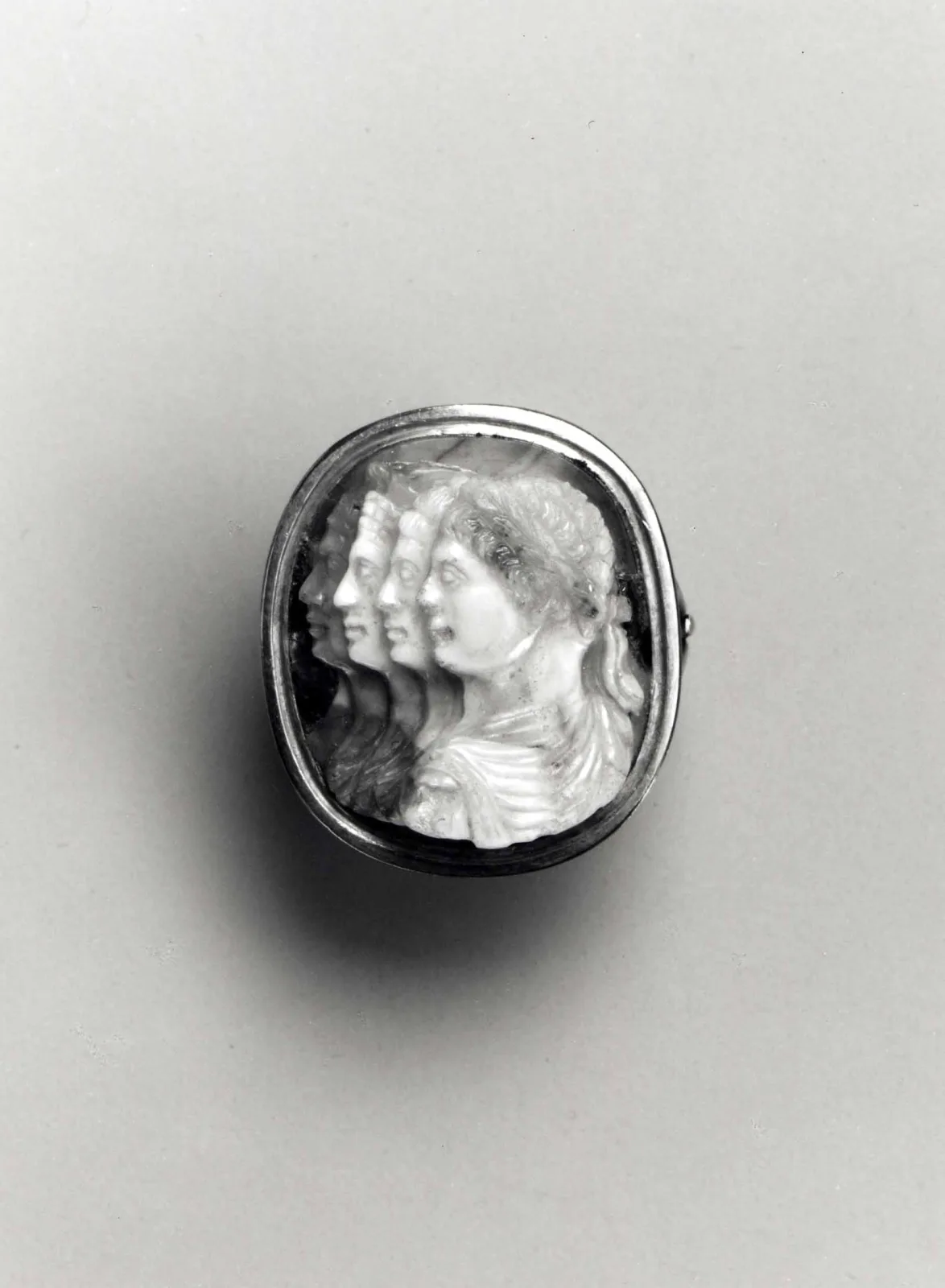
A hardstone cameo is not automatically old or hand-carved. Wikipedia’s account of the craft and the Italian cameo house Aucella both describe modern agate cameos as made mechanically, and Aucella notes that every agate cameo of one design is identical. Two rings with the same hardstone head, line for line, are production pieces. Our guide to dating a cameo by its face explains how to read the carving itself.
Step 3: Glass Is Older Than It Looks
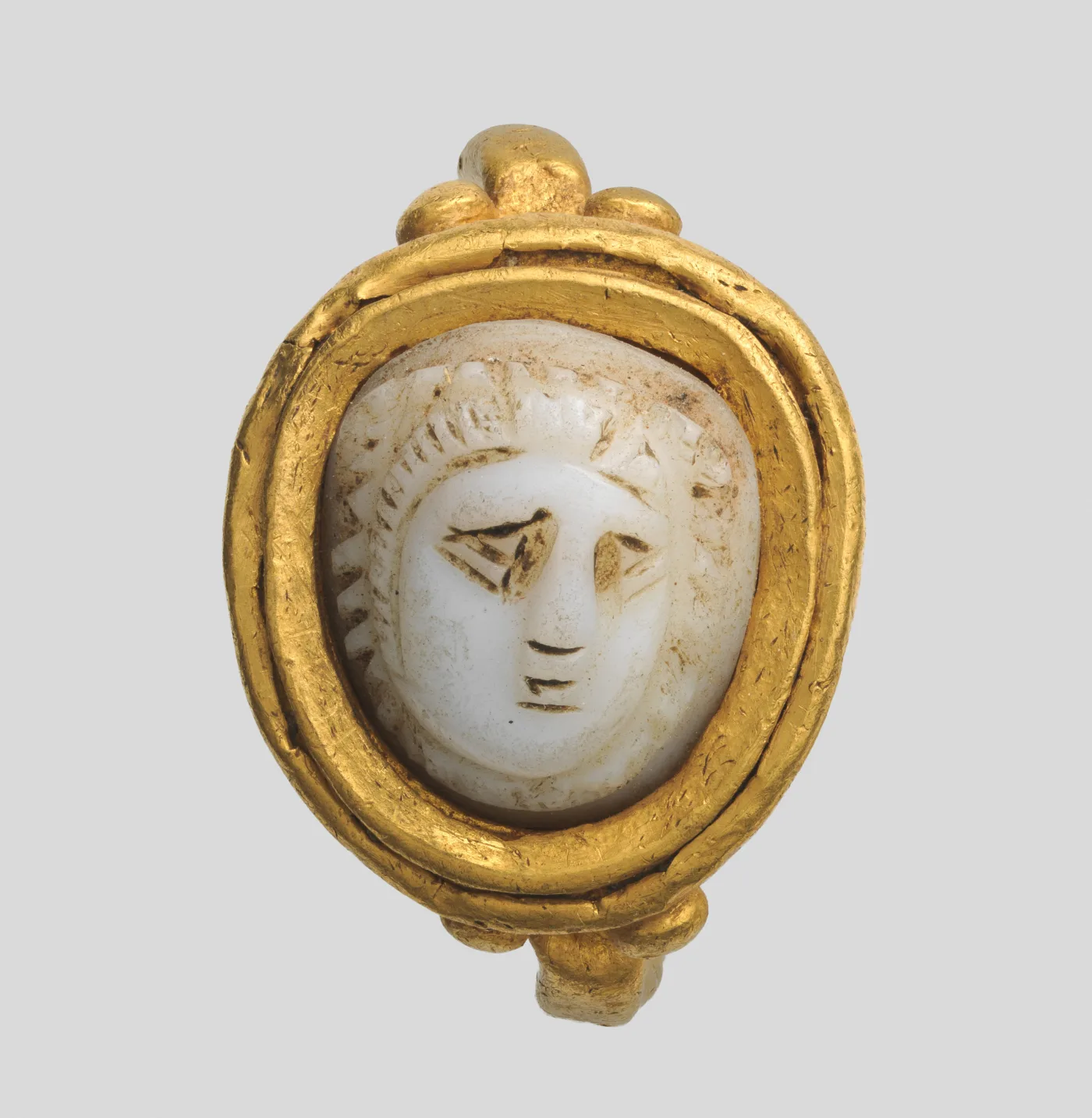
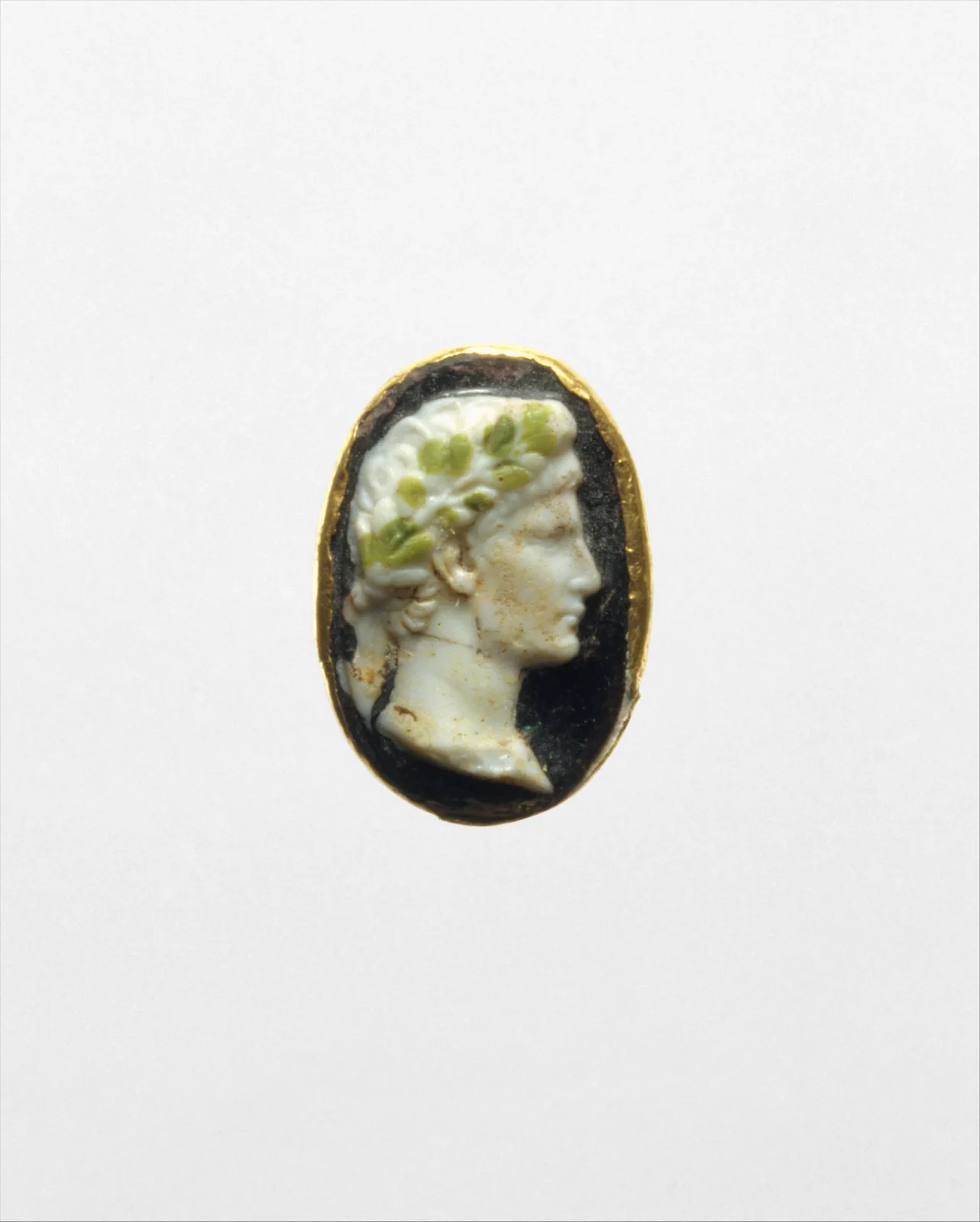
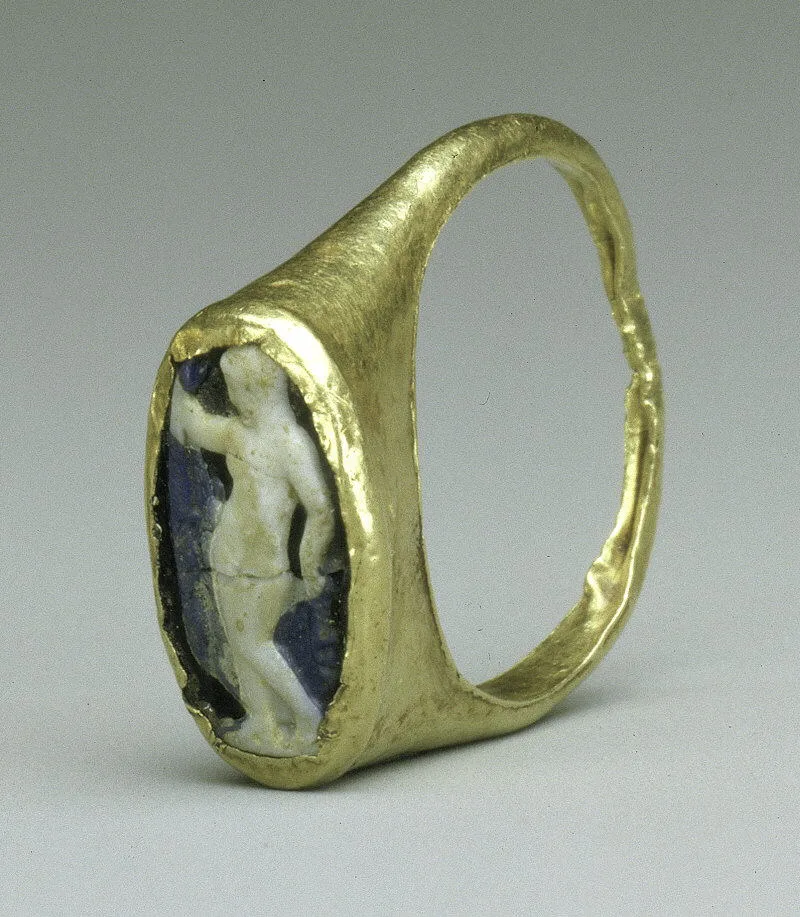
Glass is not only a modern shortcut. Layered cameo glass was set in gold rings in the Roman period, and two rings in the Metropolitan Museum show it: one with a portrait of Augustus, one with a standing figure. Moulded glass imitations of carved cameos exist as well, so on any glass cameo look for tool marks under the loupe. A moulded piece has none.
Step 4: Make the Mount and the Cameo Agree
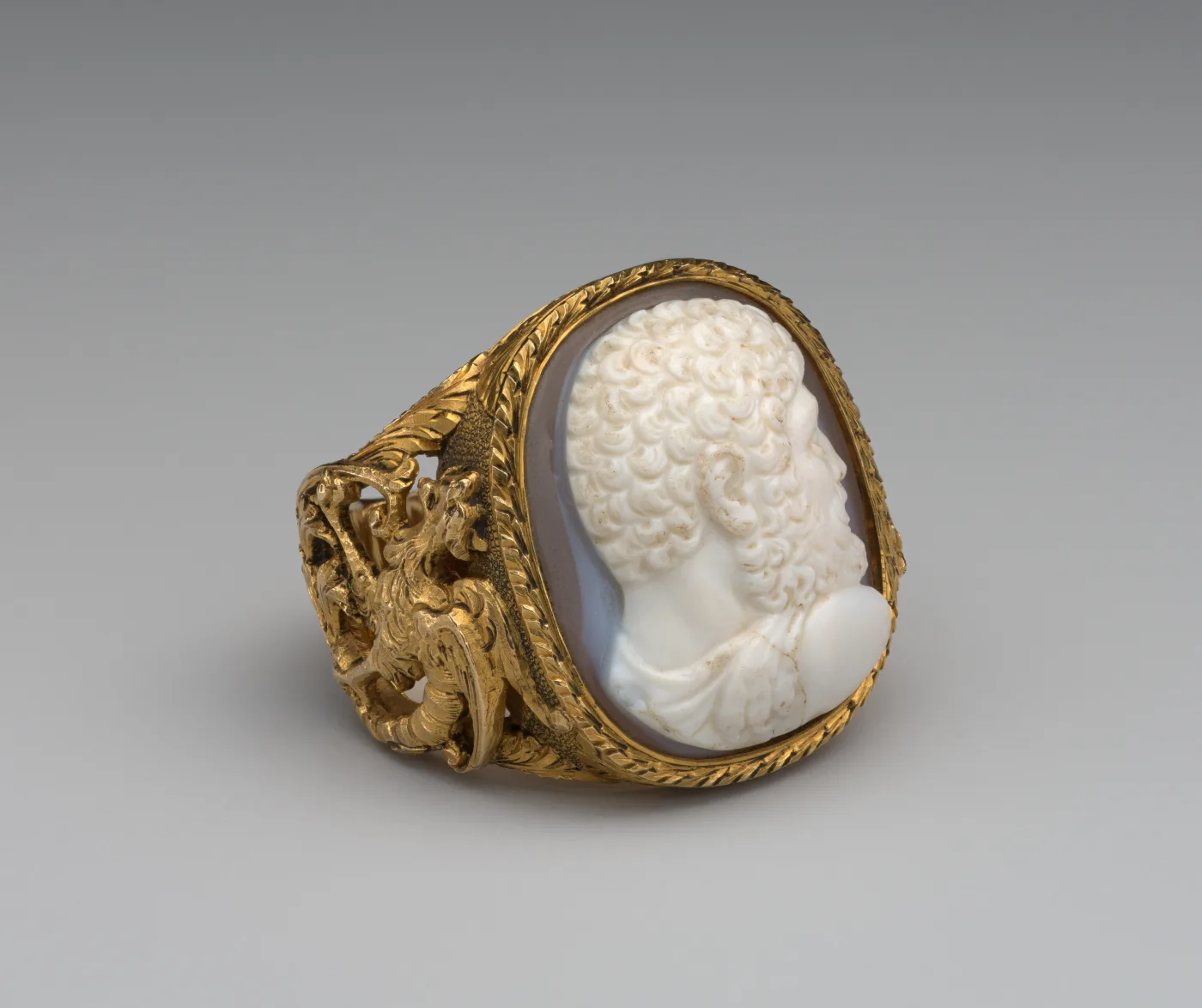
Cameos outlive their settings, and a ring is the setting most often remade. The hero ring above shows why the two have to be dated separately: the Metropolitan Museum dates its chalcedony Hercules to the late 18th century and gives no date at all for the 18k gold mount. So treat the cameo and the ring as two pieces of evidence:
- Metal: the shank stamp tells you what the band is and, for British marks, a date window.
- Cameo: the material and carving tell you what was set.
- Fit: a cameo that sits loose, has a filed edge, or doesn’t match its bezel may have been moved from another piece.
A solid-gold ring with a hand-carved hardstone cameo, and a gold-filled band with a moulded cameo, can look alike across a room. They are not alike under a loupe, and they are not worth the same. Before pricing, check the gold value of the band in our 14k gold value guide.
Frequently Asked Questions
How can I tell if a cameo ring is real gold or gold filled?
Read the inside of the shank with a 10x loupe. A karat mark alone (10K, 14K, 18K or 417, 585, 750) means solid gold. A fraction before the karat, such as 1/20 12K GF or 1/40 10K RGP, means a layer of gold bonded to base metal. GEP or HGE means electroplate. Gold filled must carry at least one-twentieth of its metal weight in gold of at least 10 karat.
What does 1/20 12K GF mean on a ring?
It means gold filled: a 12-karat gold layer that makes up one-twentieth of the ring's metal weight. Because 12 karat is half gold, the whole ring is only about 2.5% gold by weight.
How do you tell a shell cameo from a stone cameo in a ring?
Look at the back if the setting is open. Shell cameos follow the curve of the shell and let a warm light through thin areas. Hardstone cameos such as agate, onyx and sardonyx usually have a flat, polished back and crisper carving. Moulded resin shows a flat back, seam lines and sometimes tiny air bubbles.
Identify Your Jewelry Piece Instantly
Unsure about a hallmark, gemstone cut, or metal stamp? Take a photo and get an instant AI analysis and appraisal.