Vintage Cameo Brooch Identification: Dating the Face
💡 Key Takeaways (Quick Reference)
- Nose first: straight classical nose = earlier 19th century; slightly upturned = later Victorian; pert or pug nose = 20th century.
- Hair is fashion: carvers followed the hairstyles of their own day, so short or bobbed hair points to the 20th century.
- A real sitter dates differently: a commissioned portrait is dated by the sitter’s own clothes and hair, which no pattern-book face shares.
- Then check the back: the face gives you a range, and the pin, hinge and catch test it.
Most people trying to identify a vintage cameo brooch start with the material and the metal, and our antique cameo identification guide covers both: shell against hardstone, carving against moulding, gold stamps on the bezel. This guide covers the other half, the face itself. A cameo carver worked to a standard of beauty that kept changing, and that change is carved into the profile.
Step 1: Decide What Kind of Face It Is
Before reading the features, decide which of three kinds of face you are looking at, because each one is dated differently.
| Face type | What it looks like | How to date it |
|---|---|---|
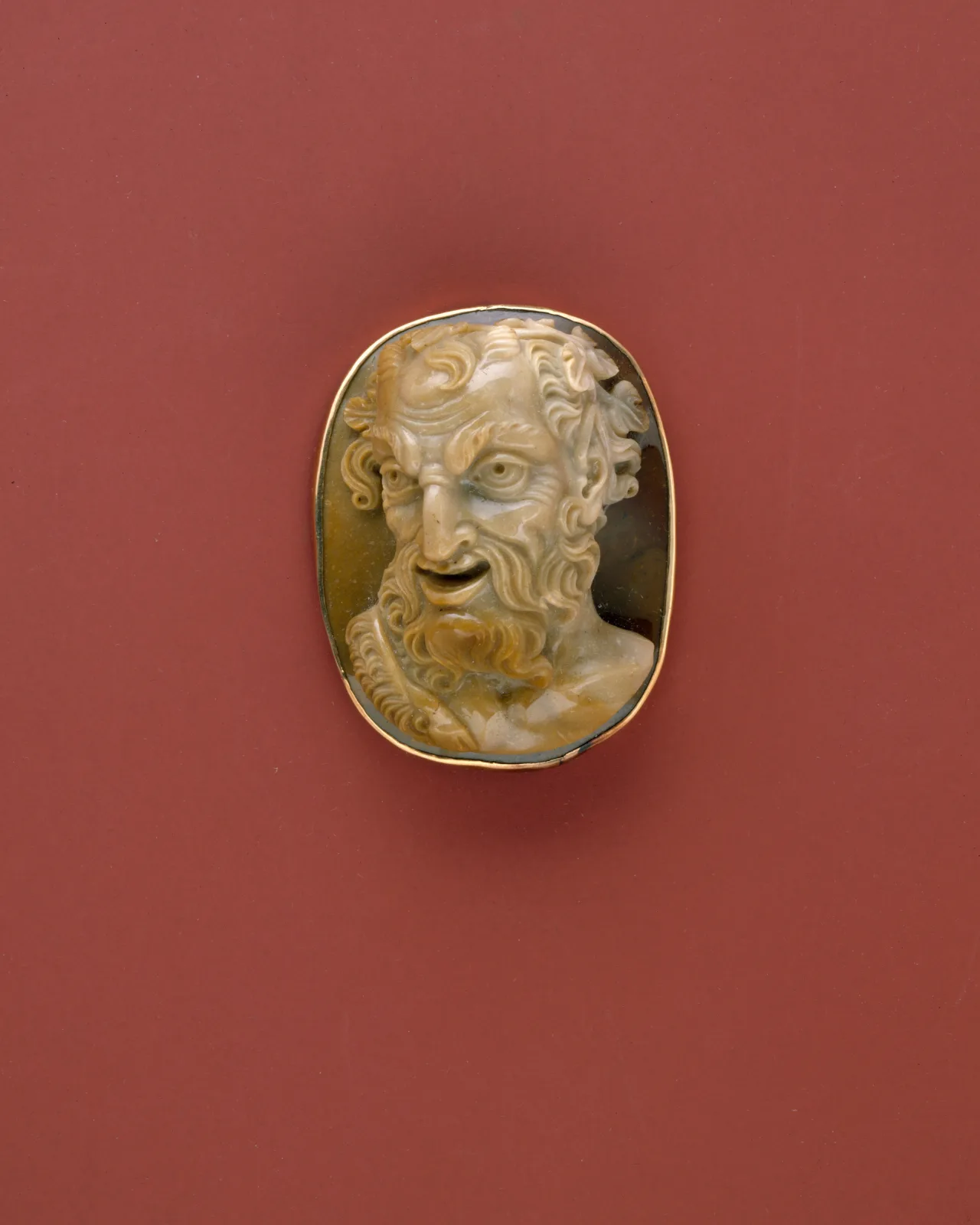
| Classical or mythological head | Gods, goddesses, Medusa, Bacchus, satyrs, heroes; idealised, often with wreaths or drapery | The dominant subject until the mid-Victorian period. Dated mostly by material and mount |
| “Ideal lady” | An anonymous woman in profile, the commonest cameo of all | Nose, hairstyle and dress follow the fashion of the carving date |
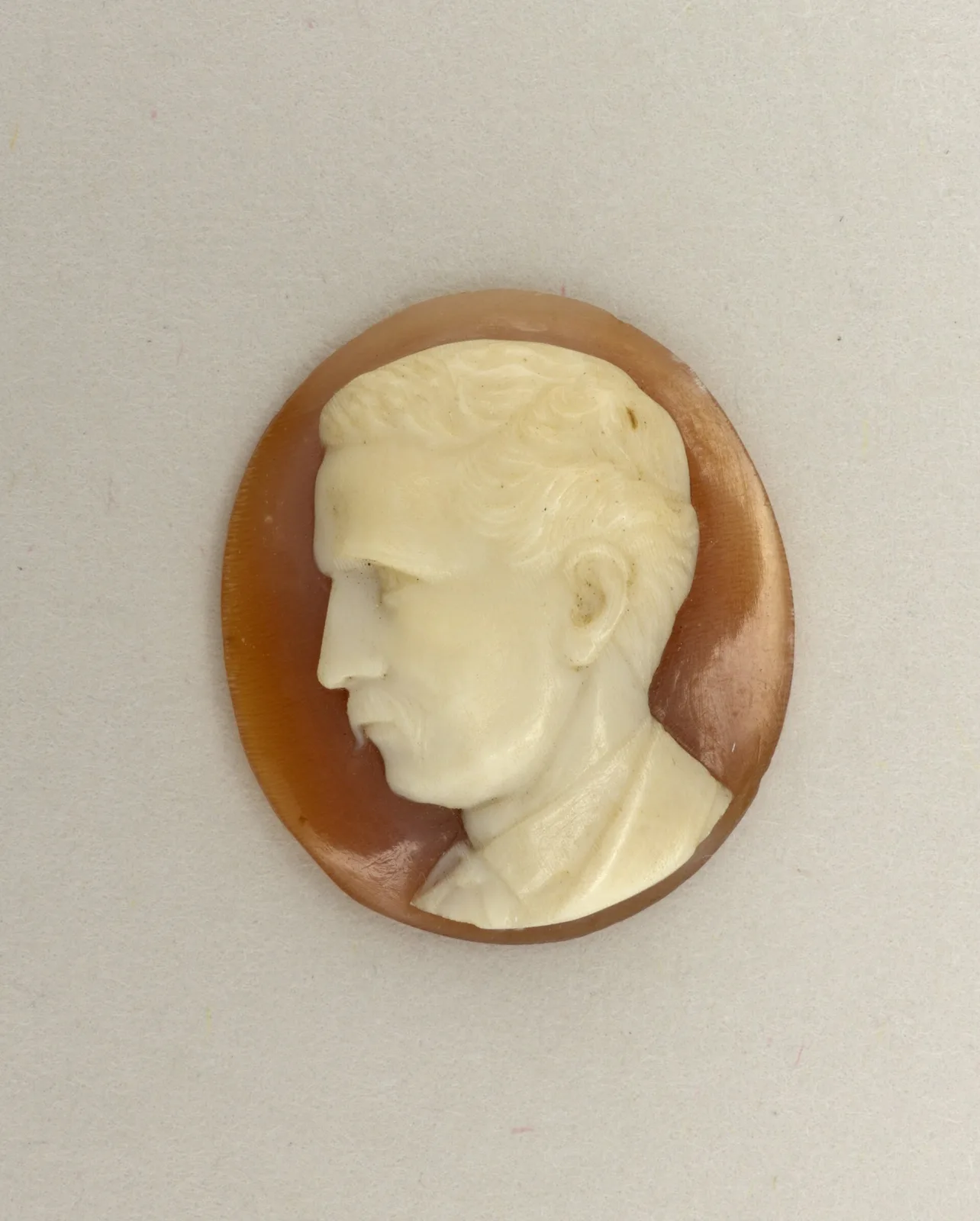
| Commissioned portrait | A particular person, with individual features, often a man or a child | Dated by the sitter’s own hair, whiskers and clothes, like a painted portrait |
Sources agree that mythological, religious and historical subjects dominated until the middle of the Victorian period, and that the anonymous woman in profile only became the standard subject after that. Men, children and full scenes are uncommon and are the ones collectors pay a premium for.
Step 2: Read the Ideal Face
For the anonymous lady, the nose is the most-cited clue. Five of the sources consulted for this guide describe the same progression:
| Feature | Earlier 19th century | Later Victorian | 20th century |
|---|---|---|---|
| Nose | Straight, classical “Roman” nose | Slightly upturned | Pert, sloped, turned up or pug |
| Hair | Classical | Following the fashion of the day | Short or bobbed hair appears |
| Real jewels (habillé) | Not found | Begin to appear | Continue |
One source presses the nose further, putting strong Roman noses before the 1860s and reading a very “cute” nose as recent work. No second source makes either claim, so treat them as leads rather than rules. The rule every source shares is the direction of travel: the older the cameo, the straighter the nose.
Step 3: Check for Real Jewels (the Habillé)
A cameo habillé, French for “dressed”, is a carved figure wearing real jewelry: usually a small diamond set as a necklace, with earrings, a tiara or a hair ornament in some examples.
The sources disagree on when it starts. Two agree that the style began in the later 19th century, and one of those then concludes that a diamond necklace means the piece was made after 1900. A third shows habillé brooches from the 1920s and the 1940s. The conclusion all three support is that a habillé cameo is late-Victorian or later, and that the diamond alone cannot say how much later. Do not print a year from it.
Diamonds around a cameo are a different thing. A diamond border belongs to the mount, not to the portrait, and it tells you about the setting, not the carving.
Step 4: A Real Sitter Is Dated Like a Portrait
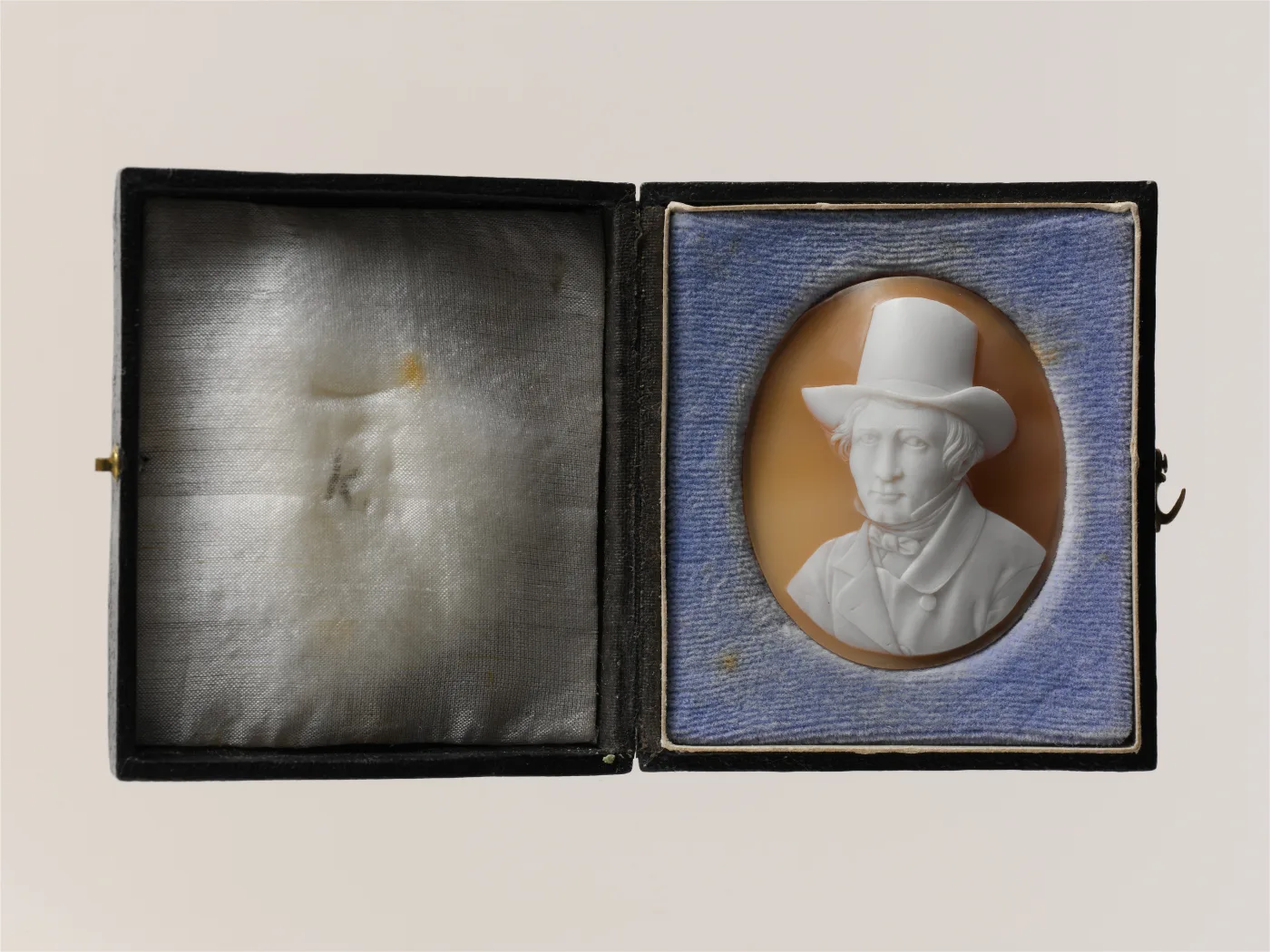
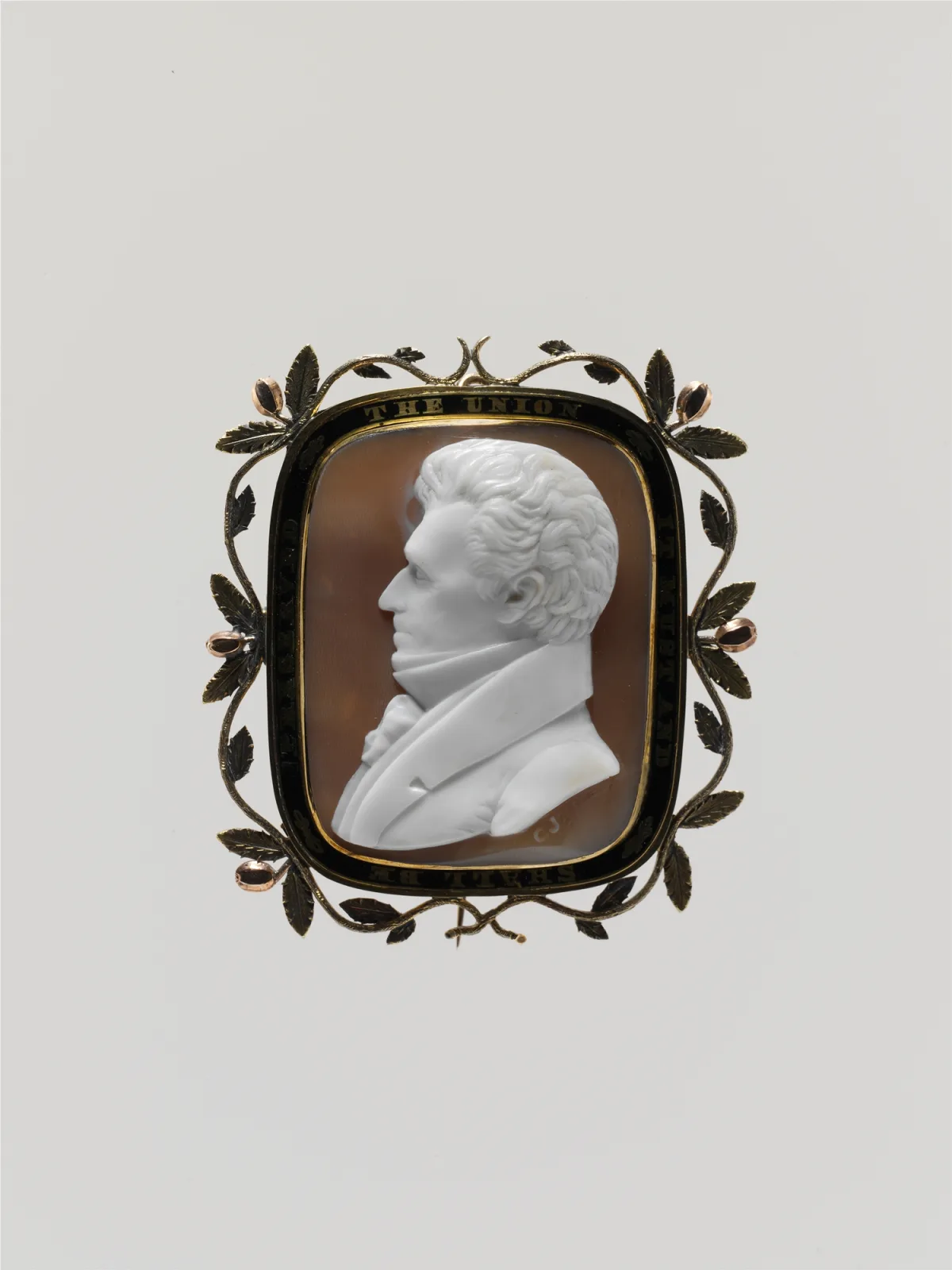
Commissioned portrait cameos are where the “nose rule” stops working, because the carver was copying one real face, not a fashionable ideal. Augustus Saint-Gaudens, later one of America’s best-known sculptors, was apprenticed in New York in 1861, at thirteen, to Louis Avet, a cutter of stone cameos. From 1864 he worked for the shell-cameo cutter Jules Le Brethon. The two Tuffs portraits in this guide are his.
,_late_19th_century_(CH_18382693).jpg)
The historical-costume trap
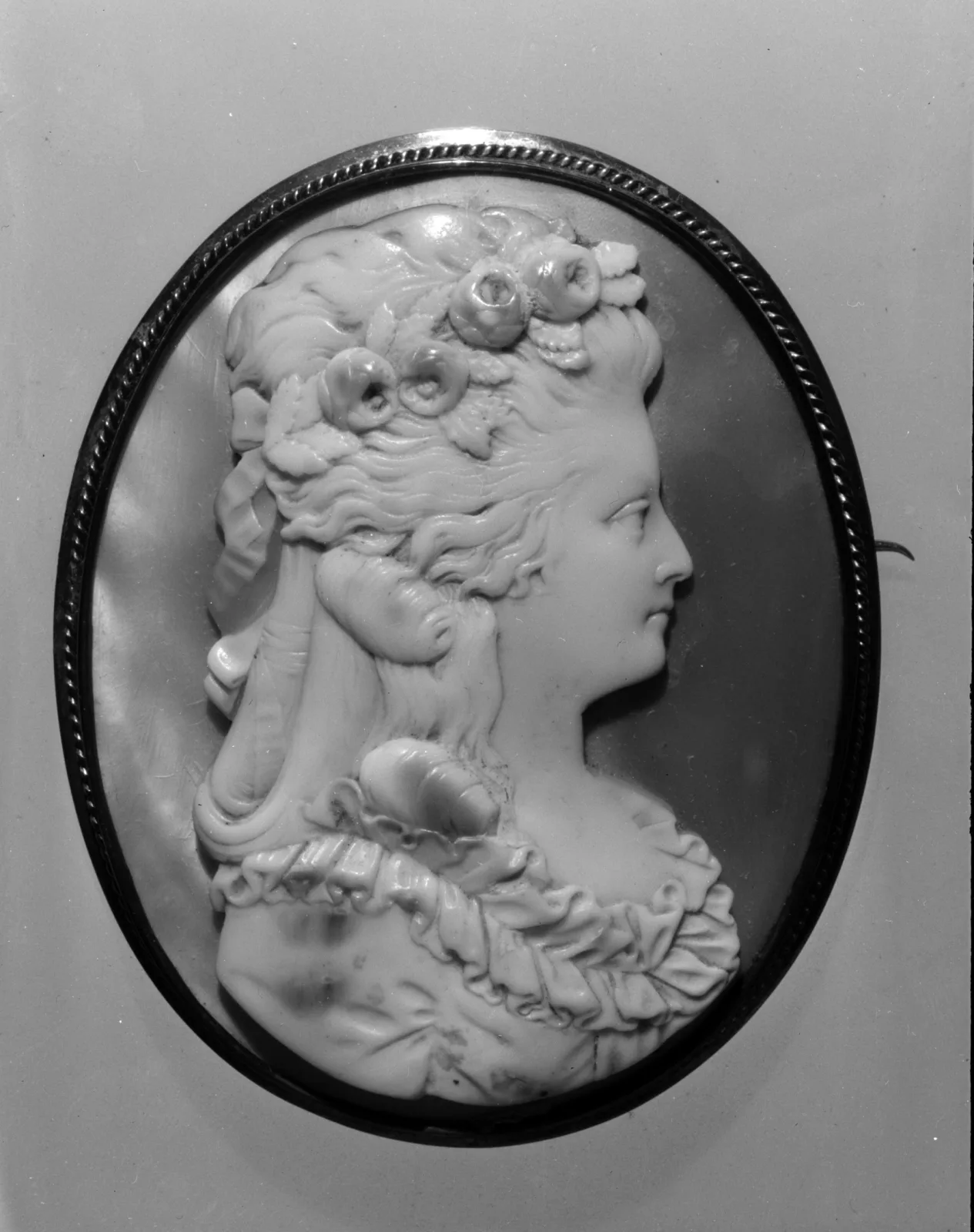
A portrait of someone from the past wears the costume of the sitter’s lifetime, not the carver’s. The Met’s cameo of Martha Washington shows 18th-century dress and hair, yet the museum dates the carving 1830–70. Whenever the face is a famous historical figure, date the object from its material, its mount and its back, never from the costume.
Step 5: Which Way Does It Face?
Most cameo heads face right. Left-facing heads are next, and forward-facing heads, like John Tuffs above, are the least common. That order affects rarity and price, but none of the sources ties direction to a period, so it is a value clue and not a dating one.
Step 6: Make the Back Agree With the Front
A reading of the face gives a range, not a year. Test it on the reverse:
- Findings: a C-catch with a pin that projects past the edge supports a 19th-century reading. Safety catches point later. The patent and adoption years are in our brooch pin, hinge and catch dating guide.
- Metal: check the mount’s stamps with our gold karat and purity stamp guide.
- Material: a pert-nosed lady in moulded plastic is consistent with the post-war period, when plastic cameos became common. A “Georgian” face in plastic is not.
When the face, the findings and the metal agree, you have a date range you can defend. When they conflict, the mount was probably replaced, or the carving copies an earlier style. Either one is worth knowing before you have the piece appraised.
Frequently Asked Questions
How can you tell how old a cameo brooch is from the face?
Look at the nose first. A straight, classical Roman nose is typical of the earlier 19th century, a slightly upturned nose of later Victorian work, and a pert, turned-up or pug nose of 20th-century cameos. Short or bobbed hair also points to the 20th century. Confirm the reading against the pin, hinge and catch on the back.
What is a cameo habillé?
Habillé is French for dressed: the carved figure wears real jewelry, usually a small diamond set as a necklace, earring or hair ornament. The style began in the late 19th century and was still made in the 1920s and 1940s, so it rules out an early-Victorian date without fixing an exact one.
Are left-facing cameos rarer?
Yes. Most cameo profiles face right, left-facing ones are the next most common, and forward-facing heads are the least common. Direction affects rarity and price, but it is not a dating clue on its own.
Identify Your Jewelry Piece Instantly
Unsure about a hallmark, gemstone cut, or metal stamp? Take a photo and get an instant AI analysis and appraisal.