Victorian Mourning Jewelry & Whitby Jet Identification Guide
💡 Key Takeaways (Quick Reference)
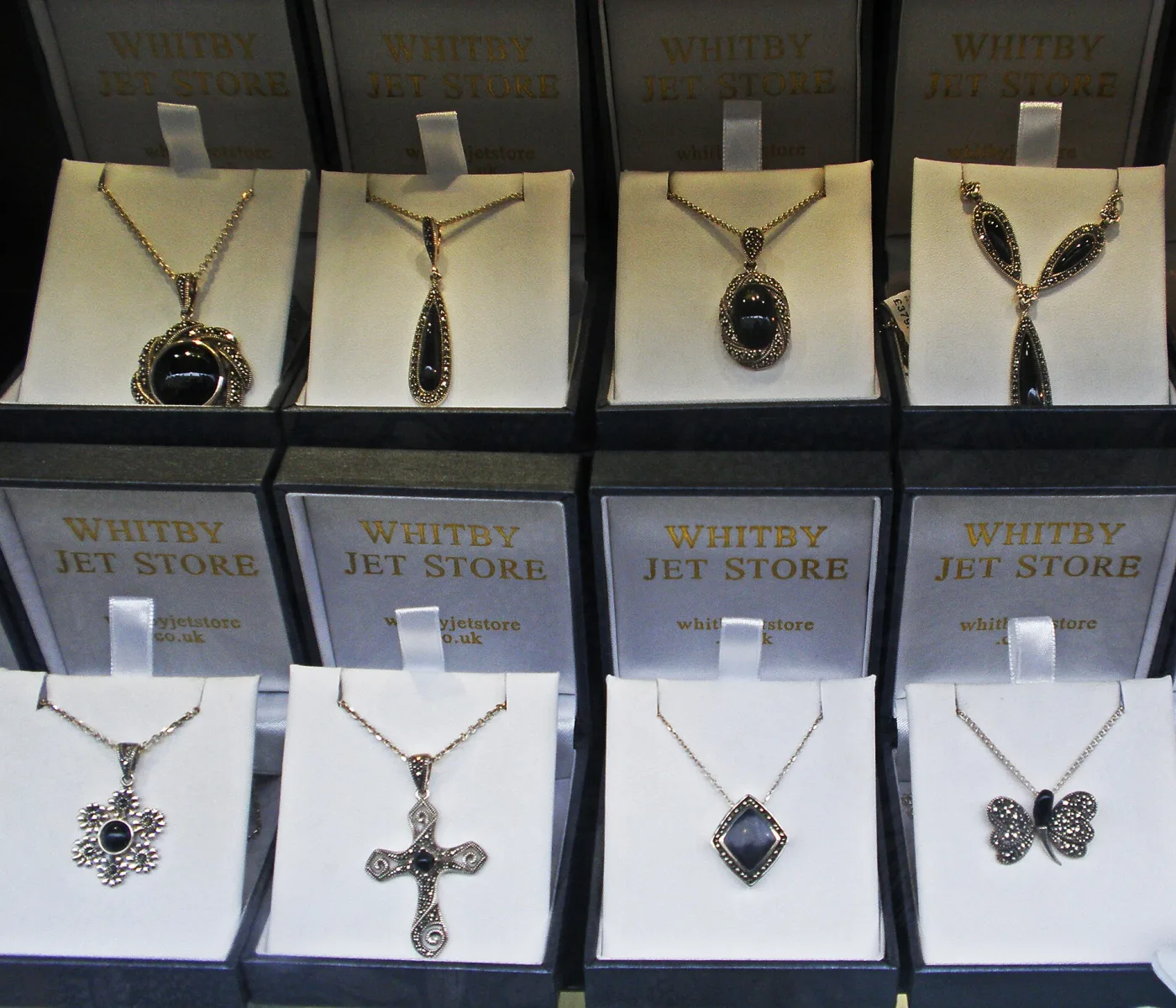
- Whitby Jet: Fossilized wood. Lightweight, warm to touch, leaves a chocolate-brown streak on unglazed porcelain.
- French Jet: Black glass. Heavy, cold to touch, chips like glass with sharp conchoidal edges.
- Vulcanite: Vulcanized rubber. Molded (not carved), discolors over time to dark brown, emits a sulfur rubber smell when rubbed.
- Bezel Gold Marks: Authentic Victorian mourning brooches are often mounted in 9K gold or silver bezels. Check our Gold Hallmarks Guide and British Silver Guide.
Victorian mourning jewelry represents one of the most poignant and fascinating chapters in jewelry history. Following the death of Prince Albert in 1861, Queen Victoria entered perpetual mourning, wearing strict black attire and black jewelry for forty years. This royal precedent established strict social etiquette across Britain and America for wearing mourning brooches, lockets, and antique carved cameos.
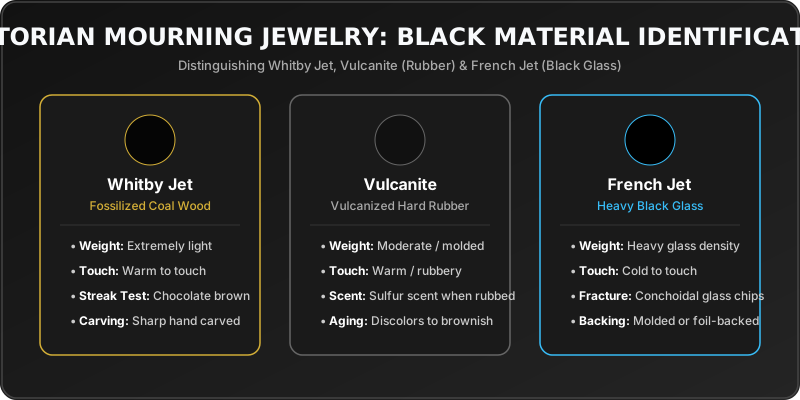
Identification Comparison: The 4 Key Black Materials
During the 19th century, artisans utilized several natural and synthetic materials to craft black mourning pieces. The matrix below outlines how appraisers differentiate genuine Whitby Jet from its Victorian imitations:

| Material | Physical Origin | Weight & Density | Thermal Sensation | Touchstone Streak Color | Key Identifying Mark |
|---|---|---|---|---|---|
| Whitby Jet | Fossilized Araucaria Wood | Extremely Light (1.3 g/cm³) | Warm to touch | Chocolate Brown | Sharp hand-carved facets |
| French Jet | Black Heavy Lead Glass | Heavy & Dense | Cold to touch | White / No streak | Conchoidal glass chips |
| Vulcanite | Vulcanized Hard Rubber | Moderate | Warm / Soft | Dark Brown / Black | Sulfur smell when heated/rubbed |
| Gutta-Percha | Natural Tree Resin Sap | Moderate | Warm | Brownish | Molded seam lines |
One black material sits outside this matrix because a single test removes it first: Berlin iron is cast iron under black lacquer, and unlike everything in the table above it answers a magnet. Reach for a magnet before running any of the tests below.
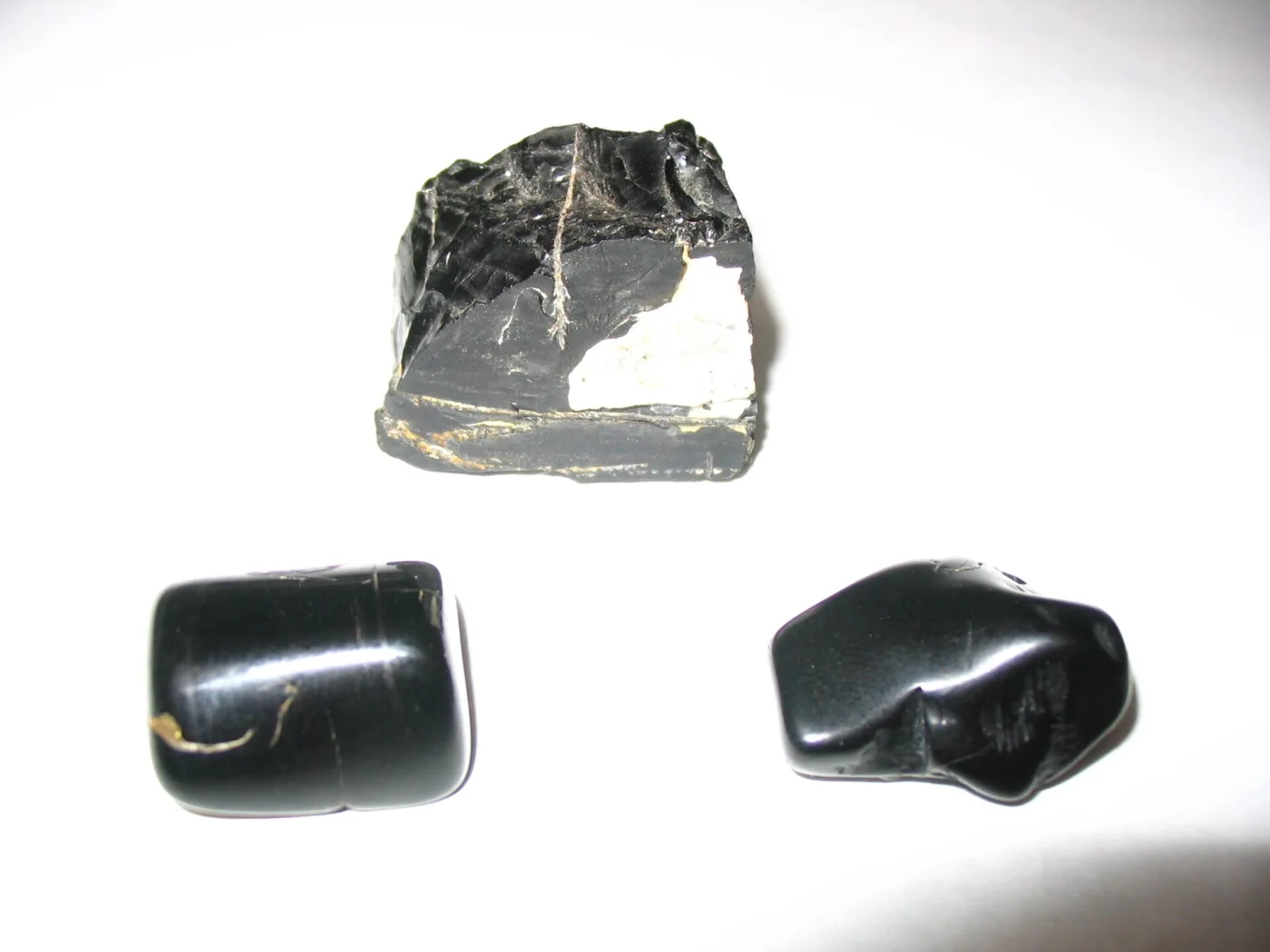
4 Field Tests for Authenticating Whitby Jet
.jpg)
1. Thermal Conductivity Test (Touch Test)
Place the item against your upper lip or cheek:
- Real Whitby Jet & Vulcanite: Feel noticeably warm because organic fossilized wood and rubber do not conduct heat away from the skin.
- French Jet (Glass) & Black Onyx: Feel distinctly cold to the touch.
2. The Weight & Density Test
Because Whitby Jet is essentially pressurized prehistoric wood coal, it is exceptionally lightweight. A large Victorian mourning necklace or carved brooch made of real Jet feels featherlight compared to a heavy black glass or agate piece of the same size.
3. The Porcelain Streak Test
Gently draw an unexposed edge of the piece across an unglazed ceramic tile (or the bottom of a porcelain tea saucer):
- Whitby Jet: Leaves a characteristic chocolate-brown streak.
- Vulcanite & Gutta-Percha: Leaves a blackish-grey streak.
- Black Glass & Onyx: Leaves no streak or scratches the tile.
4. Friction Scent Test (For Vulcanite Identification)
Vigorously rub the back of the item against a piece of wool or silk for 10 seconds to generate friction heat:
- Vulcanite: Emits a faint, unmistakable pungent sulfur/rubber odor due to the sulfur used in the vulcanization process.
- Whitby Jet: Emits no rubber smell (or a faint burning coal scent if drilled).
Hairwork: The Other Half of a Mourning Piece
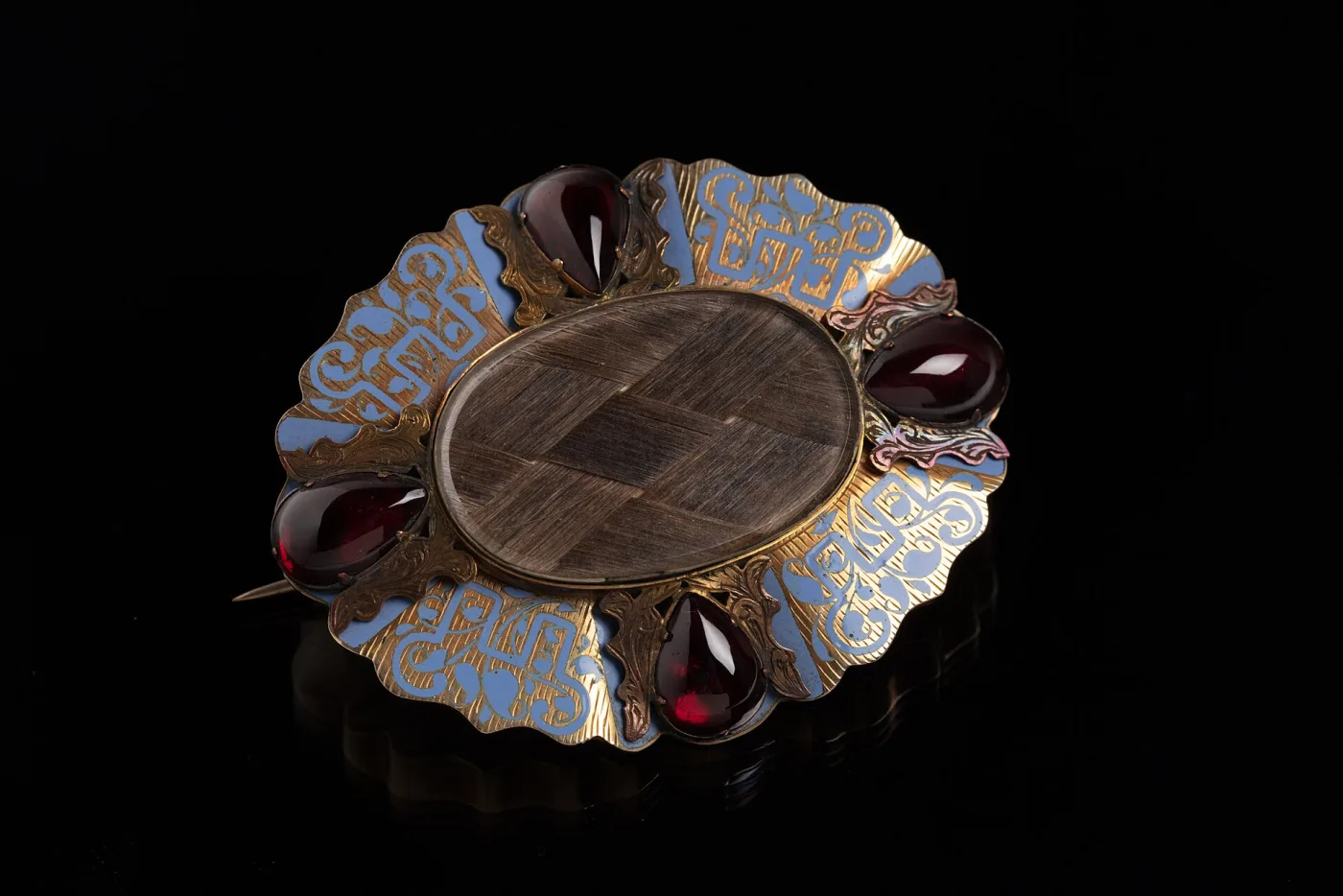
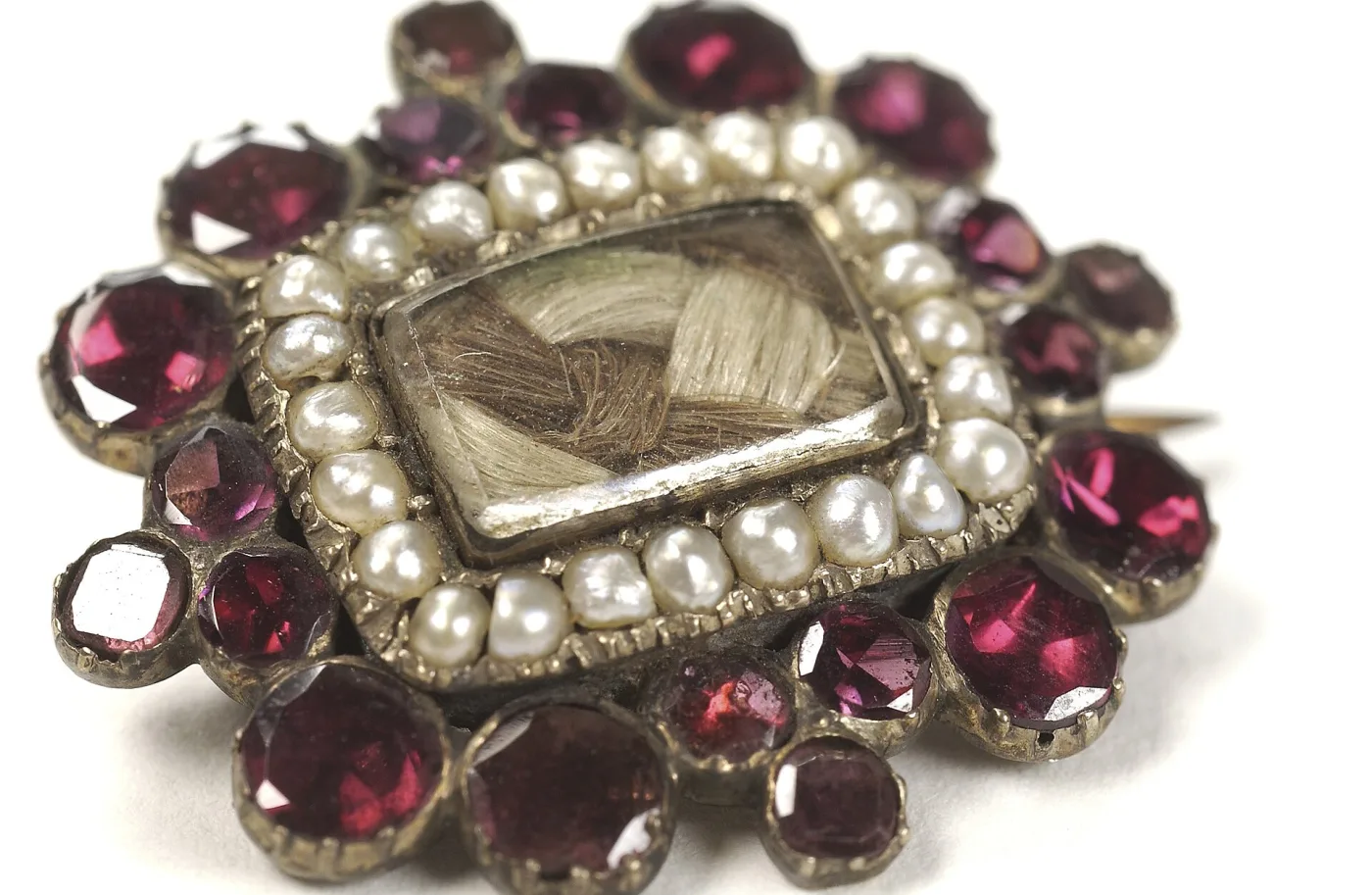
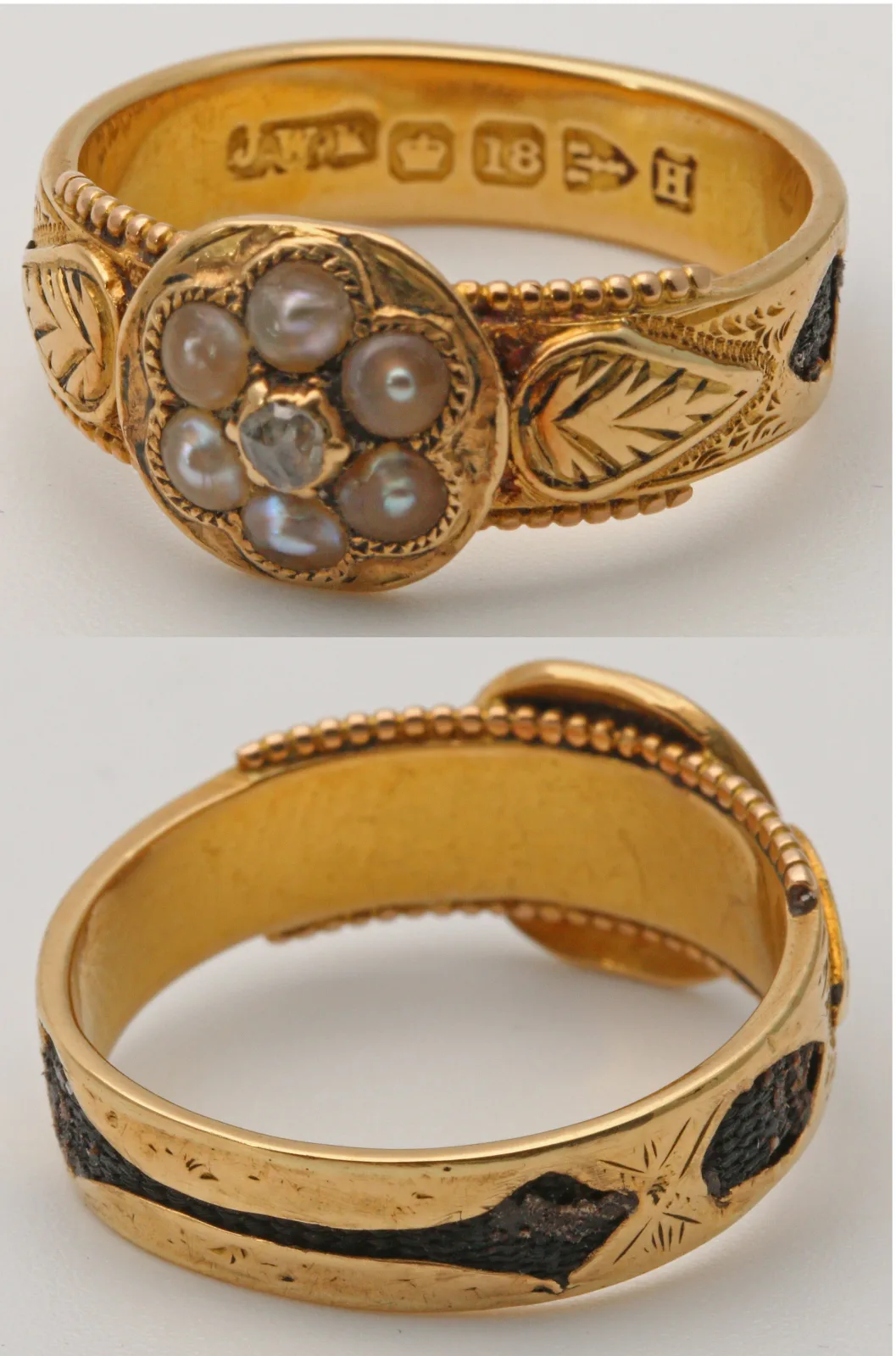
Black material is only one half of the identification. A great many mourning brooches and rings carry a compartment holding the hair of the person being mourned — plaited, woven flat, or coiled under glass — and that compartment is often the fastest way to separate a genuine Victorian piece from a modern black brooch styled to look like one.


Hardware Clasps & Mounting Metal Stamps
Victorian mourning jewelry was produced across all price points:
- High-End Mourning Pieces: Set in 18K or 15K gold bezels with enamel lettering (“In Memory Of”). Verify stamps using our Gold Karat Stamps Guide.
- British Victorian Silver Mountings: Look for 9K gold marks or the Lion Passant in our British Sterling Silver 925 Hallmarks Guide.
- Permitted Sparkle: Mourning dress ruled out overt gemstones but not the muted glitter of marcasite, set in silver — see cut steel vs. marcasite for how to tell it from the greyer, riveted cut steel it is often sold as.
- Hardware Pins: Pre-1900 Victorian mourning brooches feature long pin stems that extend past the body of the brooch and utilize a classic C-clasp, as detailed in our Antique Cameo Dating Guide. For the full timeline — tube versus round hinges, the 1901 and 1911 safety-catch patents, and how far a projecting pin stem actually narrows the date — see our brooch pin, hinge and catch dating guide.
Frequently Asked Questions
What is Whitby Jet mourning jewelry?
Whitby Jet is a fossilized wood material (coal variant) mined along the coast of Whitby, England. Popularized by Queen Victoria following Prince Albert's death in 1861, it became the supreme material for Victorian mourning etiquette.
How can I tell if jet is real Whitby jet or glass?
Real Whitby Jet is warm to the touch and extremely lightweight. Black glass (French Jet) feels cold to the touch, heavy, and often shows conchoidal chips under magnification.
What is Vulcanite in antique jewelry?
Vulcanite (vulcanized hard rubber) is a molded black material used as an affordable Victorian alternative to carved Jet. It gives off a distinct sulfur smell when rubbed vigorously on cloth.
Identify Your Jewelry Piece Instantly
Unsure about a hallmark, gemstone cut, or metal stamp? Take a photo and get an instant AI analysis and appraisal.