Antique Brooch Clasp Dating Guide: Pin, Hinge & Catch
💡 Key Takeaways (Quick Reference)
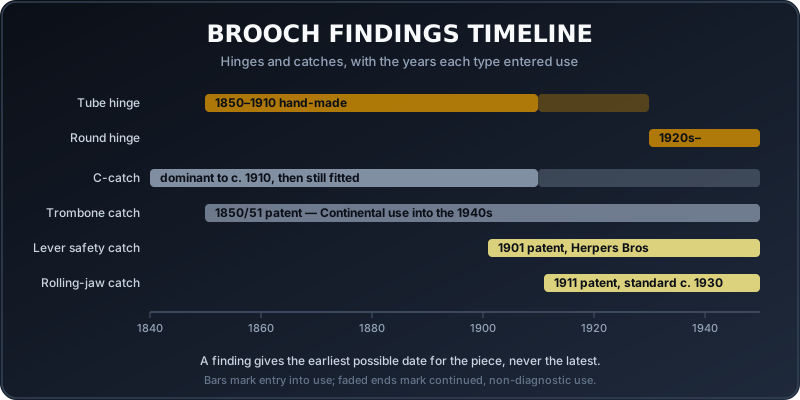
- A finding sets a floor, not a date: a catch proves the brooch cannot be older than that catch. It never proves the brooch is that young.
- Read the hinge first: a hand-made tube hinge points to roughly 1850–1910; a machine-made round hinge cannot predate the 1920s.
- Two hard patent anchors: the lever safety catch (Herpers Brothers of Newark, 1901) and the rolling-jaw “bullet” catch (Morehouse for B.A. Ballou & Co., 1911).
- The front must agree with the back: cross-check the mount against our antique cameo identification guide and the gold karat and purity stamp guide.
Turn an unmarked brooch over and the hardware answers faster than the front does. The pin, hinge and catch are findings — the non-decorative parts — and unlike style, they changed on patent dates rather than on taste.
They are also narrower evidence than most guides admit. A finding dates the finding. These parts were bought in from specialist factories in Newark, New Jersey and in Birmingham, and catches are the first component to fail and be replaced, so the honest reading of a brooch back is a terminus post quem: the earliest date the piece can be, and nothing more.
The Three Findings, Named Correctly
- Pin (pinstem): the pointed wire that passes through the fabric.
- Hinge (joint): the pivot at the blunt end, soldered or riveted to a pad on the back.
- Catch: the fitting at the pointed end that holds the pin.
Date all three separately, then see whether they agree. A 1930s catch on an 1870s hinge is a repair, and the earlier of the two dates the jewel.
Era-by-Feature Attribution Table
| Finding | What you are looking at | Attribution window | What it actually proves |
|---|---|---|---|
| Hand-made tube hinge | Three short hollow tubes: two soldered to a pad, the third fixed to the pin and pinned between them | c. 1850 – c. 1910 (some workshops to c. 1930) | Hand assembly. Consistent with, but not proof of, a 19th-century date |
| Machine-made round hinge | A stamped barrel, usually riveted rather than soldered, sitting on a pressed plate | Introduced 1920s; standard by c. 1930 | Not earlier than the 1920s |
| C-catch | An open hook of wire or sheet bent to a “C”. No moving part | Dominant to c. 1910; still fitted long afterwards | Nothing on its own. Date it by the pin instead |
| Trombone (push-pull) catch | A tube whose outer sleeve slides out to open the throat, then pushes back to close it | Patent 1850 or c. 1851; Continental use into the 1940s and later | Continental European origin more reliably than any decade |
| Lever safety catch | A small flat lever swinging across the mouth of a C to trap the pin | Patented 1901; in use to the 1930s | Not earlier than 1901 |
| Rolling-jaw (“bullet”) catch | A round barrel with a rotating jaw; the fitting still sold today | Patented 1911; effectively universal from the late 1920s | Not earlier than 1911, and in practice usually c. 1930 or later |
Reading the Hinge Before the Catch
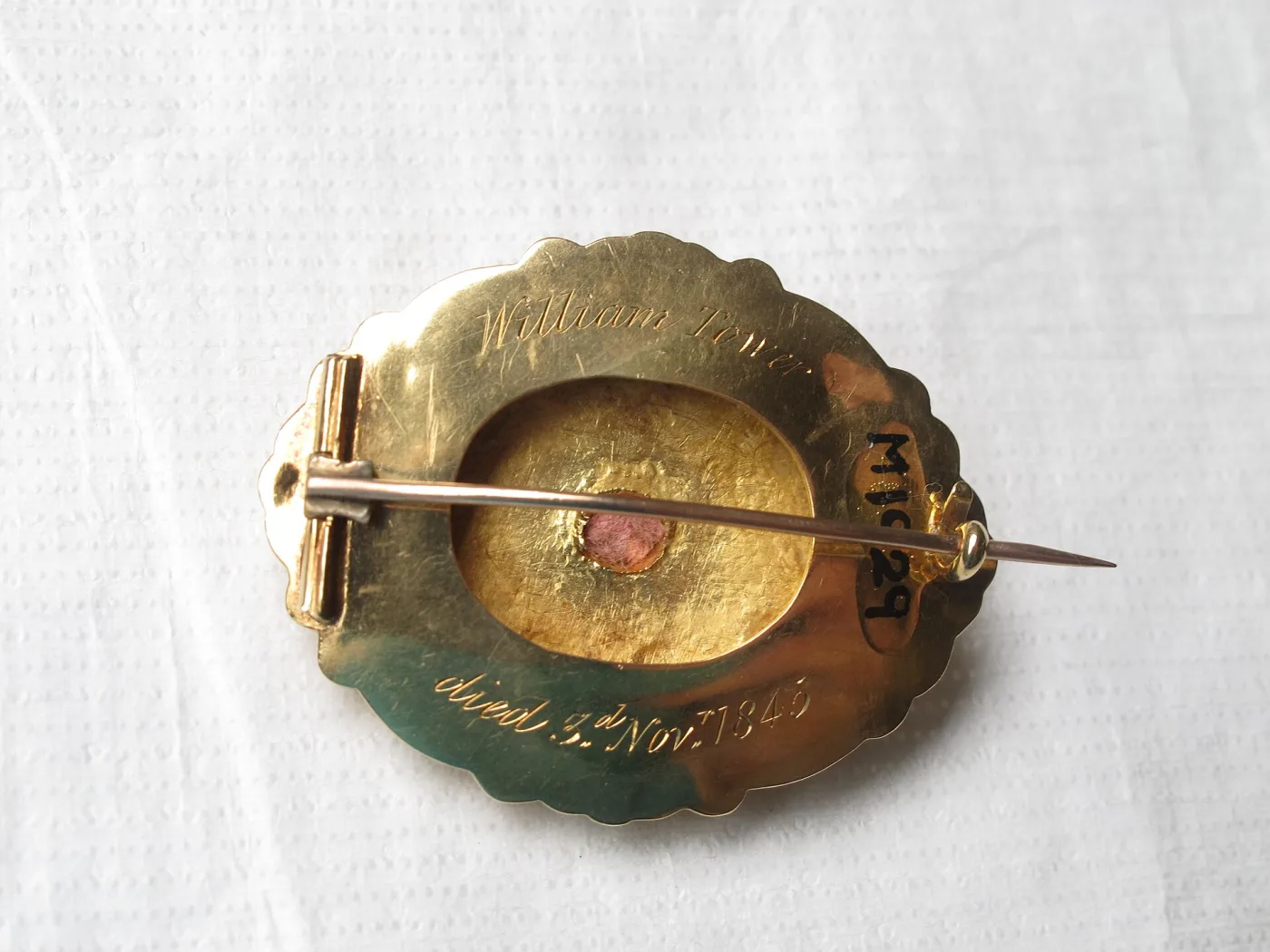
The hinge is the better witness because it is structural: replacing one means unsoldering the pad and re-finishing the back, so hinges survive where catches do not. A tube hinge was made by the same workshop as the brooch, and under a loupe its three cylinders are slightly unequal with uneven solder fillets. A round hinge is a bought-in pressed part: dimensionally perfect, and riveted to a stamped plate rather than soldered.
.jpg)
Reading the Catch
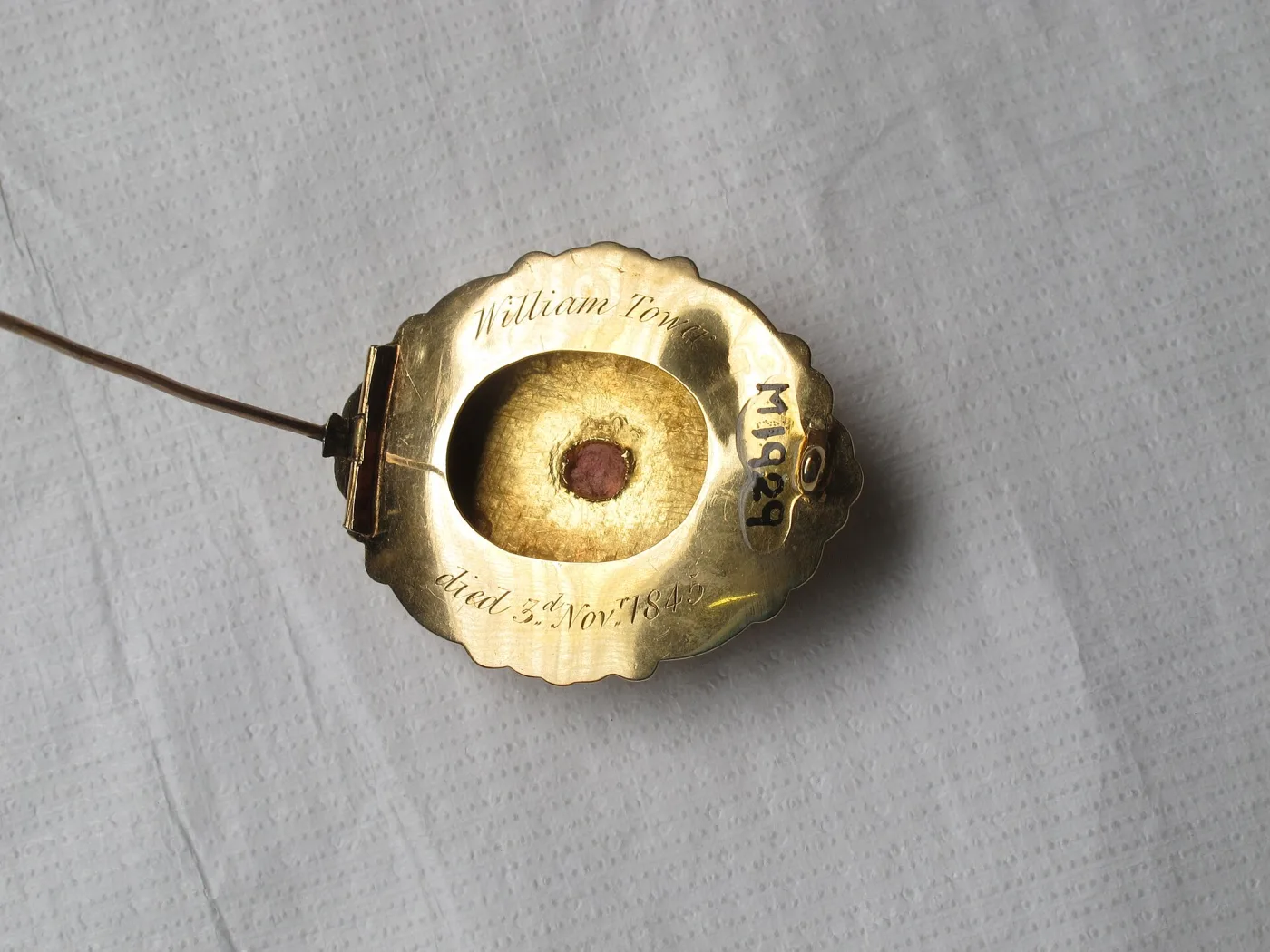
A C-catch has no moving part, so nothing about it ever went obsolete — plain C-catches were still fitted to cheap brooches, and to outright reproductions, decades after safety catches existed. Treat one as an absence of evidence, not evidence of age.
.jpg)
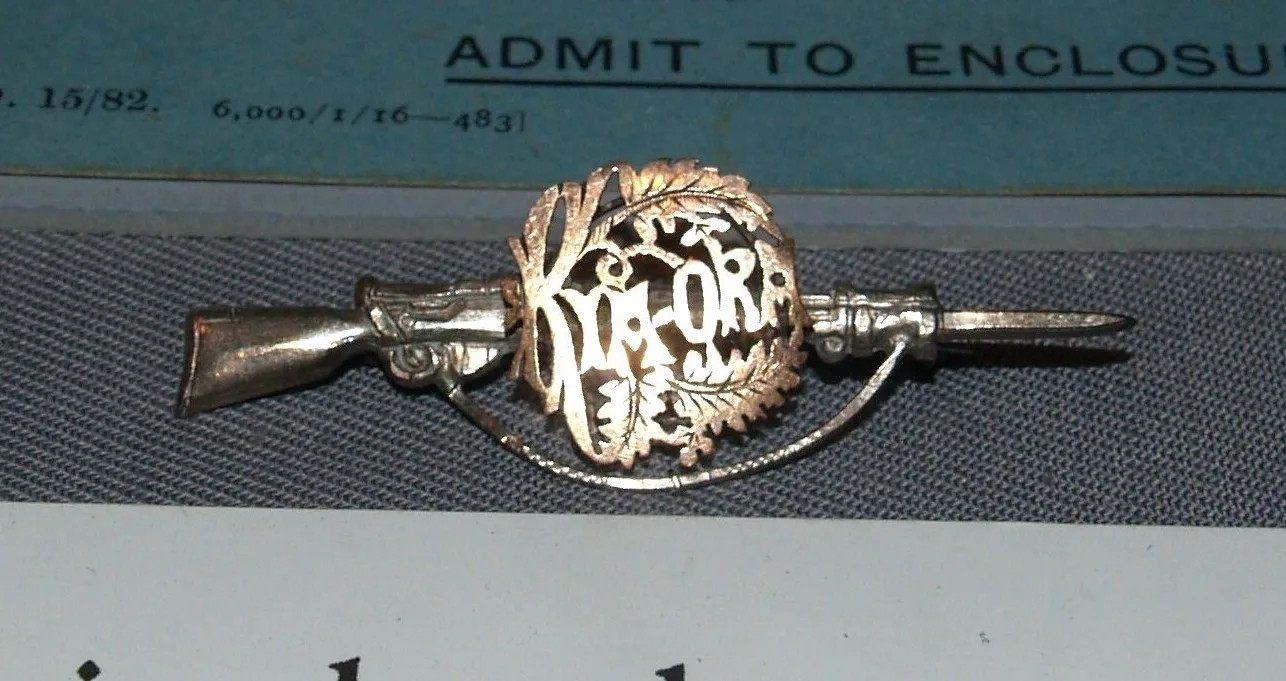
The trombone catch is credited to Charles Rowley of Birmingham, who filed a British safety-pin patent on 12 October 1849 and patented “dress pins and other fastenings” on 30 November 1850 — the document behind the familiar “patented 1850” line, though no accessible source ties a patent number specifically to the tube catch. On a marcasite or moulded-glass brooch it argues for Continental manufacture, not for a pre-1910 date. (If you are not certain the stones are marcasite at all, our guide to telling cut steel from marcasite settles that first — the two are routinely confused, and the reverse of the piece decides it.)
Jewellers began hand-making ways to trap the pin in the C around 1890, and manufactured solutions followed from Newark, then the centre of the American findings trade: the 1901 Herpers Brothers lever catch, and in 1911 Eugene Morehouse’s rolling-jaw “bullet” catch, patented for B.A. Ballou & Co. and still sold today. Those years are only the floor. Adoption was slow, so a rolling-jaw catch rarely means earlier than about 1930 unless the piece has been repaired.
The Pin Stem Itself
On a plain C-catch brooch the pin, not the catch, carries the date.
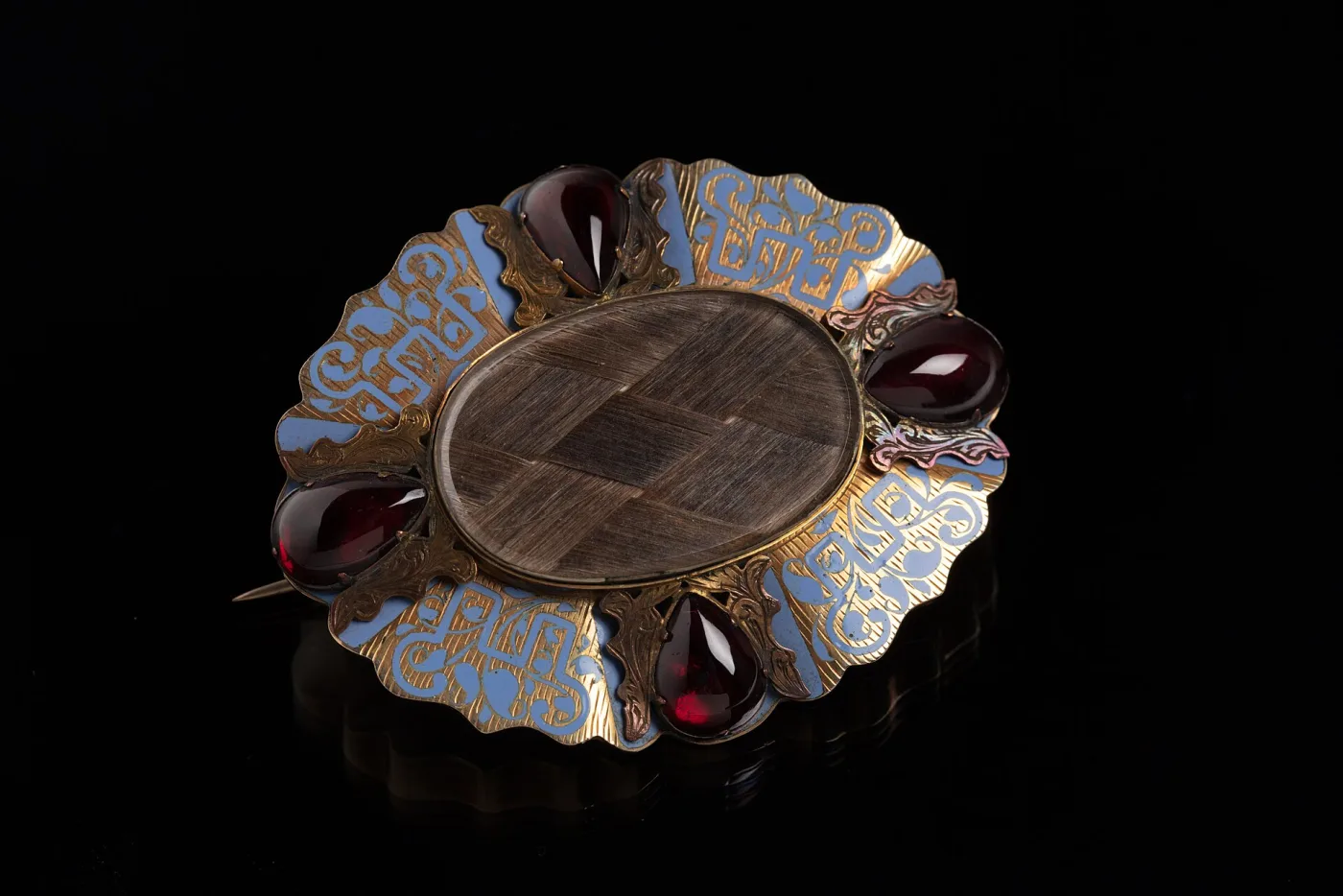
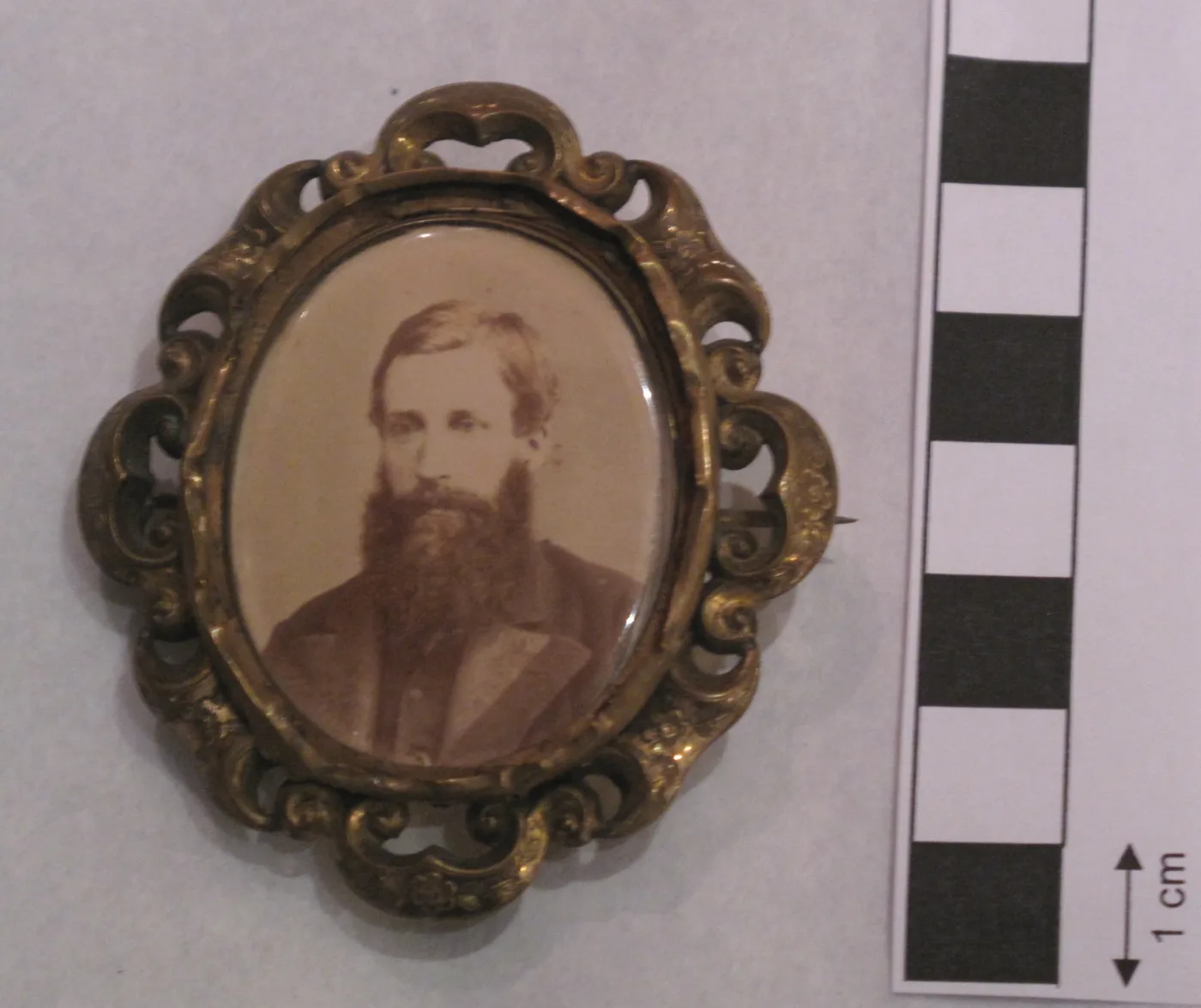
- Length. Mid-19th-century pins commonly project 3–6 mm (1/8 to 1/4 inch) past the catch, often past the edge of the brooch as well, so the stem could be woven back into heavy, loosely woven cloth. A projecting stem points to before about 1890; a stem finishing at or inside the catch to roughly 1890–1910.
.jpg)
.jpg)
Where the Published Dates Disagree
These windows are not settled, and any guide printing one tidy number is hiding the spread:
| Point | The disagreement | How to use it |
|---|---|---|
| Rowley’s trombone patent | 1850 in most references; c. 1851 in Antique Jewelry University’s own timeline | Say “about 1850”. A year either way changes no attribution |
| Trombone catch’s working life | One reading ends it c. 1910; another has it common on British and Continental work into the 1940s | Take the longer window; the short one manufactures false early dates |
| Riveted hinges | “Circa 1900” in some findings references, “1920s, standard by 1930” in others | No earlier than c. 1900, and expect the 1920s |
| Safety catch adoption | “Dominant by 1920” in some sources; “widespread late 1920s to early 1930s” in others | Use the later window when the catch is the only evidence |
| Spring / bolt ring clasp | “First used in the 1840s” in one reference; “invented in the early 20th century” in others | Weak evidence. Never date a necklace on it alone |
The Same Logic on Earrings and Necklaces
The method carries across a suite or parure, though the documentation is thinner:
| Fitting | Earliest date | Notes |
|---|---|---|
| Kidney wire / hinged ear wire | c. 1880 | For pierced ears; European work |
| Screw-back earring | Patent 1894 (Tilford and Bennett) | Uncommon before about 1909; dominant c. 1900–1955 |
| Post and butterfly clutch | 1920s | In continuous use since, so it dates nothing by itself |
| Clip-back earring | Patented c. 1934 | Dominant from the late 1930s to the 1960s |
| Omega back | 1960s | A reliable “not antique” marker |
| Hook-and-box catch | c. 1920–1930 | Common on Art Deco period necklaces |
| Lobster claw clasp | Late 1950s at the earliest | Its closest documented predecessor, Nielsen’s pivoted-trigger clasp (US patent 2,874,435), was granted in 1959; on most jewelry a lobster claw means the 1970s or later |
Was the Finding Replaced?
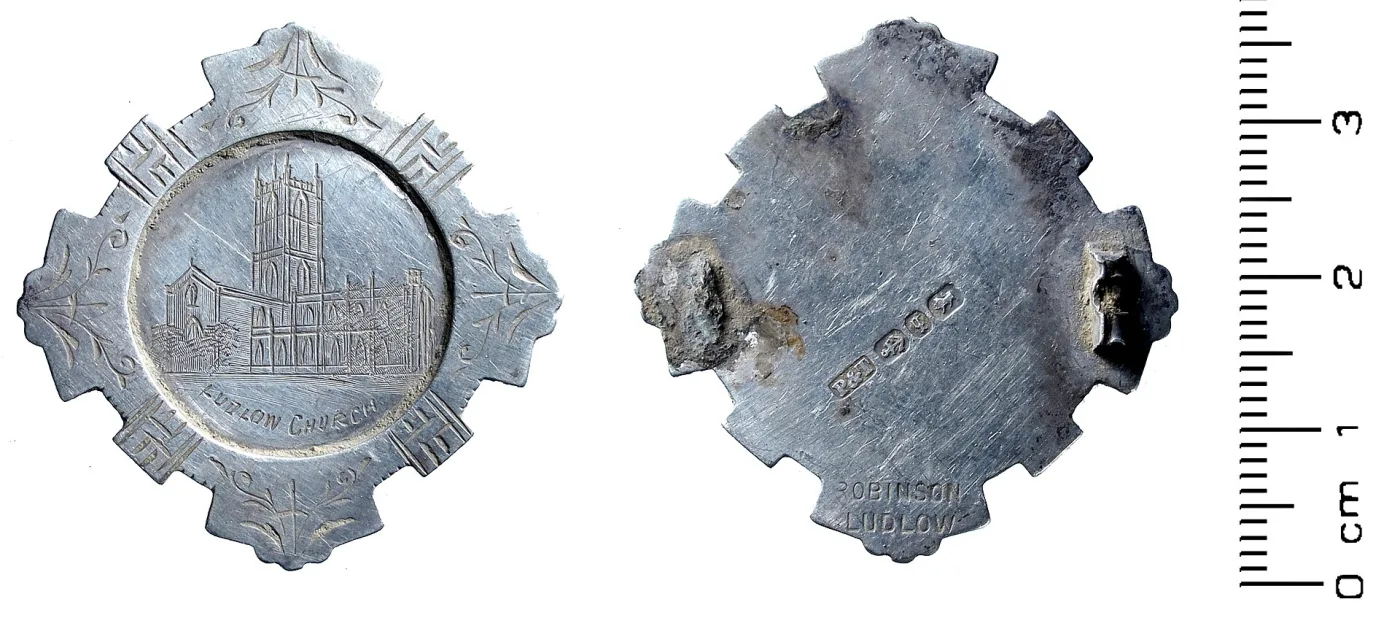
- Solder colour. A repair seam rarely matches the original alloy — brighter, whiter or pinker around one finding only.
- Wear mismatch. A crisp, unworn catch on a back otherwise softened by a century of handling.
- Scars. The ghost of an earlier pad, or a filled hole, beside the present fitting.
- Alignment. Original findings sit square to the axis of the brooch; replacements sit a degree or two off.
- Disagreement between the three. A tube hinge with a rolling-jaw catch is the signature of a repaired period brooch.
.jpg)
Expert Tip: A replacement costs an antique brooch far less than a wrong attribution does. Record the back, then let the front carry the attribution — as it must for Victorian mourning brooches and jet pieces, where hardware and material have to be read together.
The Working Sequence
- Hinge first: hand-made tube, or machine-made round?
- Catch second: C, trombone, lever, or rolling jaw?
- Pin third: does it project past the catch, and how heavy is it?
- Take the earliest window the three allow, not the latest.
- Check the mount agrees — a platinum openwork frame carries its own date range, set out in our platinum versus white gold identification guide.
The back of a brooch tells you what the piece cannot be. That is a smaller answer than “this brooch is from 1885”, and it is the one that survives an auction catalogue.
Frequently Asked Questions
How old is a brooch with a C-clasp?
A C-catch on its own proves nothing about age, because plain C-catches were still fitted to inexpensive and reproduction brooches long after 1910. What narrows it is the pin: a stem projecting 3-6 mm past the catch points to before about 1890, and a stem ending at or inside the catch to roughly 1890-1910.
When was the brooch safety catch invented?
Two patents anchor it. Herpers Brothers of Newark, New Jersey patented a lever safety catch in 1901, and Eugene Morehouse's rolling-jaw 'bullet' catch was patented for B.A. Ballou & Co. in 1911. Neither year is the useful one: the rolling-jaw catch only became the default fitting in the late 1920s and early 1930s.
Does a trombone clasp mean a brooch is European?
It says more about origin than about date. The push-pull tube catch is credited to Charles Rowley of Birmingham, dated 1850 by most references and c. 1851 by others, and it stayed in Continental European use into the 1940s and on some designer pieces later still.
Can the clasp on an antique brooch have been replaced?
Yes, and it often has been. Catches and pins are the parts that fail, so a modern rolling-jaw catch does not disqualify a Victorian brooch. Look for solder of a different colour, bright unworn metal against a worn back, and a new fitting seated over the scar of an older one.
Identify Your Jewelry Piece Instantly
Unsure about a hallmark, gemstone cut, or metal stamp? Take a photo and get an instant AI analysis and appraisal.