What Does 950 Mean on Jewelry? Platinum, Silver or Two-Tone
💡 Key Takeaways (Quick Reference)
- 950 = 95% pure. The number is parts per thousand, so it tells you the purity, not the metal.
- On a ring, 950 usually means platinum, written Pt950, PLAT 950 or 950 PT. 950 is the most common purity for platinum jewelry.
- 950 is also a silver standard, the French first standard, and some silversmiths work in it today.
- “950 gold” is not a standard. Gold is marked 999, 990, 916, 750, 585, 417 or 375.
- 950/750 means two-tone: platinum plus 18-karat gold in one piece.
What the Number 950 Means {#what-950-means}
Jewelry is marked with its purity in millesimal fineness, the number of parts of pure metal per thousand. A 950 stamp therefore means 950 parts in 1,000, or 95%. The other 5% is a mix of other metals added to make the piece harder and easier to work.
The number on its own does not name the metal. Three different things are regularly stamped 950, and they are worth very different amounts, so the first job is to work out which one you are holding.

Which Metal Is It? The Common 950 Marks {#which-metal}
| Mark you see | Metal | Purity | What to expect |
|---|---|---|---|
| Pt950, PLAT 950, 950 PT, 950 Plat | Platinum | 95% | Heavy, white-grey, does not tarnish. The most common platinum jewelry standard |
| 950 on a light, silver-colored piece | Silver | 95% | Tarnishes to grey or black over time, much lighter than platinum |
| 950/750, 950+750, Pt950/750 | Platinum and 18k gold | 95% and 75% | Two visible colors on one piece |
| 950 on its own, on a heavy white ring | Almost always platinum | 95% | Confirm with weight and the absence of tarnish |
The letters beside the number are the strongest clue. Pt is platinum’s chemical symbol, and PLAT or Plat simply abbreviates the word. Either one settles the question. A bare 950 is where you need the tests below.
Platinum 950 or 950 Silver? How to Tell {#platinum-or-silver}
When the stamp is just 950, three observations will separate platinum from silver without any equipment:
- Weight. Platinum is one of the densest metals used in jewelry, at about 21.45 g/cm³. Silver is about 10.5 g/cm³, roughly half that. A platinum ring feels noticeably heavy for its size, while a silver ring of the same size feels light.
- Tarnish. Silver reacts with sulfur in the air and darkens over time, especially in recesses and on the inside of a band. Platinum does not tarnish. It dulls to a soft satin finish called patina instead.
- Color. Platinum is a cool grey-white. Polished 950 silver is brighter and whiter, and it yellows or greys as it tarnishes.
If the piece is heavy, has never tarnished and reads Pt or PLAT anywhere, it is platinum. If it is light and darkens in the recesses, it is silver. When a white ring could be either platinum or plated white gold instead, our Platinum 950 vs. White Gold guide covers the density and plating checks in detail.

Is “950 Gold” Real? {#950-gold}
Searches for “950 gold” and “is 950 gold” are common, but there is no standard gold alloy at 950. Gold jewelry is marked with one of these fineness numbers:
| Gold mark | Karat | Pure gold |
|---|---|---|
| 999 | 24k | 99.9% |
| 990 | about 23.8k | 99.0% |
| 916 | 22k | 91.6% |
| 750 | 18k | 75.0% |
| 585 | 14k | 58.5% |
| 417 | 10k | 41.7% |
| 375 | 9k | 37.5% |
To convert between the two systems, divide the fineness by 1,000 and multiply by 24. A 950 would work out at 22.8 karats, which is not a standard anyone uses. So when a 950 appears on a piece that also shows yellow gold, it almost always belongs to platinum, usually the platinum section of a two-tone ring. Our gold purity stamps guide covers every gold mark in the table above.
950/750 and 950+750: Two-Tone Pieces {#two-tone}
A ring stamped 950/750, 950+750 or Pt950/750 is made of two metals joined together: 950 platinum and 750, or 18-karat, gold. You should be able to see both colors, typically a white platinum head or band section with a yellow gold section.
The two numbers are not an average and do not describe a single alloy. Each number describes its own section of the ring. If you see 950/750 on a piece that looks one color all over, look again under good light, and ask a jeweler to confirm which section is which.

950 Silver vs. Sterling (925) and Britannia (958) {#950-vs-sterling}
950 silver sits between the two best-known British standards:
| Standard | Fineness | Silver content |
|---|---|---|
| Sterling | 925 | 92.5% |
| French first standard | 950 | 95.0% |
| Britannia | 958 | 95.8% |
France has long used 950 as its first standard for silver, and French pieces carry their own national marks, described in our guide to French hallmarks. Sterling, at 925, is the standard used in Britain and most of the world; see our British sterling silver hallmarks guide for how those marks read.
Because 950 silver has less of the hardening metal than sterling, it is slightly softer and slightly whiter. Neither is better or worse. They are different recognized standards, and a piece stamped 950 is not fake sterling.

How the Mark Gets There {#how-marked}
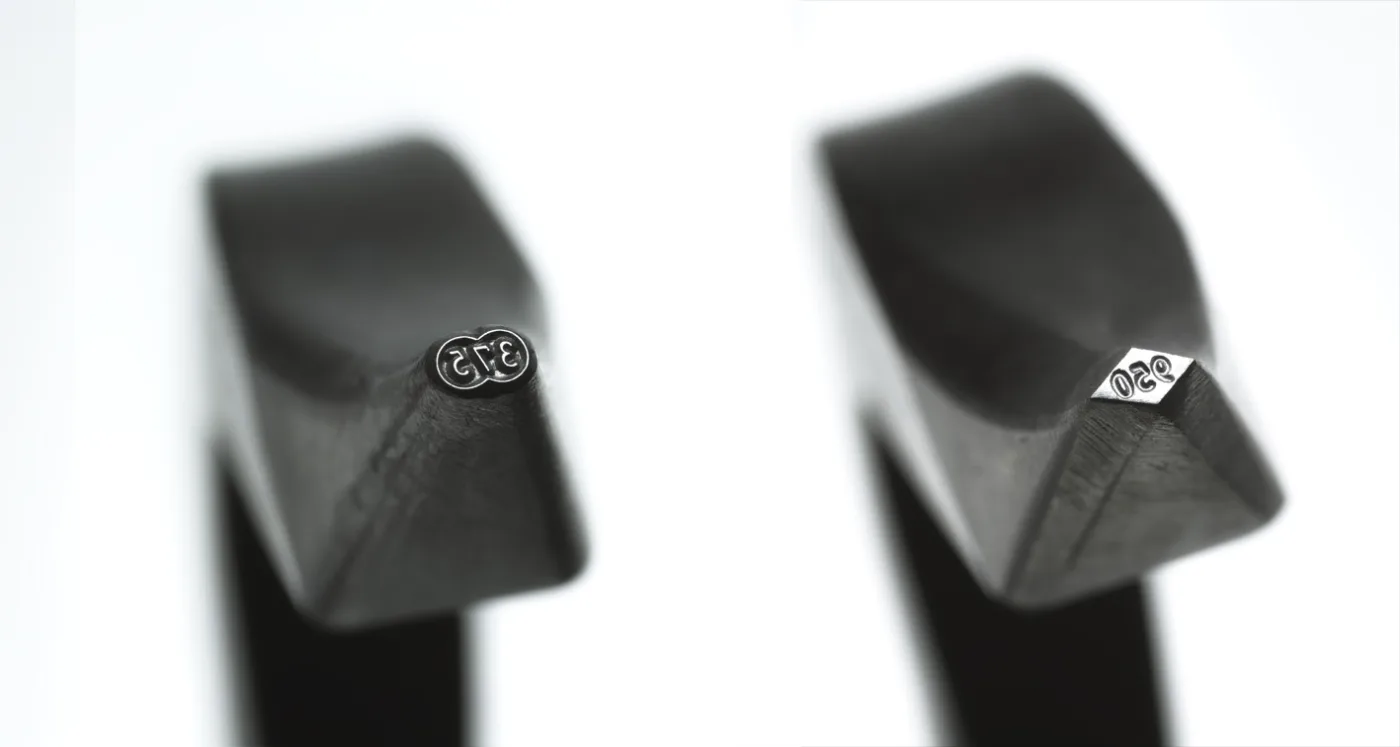
Purity marks are struck with hardened steel punches, cut in reverse so the number reads correctly on the metal. The punches in the photograph at the top of this guide follow the current Australian standard, according to the photograph’s description: a 375 gold mark in skeleton type inside an oval, and a 950 platinum mark in intaglio type inside a diamond-shaped frame. Different countries use different frame shapes and styles for different metals, so the shape around the number can be a second clue.
In the UK, a purity number on its own is not the whole story. Most precious metal items above a small weight are expected to carry a full hallmark, applied once one of the Assay Offices has tested the metal. Wherever the piece was made, the letters beside the number and the shape of the mark around it are your best clues.

The Short Answer {#summary}
A 950 stamp tells you the metal is 95% pure. With Pt or PLAT beside it, it is platinum. On its own, weigh the piece and look for tarnish: heavy and bright means platinum, light and tarnishing means 950 silver. 950/750 means a two-tone platinum and 18-karat gold piece, and 950 gold is not a real standard. When in doubt, a jeweler can confirm the metal with a non-destructive test in minutes.
Frequently Asked Questions
What does 950 mean on a ring?
It means the metal is 950 parts per thousand pure, or 95%. On a ring it most often means platinum, usually written Pt950, PLAT 950 or 950 PT, because 950 is the most common purity for platinum jewelry. The same number is also used for 95% silver, so check the metal's weight and whether it tarnishes.
Is 950 gold real?
Not as a standard gold alloy. Gold is marked 999, 990, 916 (22k), 750 (18k), 585 (14k), 417 (10k) or 375 (9k). A 950 on gold jewelry almost always belongs to platinum, either the whole piece or the platinum part of a two-tone ring, which is why searches for 950 gold usually lead back to Pt950.
What does 950/750 mean on a ring?
It marks a two-tone piece made of two metals: 950 platinum and 750, which is 18-karat gold. You should be able to see both colors on the ring, typically a white platinum head or band section and a yellow gold section. It does not mean an alloy averaged between the two.
Is 950 silver better than sterling silver?
It contains more silver: 95% against sterling's 92.5%. That makes it a little whiter and softer. 950 is the first standard of French silver, while sterling (925) is the standard used in Britain and most of the world. Neither is fake, they are simply different recognized standards.
Identify Your Jewelry Piece Instantly
Unsure about a hallmark, gemstone cut, or metal stamp? Take a photo and get an instant AI analysis and appraisal.