Art Nouveau Jewelry Identification Guide: Enamel & Motifs
💡 Key Takeaways (Quick Reference)
- Date Window (1890–1910): The Art Nouveau movement rejected Victorian mass production, emphasizing organic forms, nature, and symbolism over gemstone carat weight.
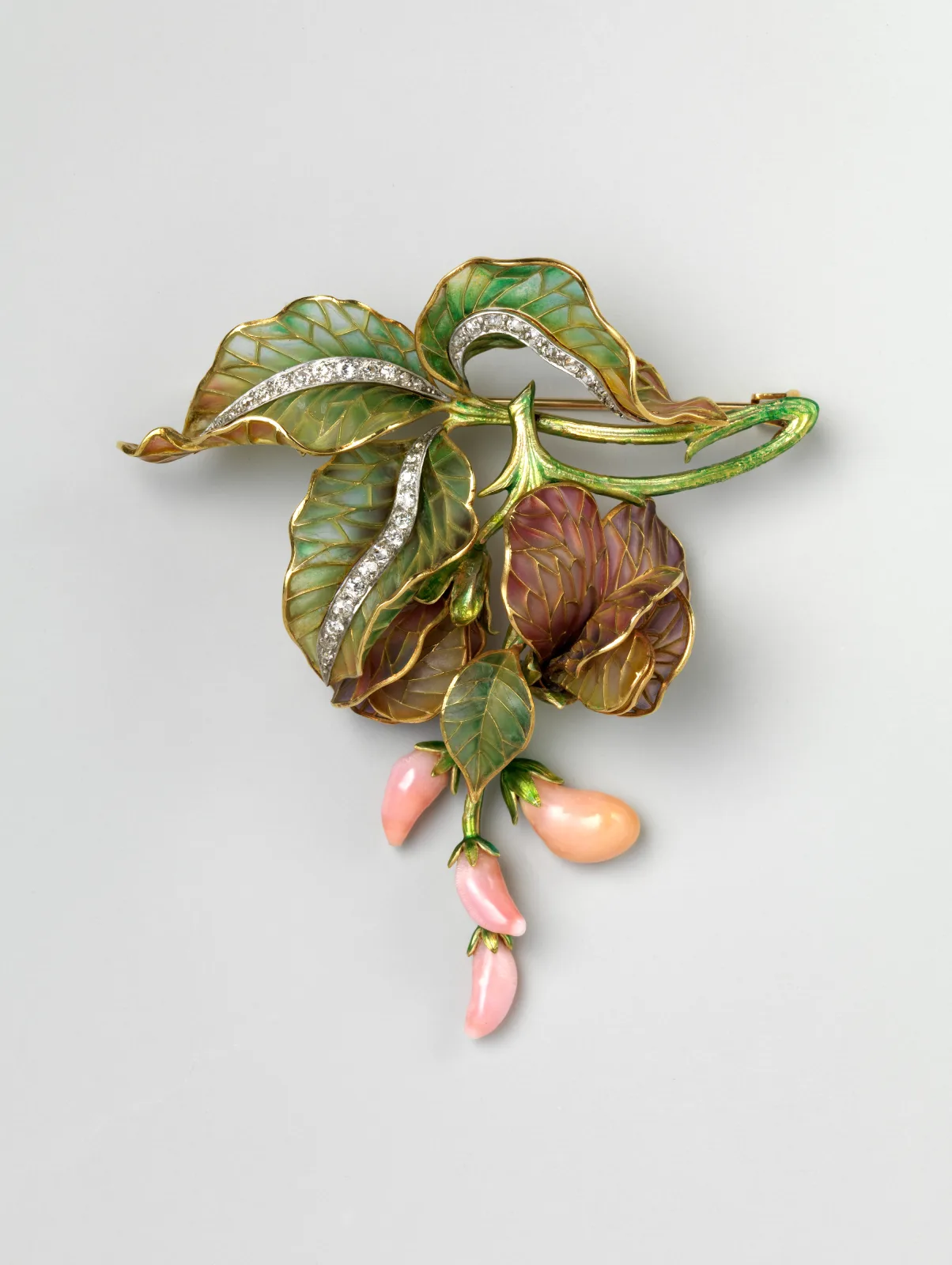
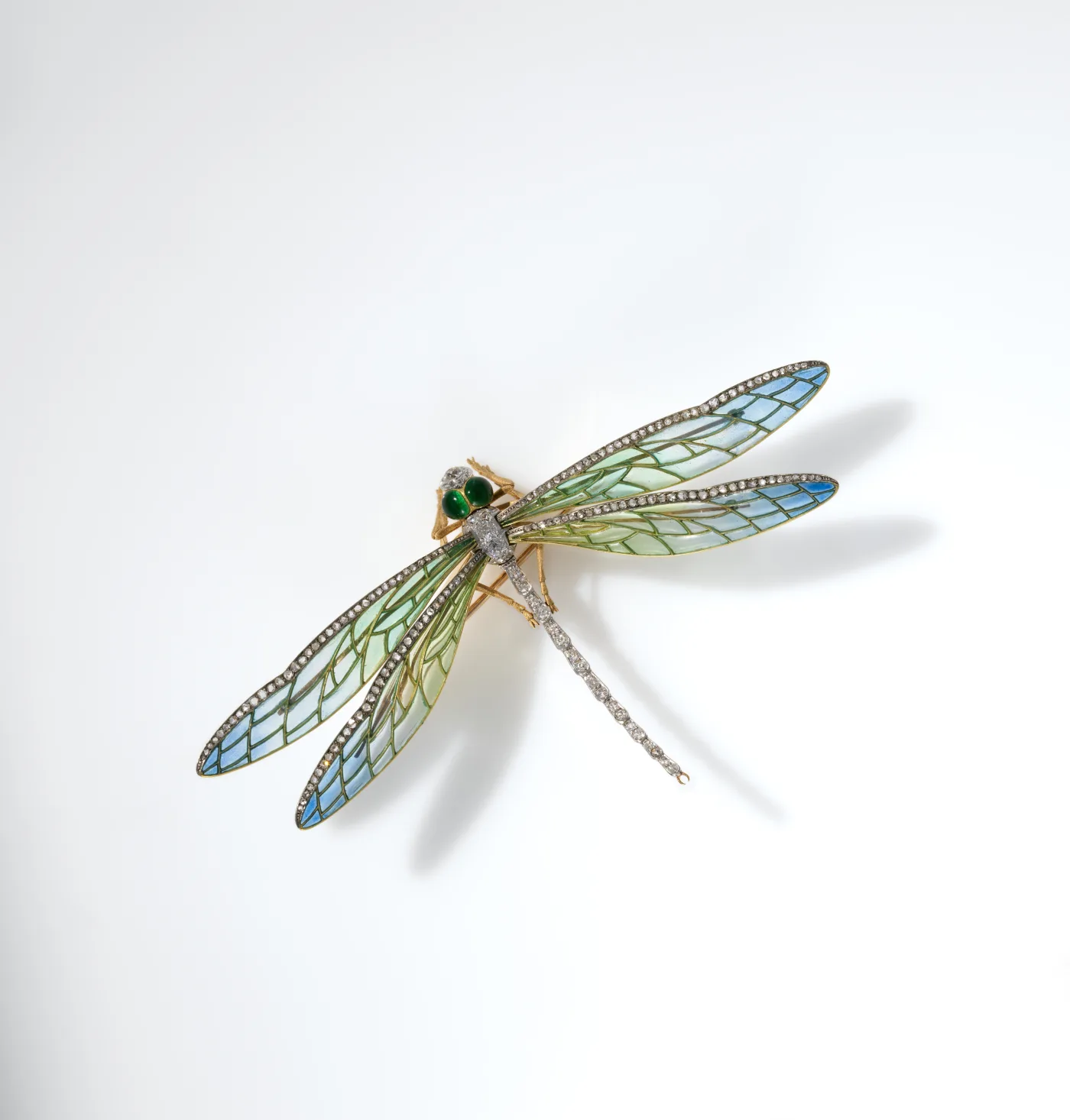
- Plique-à-Jour Enamel: Backless enamel cells that function like miniature stained-glass windows when held up to a direct light source.
- Whiplash Curve: Asymmetrical, undulating lines inspired by vines, lily pads, water streams, and flowing female tresses.
- Unconventional Materials: Carved horn, moonstones, baroque pearls, opal cabochons, and molded glass were valued far above diamonds.
- Key Makers & Marks: René Lalique, Lucien Gaillard, Henri Vever, Marcus & Co., and Unger Brothers (silver repoussé).
Emerging as a radical revolt against the rigid symmetry and industrial manufacturing of the late Victorian era, Art Nouveau (circa 1890–1910) transformed jewelry design into fine art. Rather than building mountings to display large diamonds, master goldsmiths such as René Lalique and Henri Vever sought to create wearable sculpture. They prioritized artistic expression, organic symbolism, and labor-intensive enamel techniques over raw gemstone value.
Because original Art Nouveau pieces are rare and highly sought after by collectors, reproduction pieces and modern revivals abound. Authenticating genuine Art Nouveau jewelry requires inspecting enameling methods, metal alloys, findings, and hallmark details under magnification.
1. Master Enameling Techniques: Plique-à-Jour & Champlevé
Enamel is powdered vitreous glass fused to metal in a high-temperature kiln. Art Nouveau jewelers elevated enameling into their primary medium, mastering three distinct techniques that define authentic period pieces:
- Plique-à-Jour (“braided to day”): The defining signature of high Art Nouveau jewelry. Powdered glass is applied into open gold or silver cells backed by a temporary copper foil sheet. After kiln firing, the copper backing is dissolved in acid, leaving translucent enamel suspended without any metal backplate.
- Champlevé (“raised field”): Cells are carved, etched, or cast directly into the metal surface, filled with colored enamel paste, fired, and polished flush with the surrounding metal borders.
- Basse-Taille (“low cut”): Patterned relief engraving is executed into the metal base before translucent enamel is flooded over top, allowing light to reflect off the sculpted metal underlayer.
Diagnostic Plique-à-Jour Inspection Checklist
- Light Transmission: Hold the piece up to daylight or a penlight. True plique-à-jour allows light to shine straight through the enamel cells.
- Surface Cell Convexity: Kiln-fired glass exhibits subtle surface tension meniscuses within each metal cell. Resin or plastic fakes are flat or feature uneven air bubbles.
- Metal Cell Thickness: Authentic cells use delicate hand-soldered cloisons (wire ribbons) or pierced sheet gold. Heavy, thick cell borders usually indicate a modern cast imitation.
2. Iconic Motifs: Insect Wings, Nymphs & Sinuous Curves
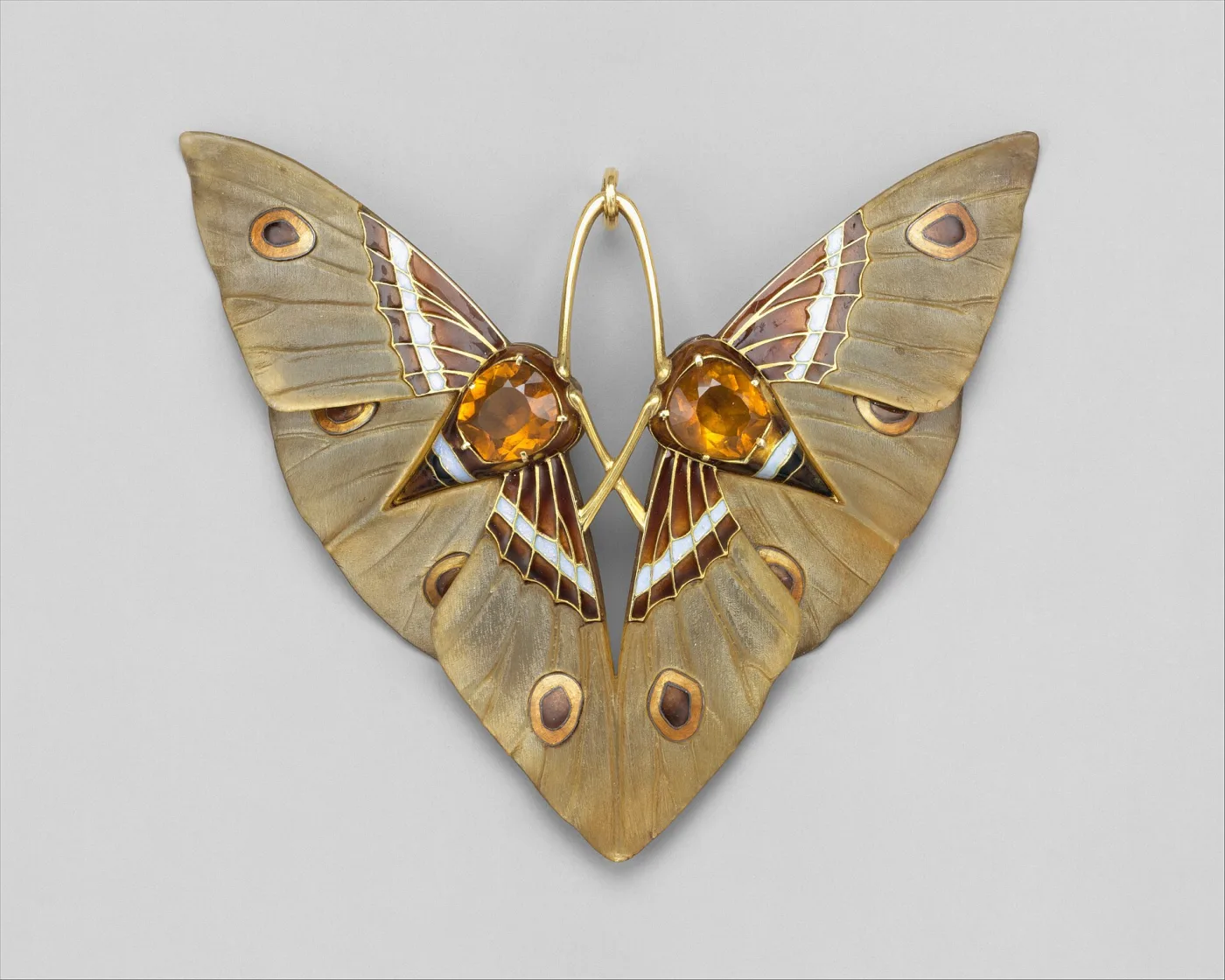
Art Nouveau motifs draw directly from natural flora, fauna, and Japanese woodblock prints (Japonisme). Designers embraced themes of transformation, metamorphosis, and natural beauty.
| Motif Category | Specific Visual Features | Typical Materials Used |
|---|---|---|
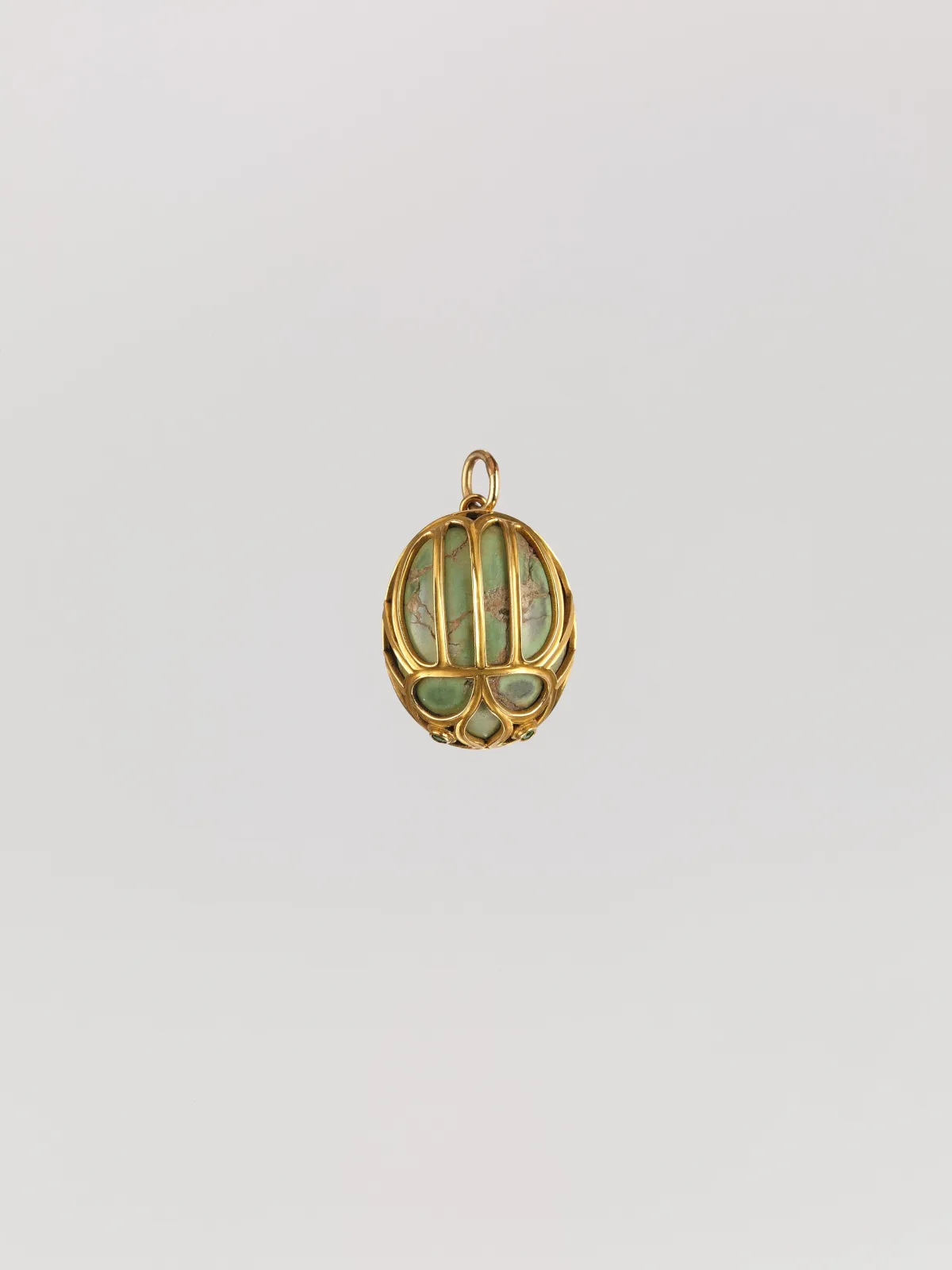
| Insects & Metamorphosis | Dragonflies, moths, butterflies, cicadas, and beetles with translucent outstretched wings | Plique-à-jour enamel, opal, moonstone, seed pearls |
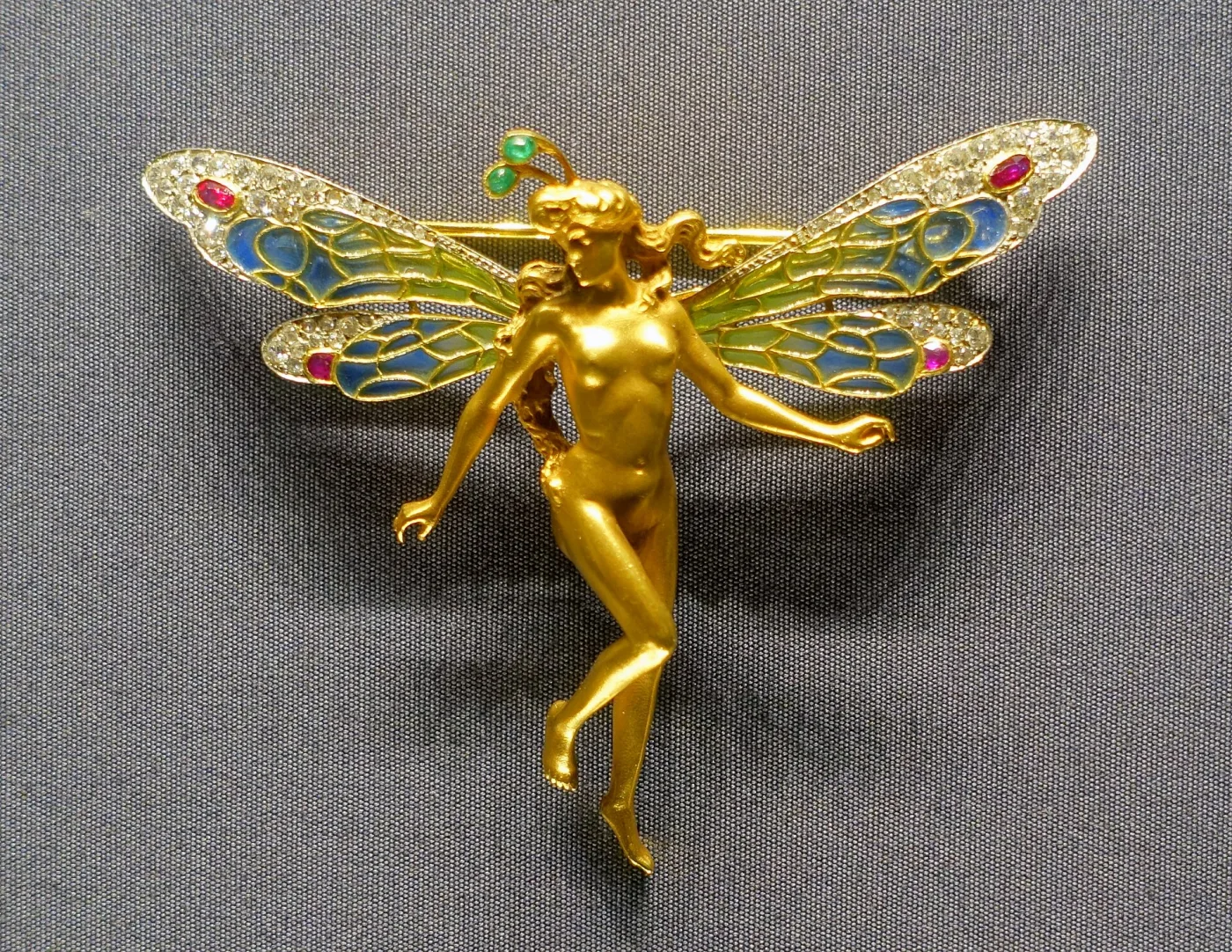
| Feminine Form & Nymphs | Ethereal female heads with long, flowing “whiplash” hair intertwined with nature | Gold, platinum, carved horn, carved ivory, enamel |
| Flora & Botanical | Water lilies, ginkgo leaves, orchids, poppies, mistletoe, and climbing vines | Green/pink enamel, baroque pearls, demantoid garnets |
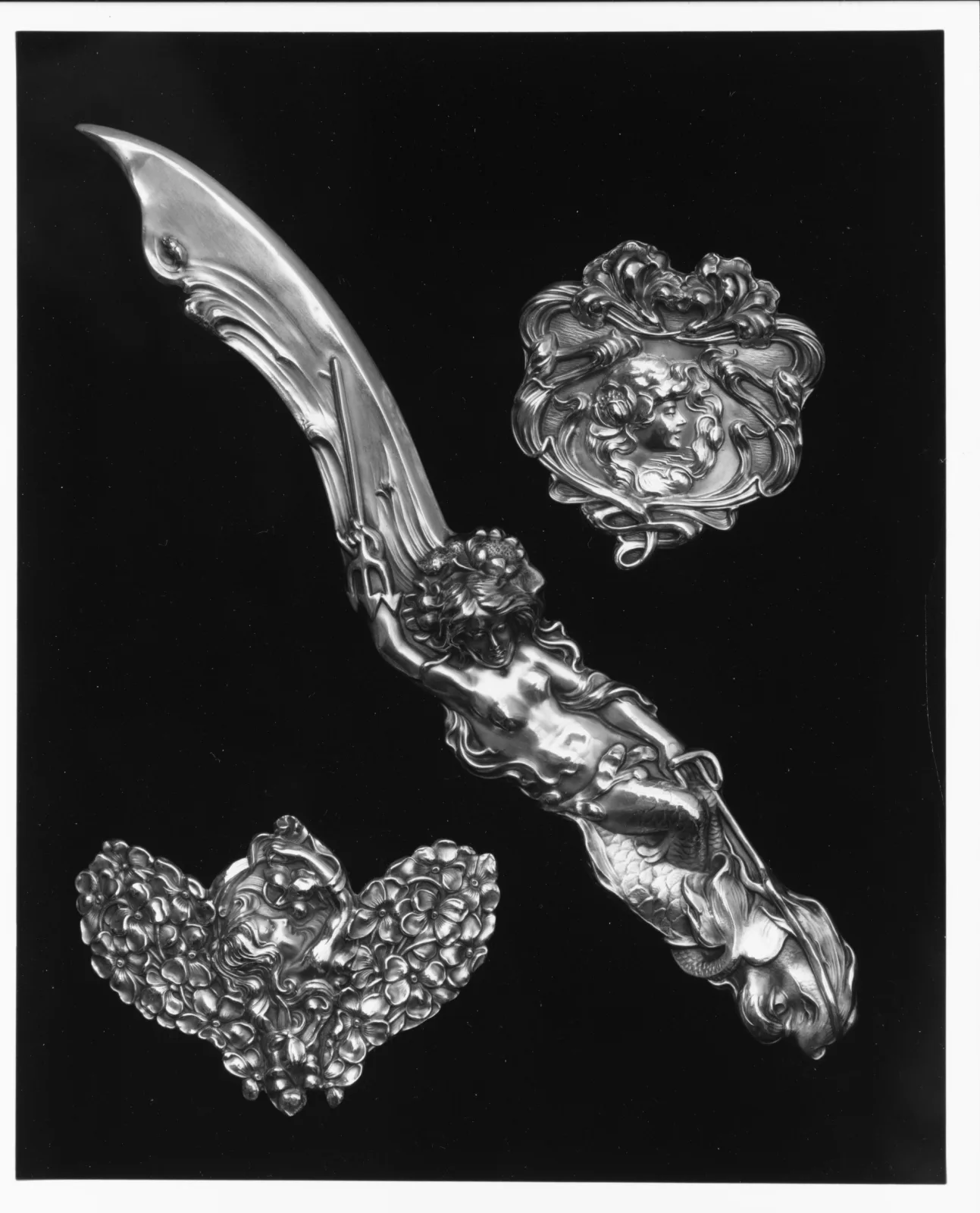
| Organic Silver Repoussé | Undulating hair tresses, flower maidens, and swirling wave patterns in relief | 925 Sterling silver or French 800 silver |

3. Metalwork, Materials & Findings
Art Nouveau artists broke away from traditional precious stone hierarchies, using gemstones for their subtle color and translucency rather than brilliance.
- Non-Traditional Gemstones: Moonstones, opals, chalcedony, tourmaline, aquamarine, demantoid garnets, and irregular baroque pearls were preferred over diamonds.
- Carved Horn & Glass: Pioneered by René Lalique and Elizabeth Bonté, natural bovine horn was dyed, carved, and polished into ethereal leaves and insect bodies. Lalique also created molded frosted glass (pâte de verre).
- Metal Alloys: Yellow gold (18K and 14K), sterling silver, and early hand-fabricated platinum details. Silver repoussé brooches were widely produced in America by companies like Unger Brothers.

Dating Findings & Construction
When evaluating Art Nouveau brooches and pendants, examine the reverse hardware:
- Brooch Pins: Pin stems often extend past the edge of the brooch body, a lingering tradition from late Victorian findings (see our Antique Brooch Clasp & Hinge Dating Guide).
- Hinge Types: Hand-fabricated tube hinges or extended round hinges.
- Catch Types: Simple open C-catches or early safety lever catches. Modern safety trombone catches or spin locks indicate later 20th-century manufacture or hardware repairs.
4. Notable Art Nouveau Jewelers & Maker Marks
Authentic Art Nouveau pieces frequently bear maker marks or national assay stamps:
- René Lalique (France): Stamped
LALIQUEorR. LALIQUEin block or script lettering. - Lucien Gaillard (France): Known for Japanese-influenced carved horn and enamel work, stamped
L. GAILLARD. - Marcus & Co. (United States): Founded by Herman Marcus, renowned for exquisite plique-à-jour brooches and pendants, stamped
MARCUS & CO. - Unger Brothers (United States): Prominent Newark silversmiths, hallmarked with an entwined
UBtrade mark inside a circle alongsideSTERLING 925 fine. - French National Assay Stamps: French gold pieces carry the Eagle’s Head (Tête d’Aigle) for 18K gold, while platinum accenting features the Dog’s Head mark.

5. Art Nouveau vs. Art Deco: Quick Comparison
Because Art Nouveau (1890–1910) directly preceded Art Deco (1915–1935), collectors sometimes confuse the two styles:
| Feature | Art Nouveau (1890–1910) | Art Deco (1915–1935) |
|---|---|---|
| Primary Forms | Sinuous, asymmetrical, organic, curving | Geometric, symmetrical, linear, architectural |
| Color Palette | Soft pastels, iridescent enamels, opalescent stones | High contrast (black onyx, rock crystal, platinum) |
| Dominant Metal | Yellow gold, silver, carved horn | Platinum filigree (see Art Deco Ring Guide) |
| Gemstone Priority | Cabochons (moonstone, opal), demantoid garnet | Geometric cut diamonds, sapphires, rubies, emeralds |
Frequently Asked Questions
What is plique-à-jour enamel and how do you spot authentic pieces?
Plique-à-jour is a backless enameling technique where enamel paste is fired into open wire cells, creating a stained-glass effect that allows light to pass directly through the piece.
What are the key design motifs of authentic Art Nouveau jewelry?
Core motifs include sinuous whiplash curves, winged insects (dragonflies, moths), feminine profiles with flowing hair, flora (ginkgo leaves, poppies), and translucent natural materials like carved horn and moonstones.
Which maker marks indicate genuine Art Nouveau origin?
Famous workshops include René Lalique, Lucien Gaillard, Marcus & Co., Henri Vever, and Unger Brothers. Authentic French gold and platinum pieces also carry standard French assay punches like the Eagle’s Head or Dog’s Head.
Frequently Asked Questions
What is plique-à-jour enamel and how do you spot authentic pieces?
Plique-à-jour is a backless enameling technique where enamel paste is fired into open wire cells, creating a stained-glass effect that allows light to pass directly through the piece.
What are the key design motifs of authentic Art Nouveau jewelry?
Core motifs include sinuous whiplash curves, winged insects (dragonflies, moths), feminine profiles with flowing hair, flora (ginkgo leaves, poppies), and translucent natural materials like carved horn and moonstones.
Which maker marks indicate genuine Art Nouveau origin?
Famous workshops include René Lalique, Lucien Gaillard, Marcus & Co., Henri Vever, and Unger Brothers. Authentic French gold and platinum pieces also carry standard French assay punches like the Eagle's Head or Dog's Head.
Identify Your Jewelry Piece Instantly
Unsure about a hallmark, gemstone cut, or metal stamp? Take a photo and get an instant AI analysis and appraisal.